

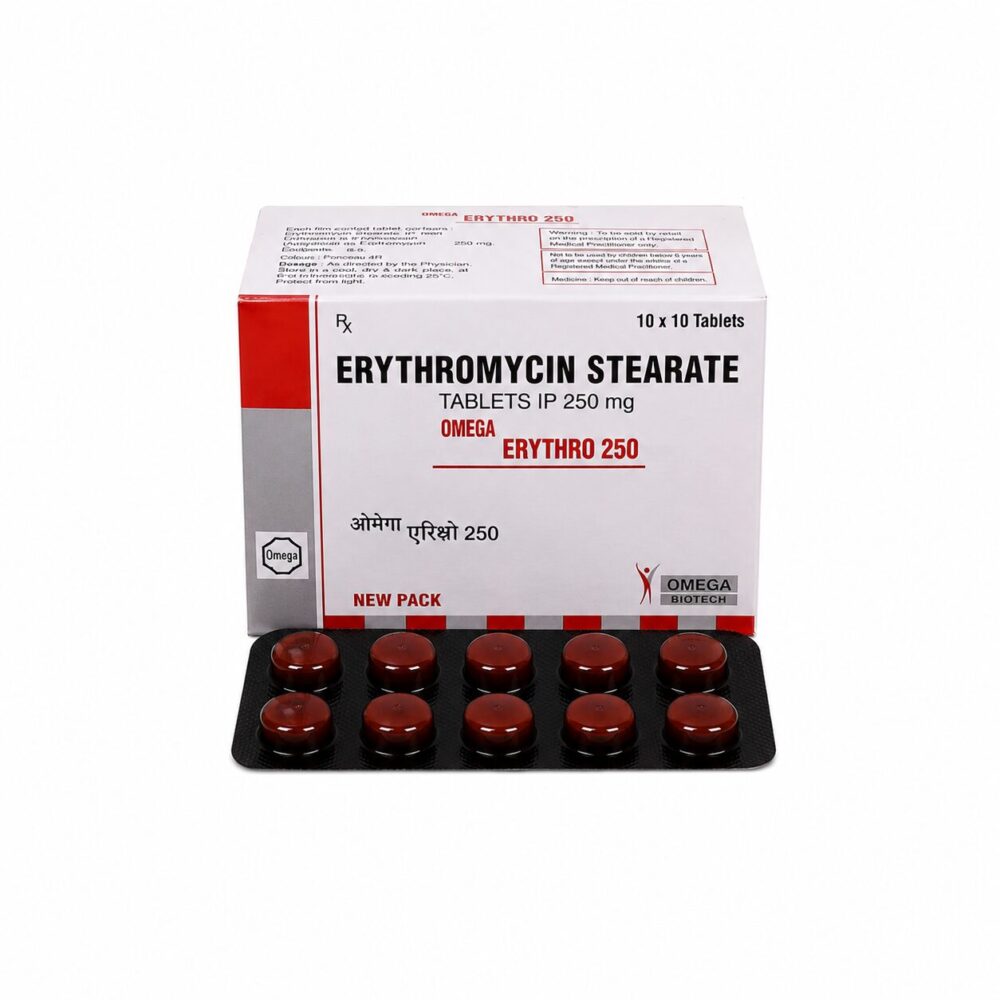

Erythro 250 mg (Erythromycin)
| Active Ingredients | Erythromycin |
| Strength | Erythromycin (250mg) |
| Dosage Form | Tablets |
| Therapeutic Category | Bacterial infections |
| Manufacturer | Omega Pharmaceuticals Pvt Ltd |
| Packaging | 10 tablets in 1 strip |
| Storage Conditions | Cool and dry place |
| Packaging Type | Plain and discreet |
| Pack Size | Price/Unit | Price | Quantity | |
|---|---|---|---|---|
| 100 Tablet/s | $0.60 | $60.00 | ||
| 200 Tablet/s | $0.55 | $110.00 | ||
| 300 Tablet/s | $0.53 | $160.00 | ||
| 500 Tablet/s | $0.45 | $225.00 |
Price range: $60.00 through $225.00
What is Erythro 250 mg?
Erythro 250 mg is an Antibiotic Tablet prepared with Erythromycin as the active ingredient. Macrolide antibiotics are widely used in bacterial infections where common antibiotics may not suit the patient or when bacteria respond better to erythromycin-based treatment.
Doctors prescribe this tablet for infections linked with the throat, tonsils, chest, lungs, ear, skin, and sinus area. Certain dental infections and soft tissue infections may also respond to Erythro 250 mg depending on bacterial sensitivity. Viral illnesses such as common cold or flu do not respond to erythromycin antibiotics.
The tablet interferes with bacterial protein production. Without those proteins, bacteria lose the ability to grow and spread further inside the body. As bacterial activity reduces, symptoms such as swelling, pain, fever, irritation, and infection-related discomfort gradually improve.
Uses of Erythro 250 mg
Doctors may prescribe Erythro 250 mg for several bacterial conditions, including:
- Tonsillitis
- Throat infection
- Sinus infection
- Ear infection
- Chest infection
- Pneumonia
- Skin infection
- Soft tissue infection
- Bronchitis
- Dental infection
- Certain urinary infections
- Bacterial eye infections in selected cases
Treatment duration depends on infection type, severity, age, and medical response. Stopping antibiotics too early may allow bacteria to return again.
How Erythro 250 mg Works
Bacteria require proteins to survive and multiply inside the body. Erythromycin interferes with that process and blocks further bacterial activity. Once bacterial growth slows down, the immune system gets more time to remove the infection.
Relief timing varies from person to person. Some infections begin improving within a few days, while deeper respiratory infections may need a longer course for noticeable recovery.
How to Take Erythro 250 mg
Swallow the tablet whole with water. Crushing or chewing may affect absorption in some cases. Many doctors prefer giving erythromycin on an empty stomach because food can sometimes reduce absorption, though some individuals may receive different instructions depending on stomach tolerance.
Maintaining the same timing daily supports better antibiotic levels in the body. Finishing the prescribed course matters even after symptoms improve earlier.
Missed doses should be taken when remembered unless the next dose timing is very close. Double dosing together increases the chance of unwanted effects.
Dosage Information
Dose selection depends on body weight, infection severity, age, liver function, and previous antibiotic response. Adults and children may receive different schedules. Some infections require shorter treatment while chest infections or severe bacterial conditions may need extended use.
Missed Dose
A forgotten dose can be taken after remembering it. If the next scheduled dose is nearby, the skipped tablet can be ignored and the regular schedule resumed. Extra tablets together are generally avoided.
Overdose
Taking too much erythromycin may lead to stomach pain, vomiting, hearing changes, irregular heartbeat, or severe nausea. Emergency care becomes necessary if overdose symptoms appear or large quantities were consumed accidentally.
Side Effects of Erythro 250 mg
Like other antibiotics, Erythro 250 mg can produce unwanted effects in some users. Many reactions remain mild and temporary during treatment.
Commonly reported side effects include:
- Nausea
- Vomiting
- Loose stools
- Abdominal discomfort
- Stomach cramps
- Loss of appetite
- Mild dizziness
- Indigestion
Serious Side Effects
Less common but serious reactions may include:
- Irregular heartbeat
- Severe allergic reaction
- Yellowing of eyes or skin
- Severe diarrhea
- Hearing problems
- Skin rash with swelling
Precautions and Warnings
Erythromycin requires careful use in people with liver disease, heart rhythm disorders, low potassium levels, or previous antibiotic-related complications. Earlier history of QT prolongation or arrhythmia also needs attention before starting treatment.
Alcohol intake may worsen stomach discomfort during the antibiotic course in some individuals. Antacids close to dosing time can interfere with absorption, so spacing may be advised.
Pregnancy and breastfeeding decisions depend on medical evaluation and infection severity. Drug transfer into breast milk is possible in small amounts.
Drug Interactions
Erythro 250 mg can interact with several prescription medicines. Interaction risk increases with heart rhythm medicines, antifungal drugs, migraine medicines, and selected cholesterol-lowering tablets.
Extra caution is needed with:
- Cisapride
- Pimozide
- Ergotamine
- Dihydroergotamine
- Warfarin
- Methotrexate
- Certain antifungal medicines
- Some antiarrhythmic drugs
Sharing complete medication history reduces the chance of harmful interactions.
Who Should Avoid Erythro 250 mg?
Certain individuals may not be suitable candidates for erythromycin treatment.
Avoid or use carefully in cases involving:
- Allergy to erythromycin
- Severe liver disease
- History of antibiotic-related jaundice
- Serious heart rhythm disorders
- Myasthenia gravis
- Low magnesium or potassium levels
Medical history review plays a major role before antibiotic selection.
Frequently Asked Questions (FAQs)
Chest infections, bronchitis, and mild pneumonia linked with sensitive bacteria may respond to erythromycin treatment.
Paracetamol is commonly used alongside antibiotics for fever or pain relief. Full medication details still matter before combining medicines regularly.
Nausea, stomach cramps, and loose stools are among the more common complaints linked with erythromycin antibiotics.
Sinus infections caused by susceptible bacteria may respond to erythromycin tablets in selected cases.
Some users notice relief within 2 to 4 days, though severe infections may require longer treatment duration.
| Pack Size | 100 Tablet/s, 200 Tablet/s, 300 Tablet/s, 500 Tablet/s |
|---|---|
| Price/Unit | $0.45, $0.53, $0.55, $0.60 |
Related products
- + wishlist+ compare
Augmentin 625mg Duo ( Amoxycillin + Clavulanic Acid )
Price range: $120.00 through $300.00Select options - + wishlist+ compare
Amoxyclav 1000 Tablet (Amoxicillin/Clavulanic Acid)
Price range: $225.00 through $620.00Select options - + wishlist+ compare
Azicip 250 mg Tablet (Azithromycin)
Price range: $50.00 through $155.00Select options

There are no reviews yet.