
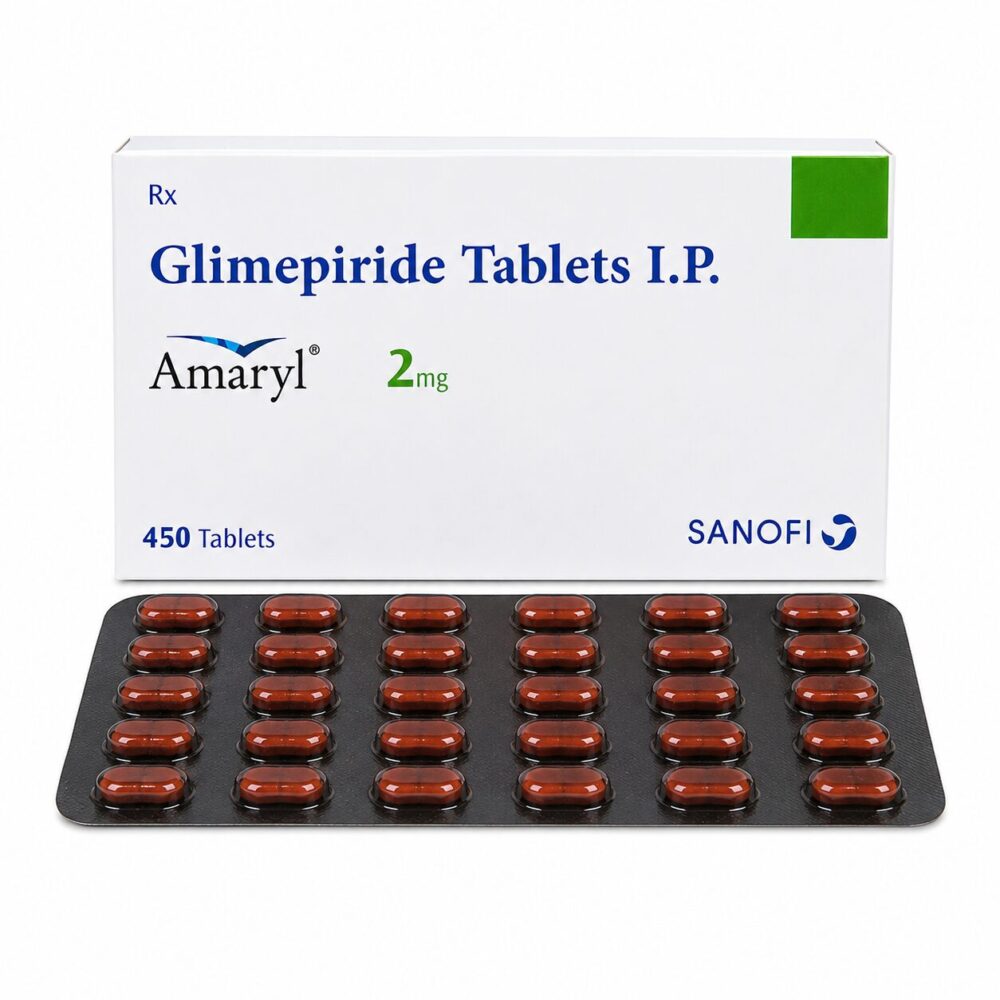
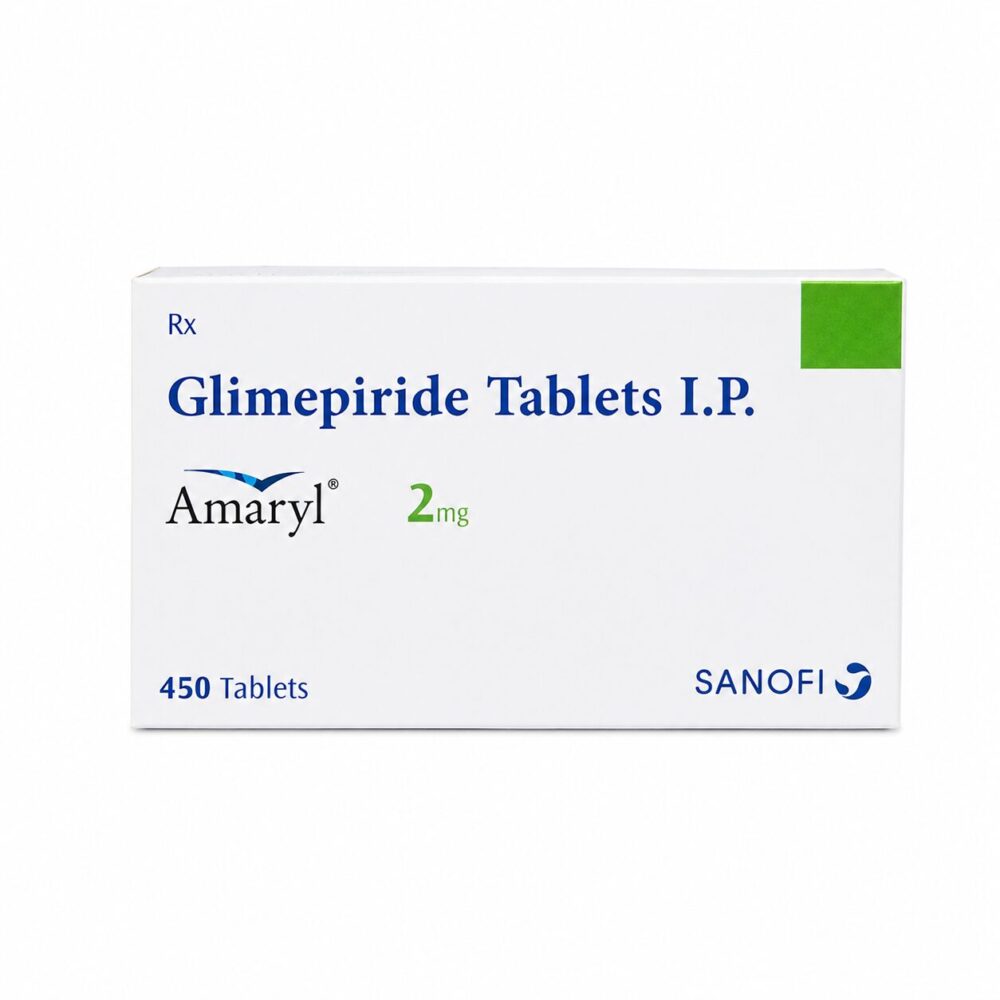
Amaryl 2 mg (Glimepiride Tablet)
| Active Ingredients | Glimepiride |
| Strength | Glimepiride 2 mg |
| Dosage Form | Tablet |
| Therapeutic Category | Type 2 diabetes |
| Manufacturer | Sanofi India Ltd |
| Packaging | 30 tablets in 1 strip |
| Storage Conditions | Cool and dry place |
| Packaging Type | Plain and discreet |
| Pack Size | Price/Unit | Price | Quantity | |
|---|---|---|---|---|
| 120 Tablet/s | $0.70 | $85.00 | ||
| 180 Tablet/s | $0.66 | $120.00 | ||
| 240 Tablet/s | $0.62 | $150.00 | ||
| 300 Tablet/s | $0.56 | $170.00 |
$85.00 – $170.00Price range: $85.00 through $170.00
What Is Amaryl 2 mg?
Amaryl 2 mg contains Glimepiride, a medicine used to lower blood glucose levels in adults living with type 2 diabetes. The medicine supports the pancreas in releasing more insulin after meals while also helping the body respond better to insulin already present in the bloodstream. Better insulin response supports smoother sugar movement from blood into body cells where it can be used for energy.
Blood sugar control often needs a combination of medicine, food balance, physical activity, weight control, and regular monitoring.
Amaryl 2 mg becomes part of that routine when sugar readings remain high despite lifestyle efforts. Some people receive it as a single therapy, while others use it with metformin, insulin, or combination Diabetes Medicines.
Treatment plans can differ from person to person because blood sugar patterns, age, eating habits, and medical history are rarely the same. Regular glucose monitoring helps track how the body is responding during ongoing treatment.
Uses of Amaryl 2 mg
Amaryl 2 mg is mainly prescribed for:
- Type 2 diabetes mellitus
- Blood sugar management in adults
- Combination diabetes therapy with metformin or insulin
- Long-term glucose control support
- Reducing post-meal blood sugar spikes
It may adjust diabetes medicines over time depending on fasting sugar levels, HbA1c readings, meal routines, body weight changes, and response to treatment.
How Amaryl 2 mg Helps Control Blood Sugar
Type 2 diabetes develops when the body does not respond properly to insulin or when insulin production becomes lower than needed. That imbalance causes glucose to remain in the bloodstream instead of entering cells effectively.
Amaryl 2 mg encourages insulin release from the pancreas after food intake. Better insulin activity supports sugar control throughout the day and reduces frequent glucose fluctuations. Many diabetes treatment plans combine the medicine with meal discipline and physical activity because lifestyle patterns still play a major role in long-term blood sugar stability.
Missing meals after taking diabetes tablets can sometimes lead to low blood sugar episodes. Consistent eating schedules are usually recommended during treatment.
Dosage and Administration
Amaryl 2 mg is generally taken once daily with breakfast or the first major meal of the day. Swallow the tablet with water without crushing or chewing unless a doctor suggests a different approach.
Dose adjustments are often based on:
- Blood sugar readings
- HbA1c levels
- Age
- Kidney function
- Other diabetes medicines being used
- Risk of hypoglycemia
Some people begin with lower strengths before moving to 2 mg depending on response. Sudden dose increases without medical guidance can raise the risk of low blood sugar.
Benefits of Amaryl 2 mg
Several patients use Amaryl 2 mg because of the following advantages:
- Supports daily blood sugar control
- Simple once-daily dosing
- Often combined with other diabetes medicines
- Helps reduce high post-meal glucose levels
- Widely prescribed for type 2 diabetes management
- Suitable for long-term treatment in many adults
Blood sugar management usually becomes more effective when medicine use is combined with balanced meals, regular movement, and routine glucose monitoring.
Common Side Effects of Amaryl 2 mg
Like many diabetes medicines, Amaryl 2 mg can cause side effects in some users. Many reactions remain mild and improve as the body adjusts during treatment.
Possible side effects include:
- Low blood sugar (hypoglycemia)
- Sweating
- Dizziness
- Hunger
- Headache
- Nausea
- Stomach discomfort
- Weakness
- Weight gain
- Blurred vision
Low blood sugar remains one of the more recognized concerns with Glimepiride. Delayed meals, alcohol intake, excessive exercise, or combining multiple diabetes medicines may increase that risk.
Signs of Low Blood Sugar
Blood sugar dropping too low can become uncomfortable and sometimes dangerous if ignored for long periods. Early recognition helps manage symptoms quickly.
Common signs include:
- Shaking
- Fast heartbeat
- Sudden sweating
- Confusion
- Irritability
- Drowsiness
- Blurred vision
- Sudden weakness
Keeping glucose tablets, fruit juice, or sugary snacks nearby is often helpful for people using sulfonylurea medicines like Glimepiride.
Precautions Before Using Amaryl 2 mg
Certain medical conditions may require extra monitoring during treatment with Glimepiride.
Extra caution may be needed in cases involving:
- Kidney disease
- Liver disorders
- Irregular meal schedules
- Elderly patients
- Alcohol dependence
- History of severe hypoglycemia
- Hormonal disorders affecting blood sugar balance
Driving or operating machinery after taking diabetes medicines may become difficult if blood sugar falls suddenly. Some individuals notice dizziness, confusion, or slower reaction times during hypoglycemic episodes.
Pregnancy and breastfeeding discussions are usually handled carefully before selecting diabetes treatment options.
Drug Interactions
Several medicines can affect how Amaryl 2 mg controls blood sugar. Some combinations may increase hypoglycemia risk, while others may reduce glucose-lowering effects.
Medicines known to interact with Glimepiride include:
- Insulin
- Metformin
- Beta blockers
- Corticosteroids
- Diuretics
- NSAIDs
- Fluoroquinolone antibiotics
- Antifungal medicines
- Blood pressure medicines
- Thyroid medicines
Blood sugar fluctuations sometimes appear after starting new medicines, changing doses, or stopping existing treatment. Medication lists should remain updated during doctor visits.
Frequently Asked Questions (FAQs)
Amaryl 2 mg is used for controlling blood sugar levels in adults with type 2 diabetes mellitus. Treatment is often combined with meal planning, exercise, and lifestyle changes.
Yes, Glimepiride may lower blood sugar too much in some situations. Skipping meals, alcohol intake, or taking multiple diabetes medicines together can increase that risk.
Many people take the tablet once daily with breakfast or the first major meal of the day to support better sugar control and reduce hypoglycemia risk.
Amaryl is the brand name, while Glimepiride is the active ingredient present in the tablet.
Yes, combination therapy with Metformin is fairly common in type 2 diabetes management when single-drug treatment is not giving enough glucose control.
| Pack Size | 120 Tablet/s, 180 Tablet/s, 240 Tablet/s, 300 Tablet/s |
|---|---|
| Price/Unit | $0.56, $0.62, $0.66, $0.70 |
Related products
- + wishlist+ compare
Amaryl 3 mg (Glimepiride Tablet)
$110.00 – $215.00Price range: $110.00 through $215.00Select options - + wishlist+ compare
Glycoheal 500 mg (Metformin)
$50.00 – $190.00Price range: $50.00 through $190.00Select options - + wishlist+ compare
Istavel 50 mg (Sitagliptin)
$90.00 – $400.00Price range: $90.00 through $400.00Select options - + wishlist+ compare
Glycomet SR 850 mg (Metformin)
$80.00 – $350.00Price range: $80.00 through $350.00Select options - + wishlist+ compare
Empasmart 10 mg (Empagliflozin)
$60.00 – $225.00Price range: $60.00 through $225.00Select options


There are no reviews yet.