
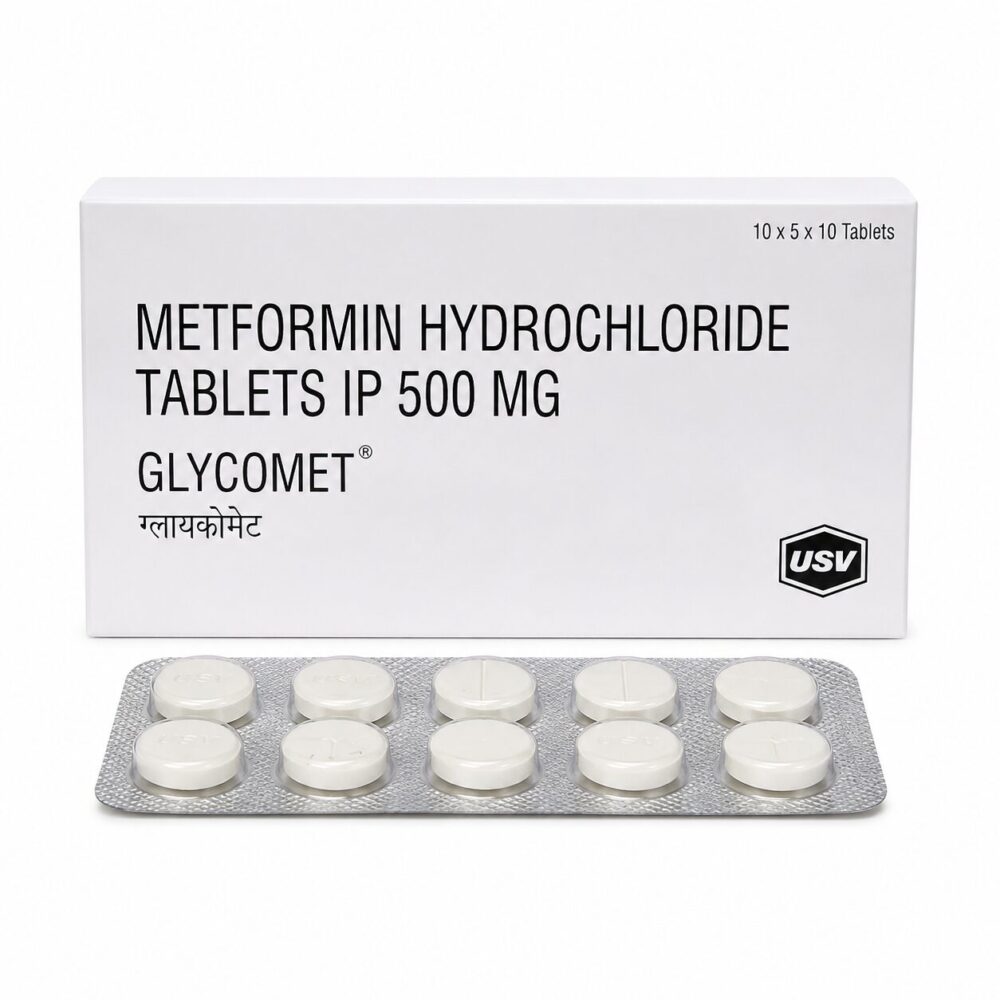
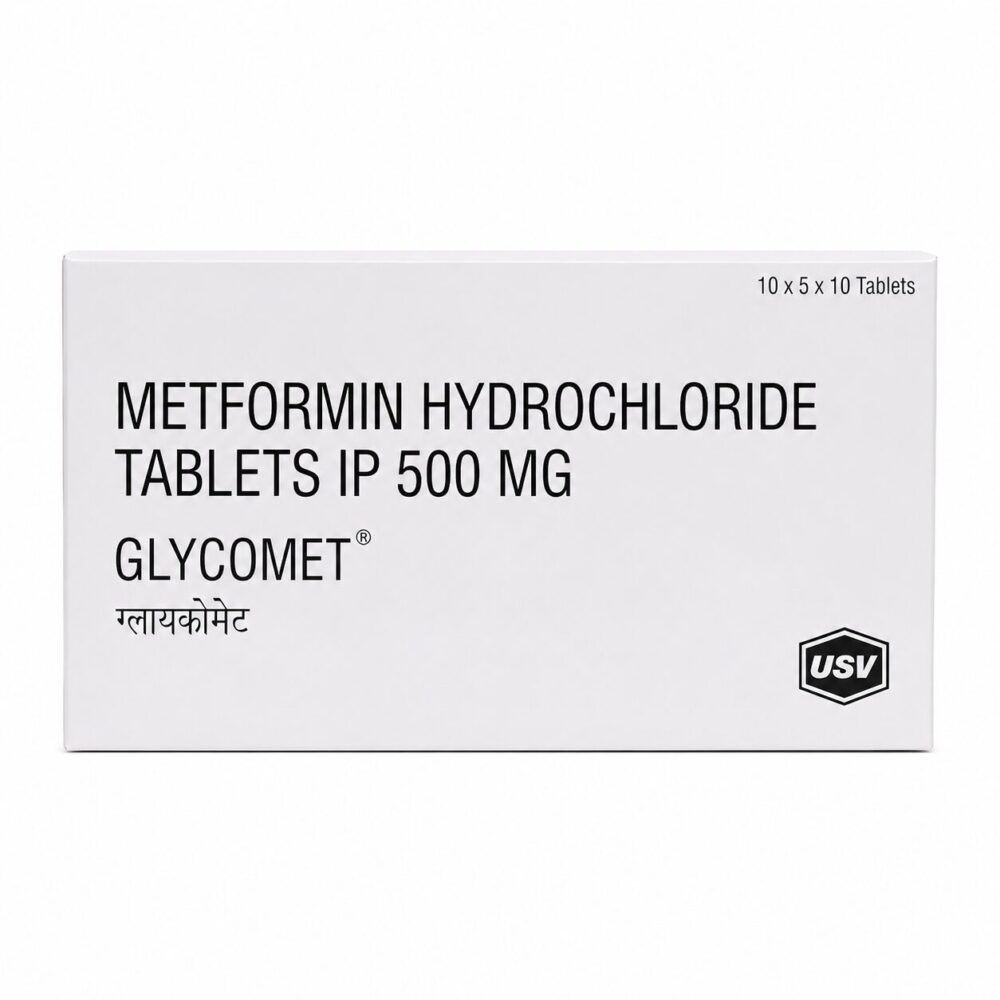
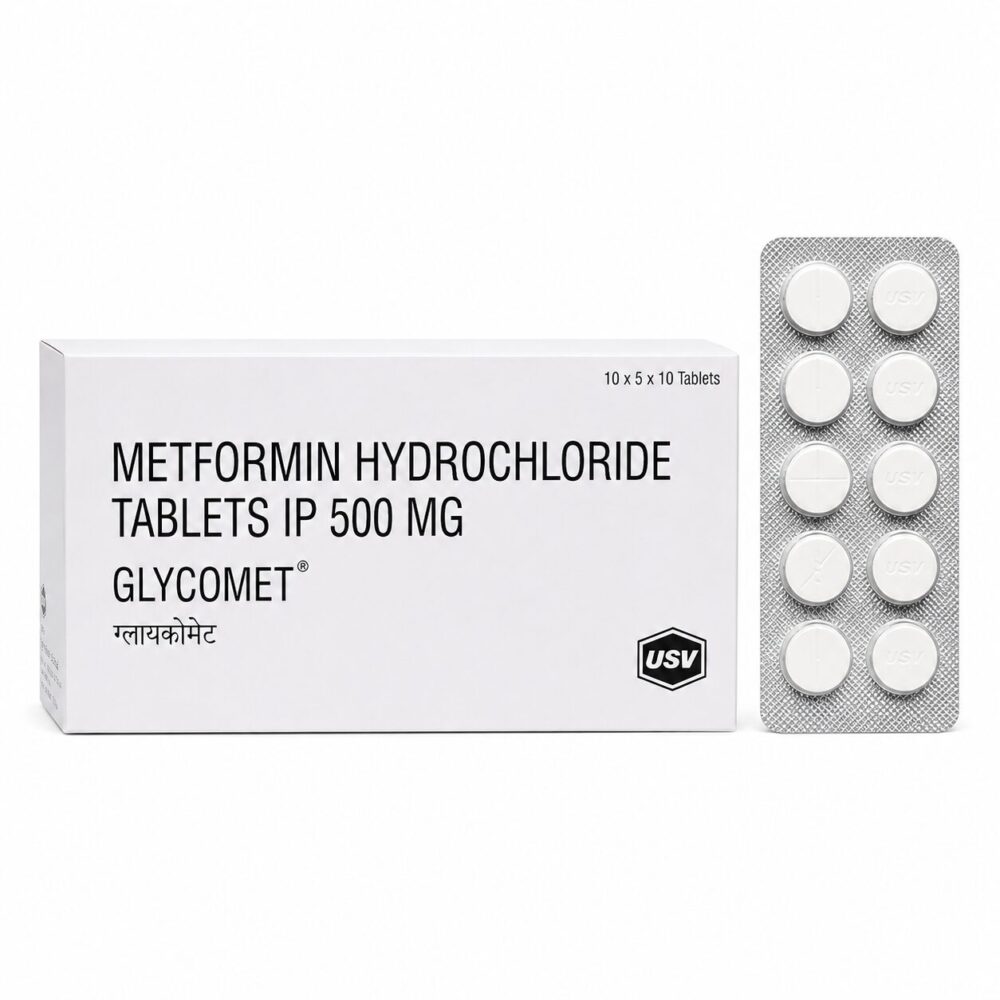
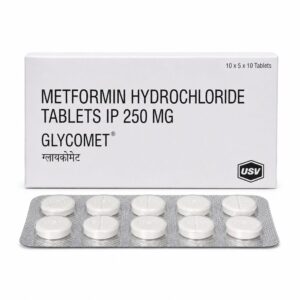
Glycomet 500 mg (Metformin)
| Active Ingredients | Metformin |
| Strength | Metformin 500 mg |
| Dosage Form | Tablet |
| Therapeutic Category | Type 2 diabetes |
| Manufacturer | USV Pvt Ltd. |
| Packaging | 10 tablets in 1 strip |
| Storage Conditions | Cool and dry place |
| Packaging Type | Plain and discreet |
| Pack Size | Price/Unit | Price | Quantity | |
|---|---|---|---|---|
| 100 Tablet/s | $0.60 | $60.00 | ||
| 200 Tablet/s | $0.55 | $110.00 | ||
| 300 Tablet/s | $0.53 | $160.00 | ||
| 500 Tablet/s | $0.45 | $225.00 |
Price range: $60.00 through $225.00
What Is Glycomet 500 mg?
Glycomet 500 mg belongs to the biguanide class of anti-diabetic medicines. It often recommend Metformin as an early treatment option when diet control and exercise alone do not maintain healthy blood sugar levels.
The medicine is mainly prescribed for adults living with type 2 diabetes, though certain cases of insulin resistance and polycystic ovary syndrome (PCOS) may also involve Metformin-based treatment.
Metformin supports glucose control in multiple ways. Liver glucose production becomes lower, insulin sensitivity improves, and muscle cells are able to use glucose more efficiently. Due to these combined effects, blood sugar fluctuations may reduce over time when combined with proper dietary habits.
Unlike some Diabetes Medicines linked with rapid insulin spikes, Metformin carries a lower risk of sudden low blood sugar episodes when taken alone.
Many physicians prefer starting diabetes treatment with Metformin because of its well-established usage history, affordability, and flexible dosing options.
Uses of Glycomet 500 mg Tablet
Glycomet 500 mg is mainly prescribed for controlling high blood sugar levels linked with type 2 diabetes. Proper sugar management helps lower the risk connected with diabetes-related complications affecting the kidneys, eyes, nerves, and blood vessels over time.
Common uses include:
- Type 2 diabetes mellitus
- Insulin resistance management
- Blood sugar control support
- Diabetes management alongside exercise and diet
- PCOS-related insulin imbalance in selected cases
- Combination therapy with other anti-diabetic medicines
Many individuals taking Glycomet 500 mg notice better fasting sugar levels and improved post-meal glucose control after regular use. Some treatment plans combine Metformin with insulin or other oral diabetes medicines when sugar readings remain uncontrolled through single-drug therapy.
Weight-neutral behavior also makes Metformin a preferred option for people concerned about diabetes medicines linked with weight gain. Long-term diabetes management usually focuses on maintaining stable glucose trends rather than short-term sugar reduction alone.
How Glycomet 500 mg Supports Blood Sugar Control
Glucose produced by the liver often remains higher in people living with type 2 diabetes. Metformin helps reduce this excess glucose release into the bloodstream. Better insulin response inside body tissues also allows glucose to move into cells more effectively.
Meal-related sugar spikes can become easier to manage when Glycomet is taken regularly along with proper meal timing. Consistency matters more than occasional use because diabetes control usually improves gradually over weeks rather than overnight.
Balanced eating habits, reduced sugary beverages, regular walking, and weight management often improve overall treatment outcomes while using Metformin therapy.
Dosage and Administration
Dose selection depends on blood sugar levels, medical history, age, kidney health, and response to treatment. Many adults begin with a lower dose before gradual adjustment to reduce stomach discomfort during the first few weeks.
Tablets are generally taken with food or immediately after meals. Taking the medicine on an empty stomach may increase digestive discomfort such as nausea or loose stools in some users.
Missing doses repeatedly may affect blood sugar stability. Double dosing after forgetting a tablet may increase unwanted side effects and should be avoided unless advised during medical review.
Long-term diabetes treatment often includes regular monitoring of:
- Fasting blood sugar
- HbA1c levels
- Kidney function
- Vitamin B12 levels
- Weight and dietary response
Side Effects of Glycomet 500 mg
Common Side Effects
Digestive symptoms are the most frequently reported during early treatment phases. Many people notice improvement after the body adjusts to Metformin.
Common side effects include:
- Nausea
- Stomach discomfort
- Loose stools
- Mild diarrhea
- Metallic taste in mouth
- Reduced appetite
- Bloating
Taking Glycomet with meals often helps reduce stomach-related discomfort.
Serious Side Effects
Rare complications may occur in selected individuals, especially in those with severe kidney issues or dehydration.
Medical review becomes necessary if symptoms such as these appear:
- Severe weakness
- Breathing difficulty
- Extreme tiredness
- Unusual muscle pain
- Persistent vomiting
- Slow heartbeat
Lactic acidosis remains uncommon but requires urgent medical attention if suspected.
Precautions and Safety Information
Kidney and Liver Health
Metformin leaves the body through the kidneys. Reduced kidney function may increase medicine accumulation inside the bloodstream. Blood tests are often checked periodically during long-term treatment.
Liver disorders, dehydration, or alcohol misuse may increase complication risks linked with Metformin therapy.
Alcohol Consumption
Heavy alcohol intake may affect blood sugar balance and increase the possibility of lactic acidosis. Occasional alcohol use should still be discussed during diabetes treatment planning.
Pregnancy and Breastfeeding
Diabetes management during pregnancy requires careful monitoring. Treatment plans may differ depending on sugar levels and maternal health. Breastfeeding considerations also vary based on medical assessment and infant monitoring needs.
Surgery and Medical Procedures
Temporary stoppage of Metformin may be advised before certain surgeries, contrast dye scans, or hospital procedures involving kidney stress. Restart timing usually depends on kidney function results after the procedure.
Drug Interactions
Some medicines may affect blood sugar control or interfere with Metformin metabolism. Sharing a complete medicine list during diabetes treatment helps reduce interaction risks.
Possible interactions include:
- Steroids
- Diuretics
- Insulin
- Thyroid medicines
- Blood pressure medicines
- Certain heart medicines
- Contrast dye used in imaging scans
Sugar levels may require closer observation after starting new medicines alongside Glycomet 500 mg.
Benefits of Glycomet 500 mg
Several reasons explain why Metformin remains one of the most prescribed diabetes medicines worldwide.
Key benefits include:
- Supports long-term blood sugar control
- Lower risk of hypoglycemia when used alone
- Helps improve insulin sensitivity
- Suitable for combination diabetes therapy
- Widely studied and clinically established
- Available in multiple dosage strengths
Long-term diabetes management usually focuses on stable control rather than rapid glucose reduction, making Metformin suitable for ongoing treatment plans.
Frequently Asked Questions
Glycomet 500 mg is mainly used for managing type 2 diabetes mellitus and improving blood sugar control in adults.
Some individuals notice stable weight or mild weight reduction during long-term Metformin therapy combined with balanced eating habits and exercise.
Metformin alone usually carries a lower risk of hypoglycemia compared to several other diabetes medicines. Risk may rise when combined with insulin or certain anti-diabetic drugs.
Many treatment plans involve taking the tablet with meals to reduce stomach discomfort and improve tolerance.
Digestive discomfort such as nausea, diarrhea, or bloating may appear during the initial weeks of treatment. Symptoms often improve gradually.
Metformin has been used for long-term diabetes management for many years. Periodic monitoring of kidney function and vitamin B12 levels is often included during ongoing therapy.
Heavy alcohol use may increase health risks linked with Metformin therapy and may affect blood sugar balance.
Yes, Glycomet SR versions are available for people needing modified-release dosing schedules.
| Pack Size | 100 Tablet/s, 200 Tablet/s, 300 Tablet/s, 500 Tablet/s |
|---|---|
| Price/Unit | $0.45, $0.53, $0.55, $0.60 |
There are no reviews yet.