
0

Cart

Home 3ShopAnti BioticMinicycline 100mg ( Doxycycline )

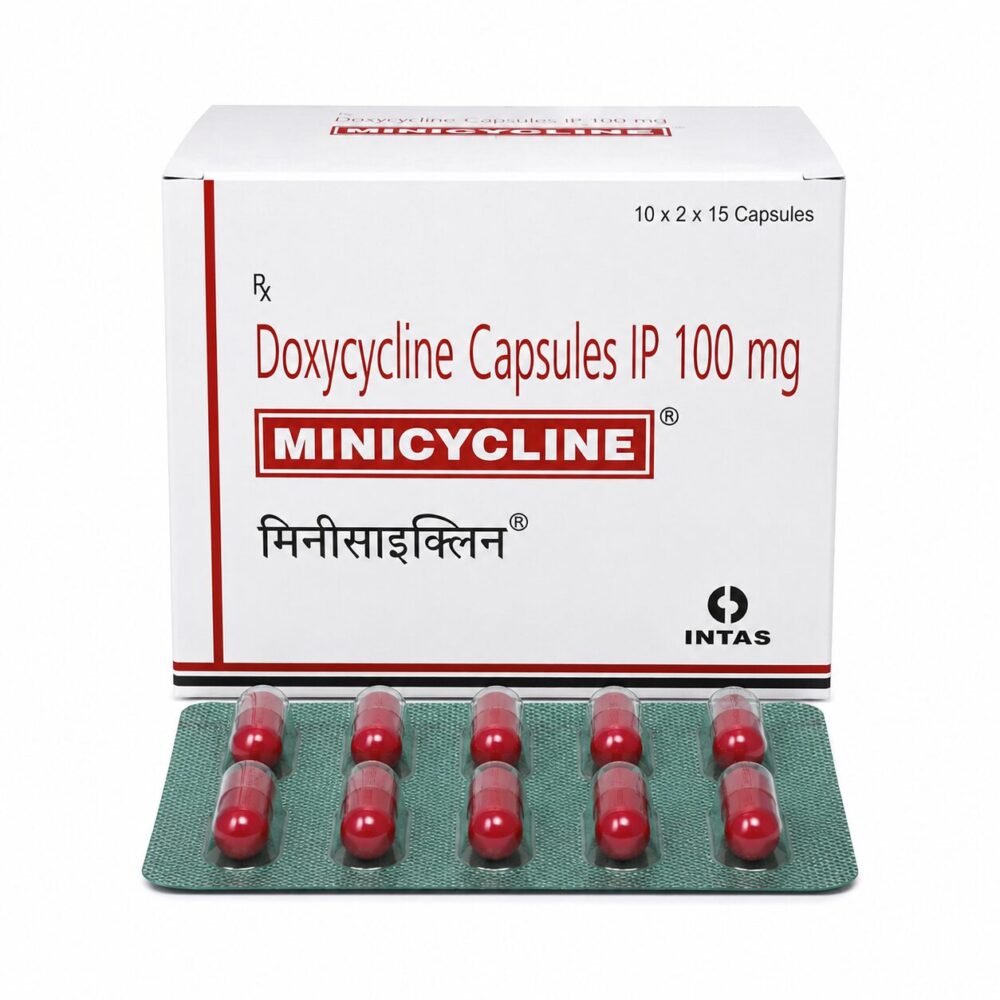
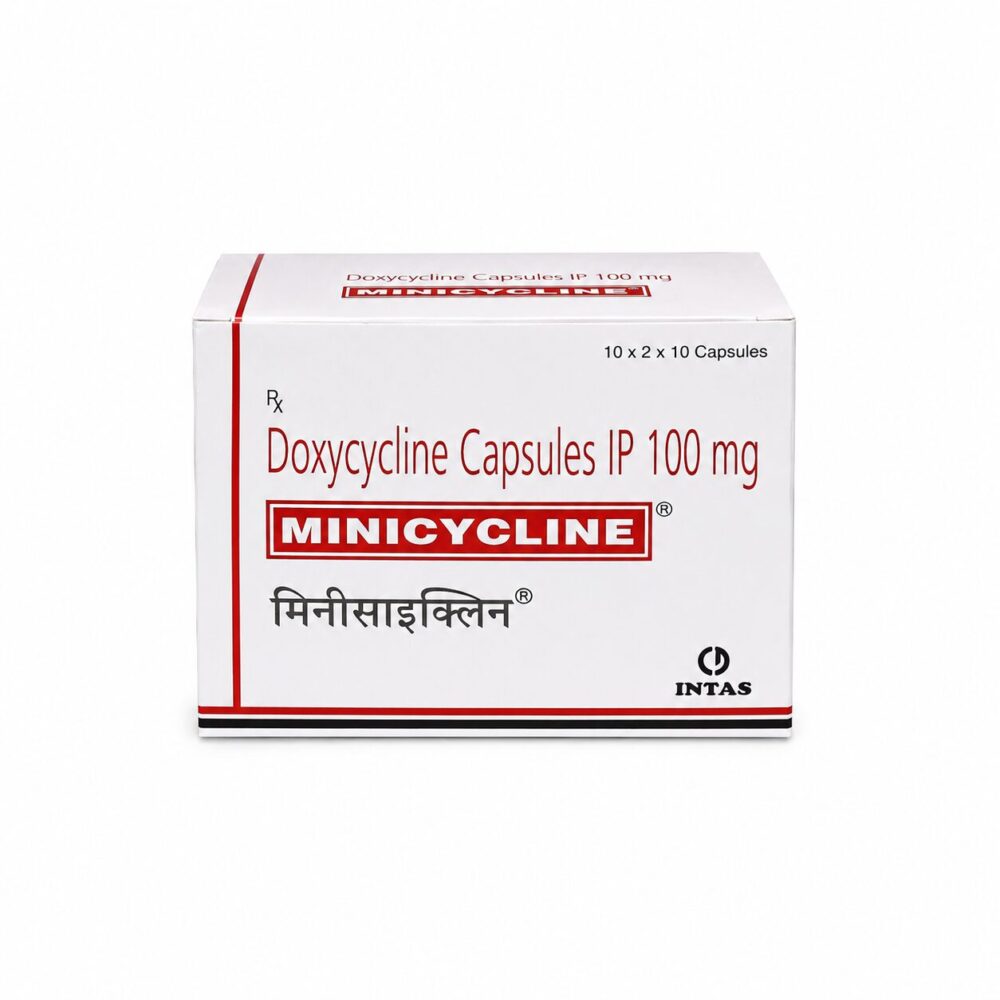
Minicycline 100mg ( Doxycycline )

Active IngredientsDoxycycline
Strength Doxycycline (100mg)
Dosage FormCapsules
Therapeutic CategoryAntibiotic
ManufacturerShreya Life Sciences Pvt Ltd
Packaging10 Capsule in 1 strip
Storage ConditionsCool and dry place
Packaging TypePlain and discreet

Pack SizePrice/UnitPriceQuantity 
90 Capsule/s$0.72$65.00
120 Capsule/s$0.66$80.00
220 Capsule/s$0.56$125.00
350 Capsule/s$0.52$185.00

Price range: $65.00 through $185.00

Discreet Shipping
Secure Checkout
Assured Delivery
Add to wishlist Add to compareAsk about product
SKU: N/A Category:

What Is Minicycline 100 mg Capsule?

Minicycline 100 mg Capsule contains Doxycycline 100 mg, an Antibiotic from the tetracycline group. Doctors may use it for infections caused by bacteria, not for viral illnesses like common cold or flu. The medicine is known for covering many infection types, but the right use depends on the infection, age, medical history, and current medicines.

Doxycycline slows bacterial growth so the body can clear the infection. For many users, Minicycline 100 mg is linked with treatment plans for respiratory infections, acne, chlamydia, rickettsial infections, cholera, and malaria prevention in certain travel-related cases.

Minicycline 100 mg Uses

Minicycline 100 mg Capsule may be used for different bacterial conditions when a doctor finds doxycycline suitable. The exact reason for use may vary from person to person.

Common uses include:

  • Respiratory tract infections
  • Acne and skin infections
  • Chlamydia infection
  • Mycoplasma pneumonia
  • Rickettsial infections
  • Cholera
  • Brucellosis
  • Malaria prevention
  • Certain reproductive organ infections
  • Selected soft tissue infections

Minicycline 100 mg does not treat fungal infections or viral infections. Taking antibiotics without the right need can make future bacterial infections harder to treat.

How Minicycline 100 mg Capsule Acts In The Body

Doxycycline targets bacteria by blocking protein production needed for their growth. When bacteria cannot make these proteins, their spread slows down and the immune system gets a better chance to control the infection.

The action of Minicycline 100 mg makes it useful in several bacterial conditions. Still, the medicine choice depends on the suspected bacteria, lab results when available, and the infection site.

Minicycline 100 mg Dosage

The dose of Minicycline 100 mg Capsule depends on the infection type, severity, age, body weight, and previous medical history. Some infections need a short course, while others may need a longer plan.

Minicycline 100 mg is usually swallowed whole with water. Do not crush, chew, or open the capsule unless your doctor has given a clear reason. A full glass of water helps reduce throat irritation.

Missed Dose

A missed dose can be taken when remembered. If the next dose is close, skip the missed one and continue the normal schedule. Do not take two doses together to cover the missed dose.

Overdose

Taking more than the planned dose can increase side effects such as stomach upset, vomiting, dizziness, or other unwanted reactions. Contact local emergency care or your doctor if an overdose happens.

How To Take Minicycline 100 mg Capsule

Minicycline 100 mg Capsule is usually taken with water. Some people take it on an empty stomach, while others may need food if stomach upset occurs. Dairy items such as milk, curd, cheese, paneer, and ice cream can reduce absorption, so keep a time gap if these are part of your meal.

Antacids, iron, zinc, calcium, and magnesium products may also lower doxycycline absorption. Keep a proper gap between Minicycline 100 mg and such supplements or medicines as advised in your prescription.

Benefits Of Minicycline 100 mg

Minicycline 100 mg Capsule can be helpful in bacterial infections where doxycycline is suitable. Its value comes from the way it covers several infection types and is available as an oral capsule.

Key benefits include:

  • Useful for many selected bacterial infections
  • Oral capsule form
  • May be used for acne-related bacterial control
  • May support malaria prevention in suitable cases

Often used in respiratory, skin, and reproductive tract infection plans

The benefit depends on correct diagnosis, correct dose, and finishing the planned course.

Side Effects Of Minicycline 100 mg Capsule

Some users may notice side effects while taking Minicycline 100 mg. Many are mild and settle as the body adjusts, but some reactions need quick care.

Common Side Effects

  • Nausea
  • Vomiting
  • Diarrhea
  • Stomach pain
  • Loss of appetite
  • Headache
  • Mouth ulcers
  • Skin sensitivity to sunlight
  • Dizziness
  • Vaginal yeast infection

Serious Side Effects

Get urgent help if there is severe allergy, breathing trouble, swelling of the face or lips, severe skin rash, watery or bloody diarrhea, vision changes, or strong headache with blurred vision.

Warnings And Precautions

Minicycline 100 mg Capsule may not suit everyone. Extra care is needed in pregnancy, breastfeeding, liver disease, kidney disease, bowel inflammation, and allergy to tetracycline antibiotics.

Avoid strong sunlight where possible because doxycycline can make skin burn faster. Use protective clothing and sunscreen when going outside. Alcohol may disturb treatment response in some cases, so ask your doctor what is safe for your situation.

Minicycline 100 mg is usually avoided during pregnancy and in young children unless a doctor finds a strong reason. Tetracycline-type medicines can affect tooth color and bone growth during certain stages of development.

Drug Interactions With Minicycline 100 mg

Some medicines and supplements can change how Minicycline 100 mg works or raise side effect risk. Share your medicine list before starting treatment.

Possible interactions include:

  • Antacids containing aluminum, calcium, or magnesium
  • Iron supplements
  • Zinc supplements
  • Warfarin
  • Phenytoin
  • Carbamazepine
  • Phenobarbitone
  • Rifampicin
  • Methotrexate
  • Sucralfate
  • Digoxin
  • Penicillin-type antibiotics
  • Oral contraceptive pills
  • Cholera vaccine

When Not To Use Minicycline 100 mg

Minicycline 100 mg Capsule may not be suitable if there is allergy to doxycycline or other tetracycline antibiotics. It may also be avoided in pregnancy, breastfeeding, serious liver problems, and certain age groups.

Do not start antibiotics only because symptoms look similar to a past infection. Wrong antibiotic use can hide symptoms, delay correct care, and increase resistance.

Frequently Asked Questions (FAQs)


Minicycline 100 mg is used for selected bacterial infections such as acne, respiratory infections, chlamydia, rickettsial infections, cholera, and malaria prevention when prescribed.


Yes. Minicycline 100 mg contains Doxycycline 100 mg as the active ingredient.


Doxycycline may be used for acne linked with bacterial inflammation. The dose and course length depend on skin condition and doctor review.


Milk and dairy products can reduce doxycycline absorption. Keep a time gap if your doctor allows dairy during treatment.


Yes, doxycycline can make skin more sensitive to sunlight. Use sun protection and avoid long sun exposure.


Doxycycline is usually avoided during pregnancy because it may affect baby teeth and bone development.


Stopping early can allow bacteria to return. Complete the course given in your prescription unless your doctor changes it.


Minicycline 100 mg product information and ordering support may be available through GenericRx Online, subject to prescription and availability.


References

  1. https://dailymed.nlm.nih.gov/dailymed/
  2. https://www.cdc.gov/antibiotic-use/index.html

Pack Size

120 Capsule/s, 220 Capsule/s, 350 Capsule/s, 90 Capsule/s

Price/Unit

$0.52, $0.56, $0.66, $0.72

There are no reviews yet.

Be the first to review “Minicycline 100mg ( Doxycycline )”

Your email address will not be published. Required fields are marked *

Error: Contact form not found.