

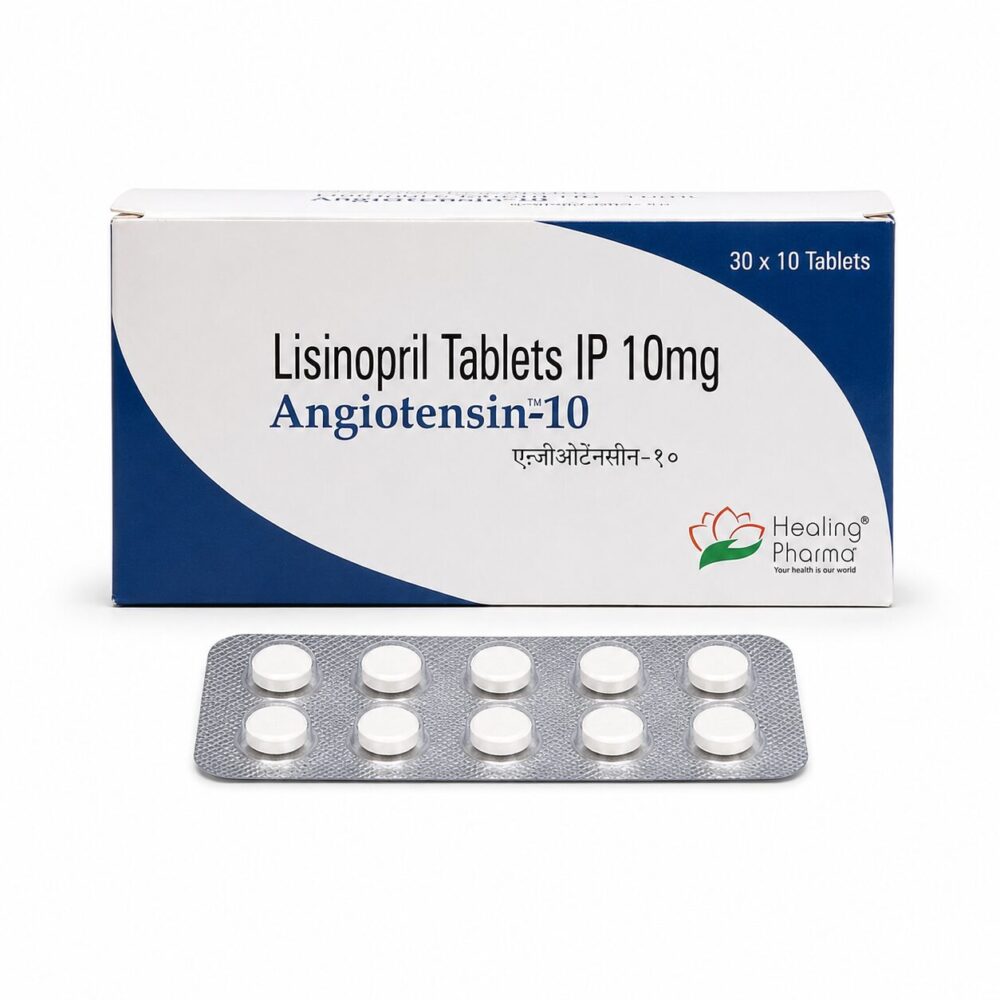
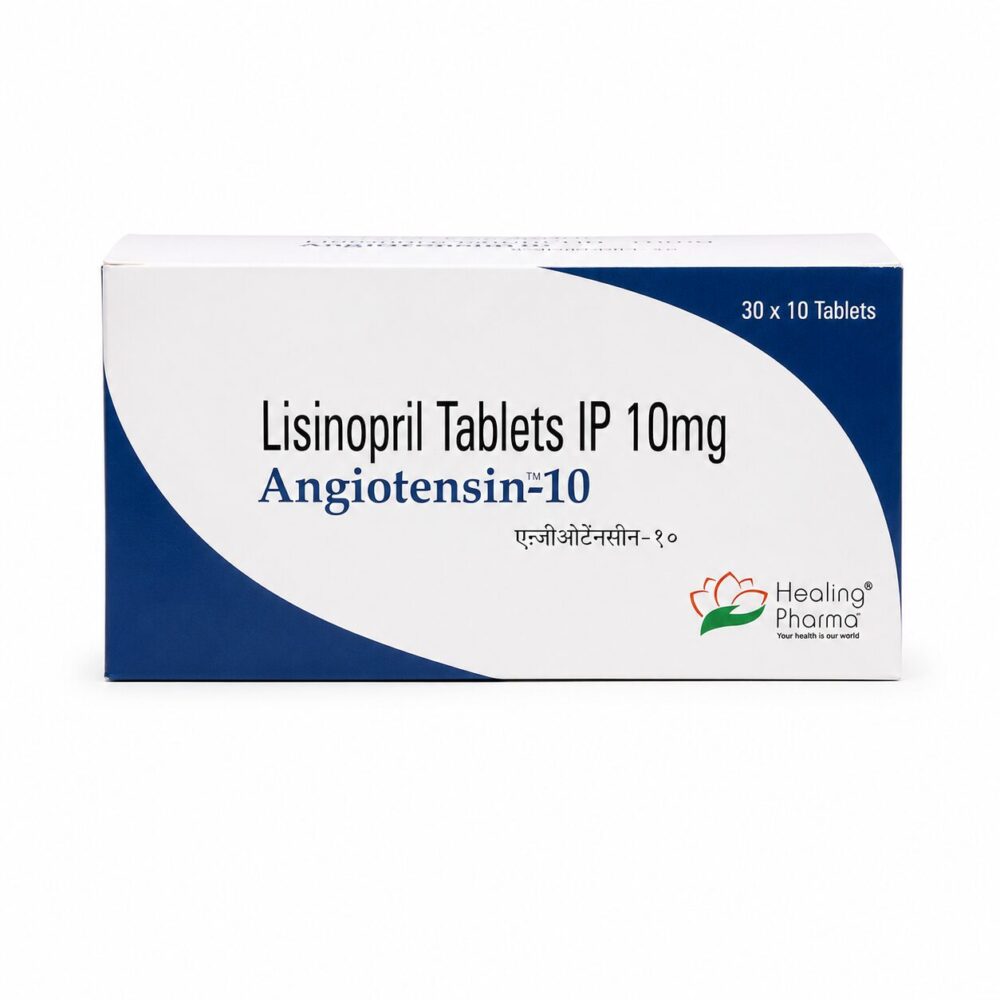
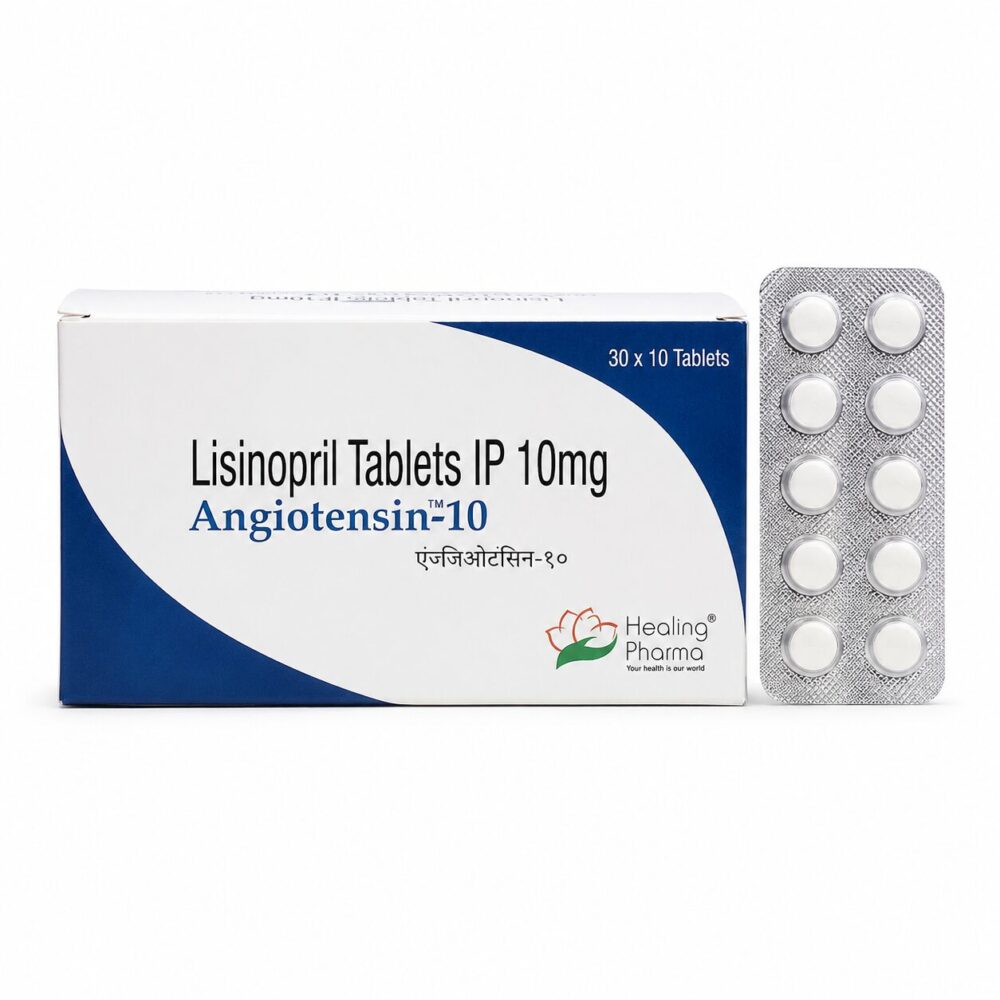
Angiotensin 10 mg (Lisinopril)
| Active Ingredients | Lisinopril |
| Strength | 10 mg |
| Dosage Form | Tablets |
| Therapeutic Category | High Blood pressure |
| Manufacturer | Healing Pharma India Pvt Ltd. |
| Packaging | 10 tablet in 1 strip |
| Storage Conditions | Cool and dry place |
| Packaging Type | Plain and discreet |
| Pack Size | Price/Unit | Price | Quantity | |
|---|---|---|---|---|
| 90 Tablet/s | $1.00 | $90.00 | ||
| 120 Tablet/s | $0.95 | $115.00 | ||
| 220 Tablet/s | $0.86 | $190.00 | ||
| 350 Tablet/s | $0.82 | $290.00 |
Price range: $90.00 through $290.00
What is Angiotensin 10 mg?
Angiotensin 10 mg is a prescription tablet used for managing hypertension and supporting cardiovascular health. It may also recommend it after heart-related complications or in cases where lowering Blood Pressure can reduce future risks linked with stroke or heart failure.
Lisinopril, the active ingredient present in Angiotensin 10 mg, belongs to the ACE inhibitor category. Blood vessels naturally tighten due to certain chemicals inside the body. ACE inhibitors reduce that tightening effect, allowing smoother blood circulation and less pressure inside the arteries.
Long-term uncontrolled blood pressure may increase stress on vital organs. Consistent treatment with Angiotensin 10 mg supports healthier circulation and lowers pressure on the heart during daily activity.
Some treatment plans also include this medicine alongside other blood pressure medications depending on medical history and blood pressure readings.
Uses of Angiotensin 10 mg
It prescribe Angiotensin 10 mg for different cardiovascular and blood pressure-related conditions. Treatment goals vary from person to person depending on age, health condition, and risk level.
Common medical uses include:
- High blood pressure management
- Supportive care in heart failure
- Lowering the risk of stroke
- Reducing cardiovascular strain
- Kidney protection in diabetic patients
- Blood pressure support after heart attack
Stable blood pressure levels support healthier blood circulation throughout the body. Better circulation may also reduce pressure on arteries and lower long-term cardiovascular risks linked with hypertension.
How Angiotensin 10 mg Helps the Body
Angiotensin 10 mg blocks the formation of chemicals that tighten blood vessels. Relaxed blood vessels allow blood to move more freely, reducing resistance inside the arteries. Lower resistance helps the heart pump blood with less effort.
Improved blood flow supports oxygen delivery throughout the body and reduces excess workload on the cardiovascular system. Many hypertension treatment plans include ACE inhibitors because they provide steady blood pressure support over long durations.
Some people notice improved blood pressure readings within the first few weeks of treatment, while full cardiovascular benefits may become more noticeable with regular long-term use.
Benefits of Angiotensin 10 mg
Blood Pressure Support
Healthy blood pressure levels reduce pressure on arteries, blood vessels, and the heart. Regular treatment helps maintain more stable readings throughout the day.
Cardiovascular Protection
Reduced strain on the heart may lower future risks linked with severe cardiovascular complications. Many long-term hypertension plans focus on maintaining steady blood circulation to support heart health.
Kidney Support
Diabetic patients sometimes receive ACE inhibitors because healthy blood pressure levels may support kidney function and reduce pressure on kidney blood vessels.
Once-Daily Convenience
Simple dosing schedules improve treatment consistency. Many people prefer medicines that fit easily into daily routines without multiple doses.
Long-Term Wellness Support
Controlled hypertension supports healthier circulation and reduces silent damage caused by untreated high blood pressure over time.
How to Take Angiotensin 10 mg
Angiotensin 10 mg is taken orally with water. Many people take the tablet at the same time every day to maintain consistent blood levels.
Helpful usage guidelines include:
- Swallow the tablet whole
- Take with or without food
- Maintain the same dosing schedule daily
- Avoid skipping doses
- Continue treatment regularly unless dosing changes are advised
Lifestyle improvements such as reducing excess salt intake, maintaining healthy body weight, staying physically active, and lowering stress levels may support better blood pressure control during treatment.
Dosage Information
The correct dosage depends on blood pressure readings, age, medical history, kidney function, and other medications being used. Some people begin with lower strengths before moving to stronger doses if required.
Available strengths may include:
Angiotensin 2.5 mg
Angiotensin 5 mg
Angiotensin 10 mg
Angiotensin 20 mg
Dose adjustments may happen gradually depending on treatment response and blood pressure control.
Possible Side Effects of Angiotensin 10 mg
Common Side Effects
Some users may experience mild side effects during the early stage of treatment while the body adjusts to the medicine.
Commonly reported effects include:
- Headache
- Dry cough
- Dizziness
- Weakness
- Fatigue
- Nausea
- Low blood pressure
- Increased potassium levels
Mild symptoms often improve with continued use. Persistent discomfort or worsening reactions may require medical review.
Serious Reactions
Rare complications may include swelling of the face, breathing difficulty, severe dizziness, or fainting. Such reactions require urgent medical care.
Precautions Before Using Angiotensin 10 mg
Kidney Problems
Existing kidney disease may affect how the medicine is processed inside the body. Blood pressure and kidney function monitoring may be required during treatment.
Liver Conditions
Liver-related disorders may influence medicine tolerance in some individuals. Dose modifications can sometimes become necessary.
Pregnancy and Breastfeeding
Pregnancy exposure may harm the unborn baby. Breastfeeding safety concerns also exist because small amounts of medicine may pass into breast milk.
Low Blood Pressure
People already experiencing low blood pressure, dehydration, or severe fluid loss may develop stronger dizziness or weakness after starting treatment.
Driving and Alcohol
Alcohol may increase dizziness and lightheadedness. Some users also experience reduced alertness during the early treatment phase.
Drug Interactions
Medicines That May Interact
Certain medicines may alter blood pressure levels or increase side effect risks when combined with Angiotensin 10 mg.
Potential interactions include:
- Diuretics
- Potassium supplements
- NSAID pain relievers
- Other blood pressure medicines
- Lithium
- Diabetes medications
Sharing current medicine details before starting treatment helps reduce unwanted interactions and dosing complications.
Frequently Asked Questions (FAQs)
Angiotensin 10 mg is mainly prescribed for high blood pressure. Some treatment plans also include it for heart failure support, stroke risk reduction, and cardiovascular protection.
Blood pressure improvement may begin within the first few days, though steady long-term control often develops over several weeks of regular use.
Food does not usually affect absorption. Many people take the tablet with or without meals depending on personal routine.
Dry cough has been reported in some users because ACE inhibitors can affect airway sensitivity in certain individuals.
It sometimes prescribe ACE inhibitors for diabetic patients because controlled blood pressure may support kidney protection and cardiovascular health.
Missed doses should usually be taken when remembered unless the next dose timing is very close. Double dosing is generally avoided.
Many hypertension treatment plans involve long-term use because steady blood pressure control supports heart and blood vessel health over time.
| Pack Size | 120 Tablet/s, 220 Tablet/s, 350 Tablet/s, 90 Tablet/s |
|---|---|
| Price/Unit | $0.82, $0.86, $0.95, $1.00 |
Related products
- + wishlist+ compare
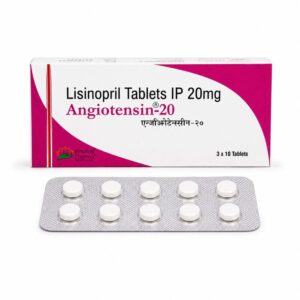
Angiotensin 20 mg (Lisinopril)
Price range: $110.00 through $320.00Select options
There are no reviews yet.