
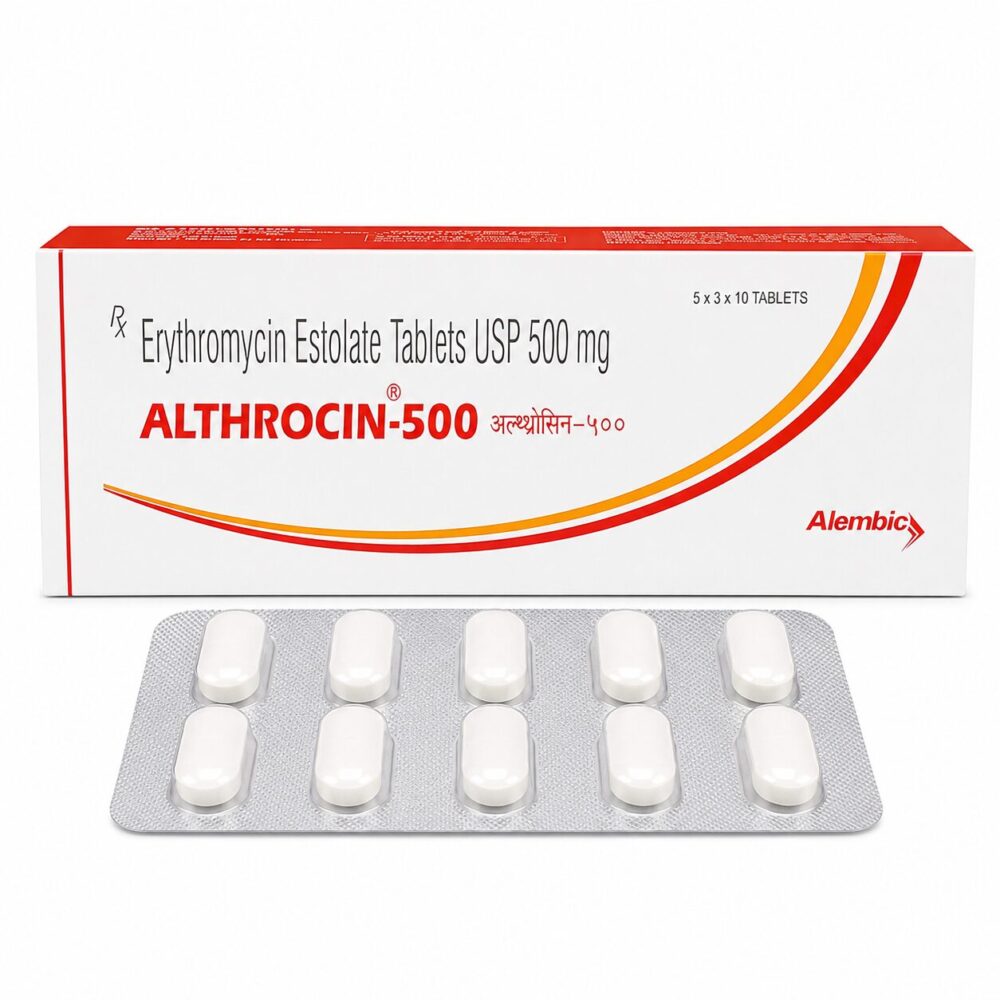
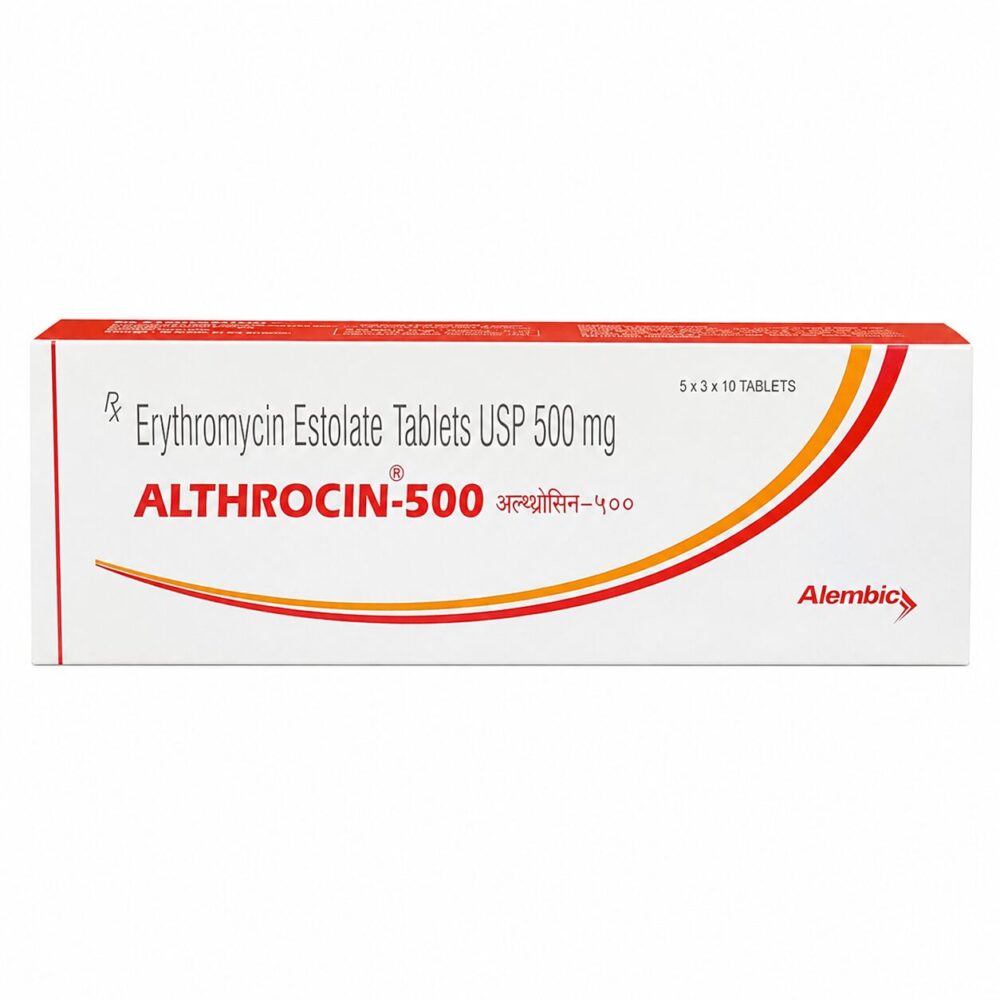
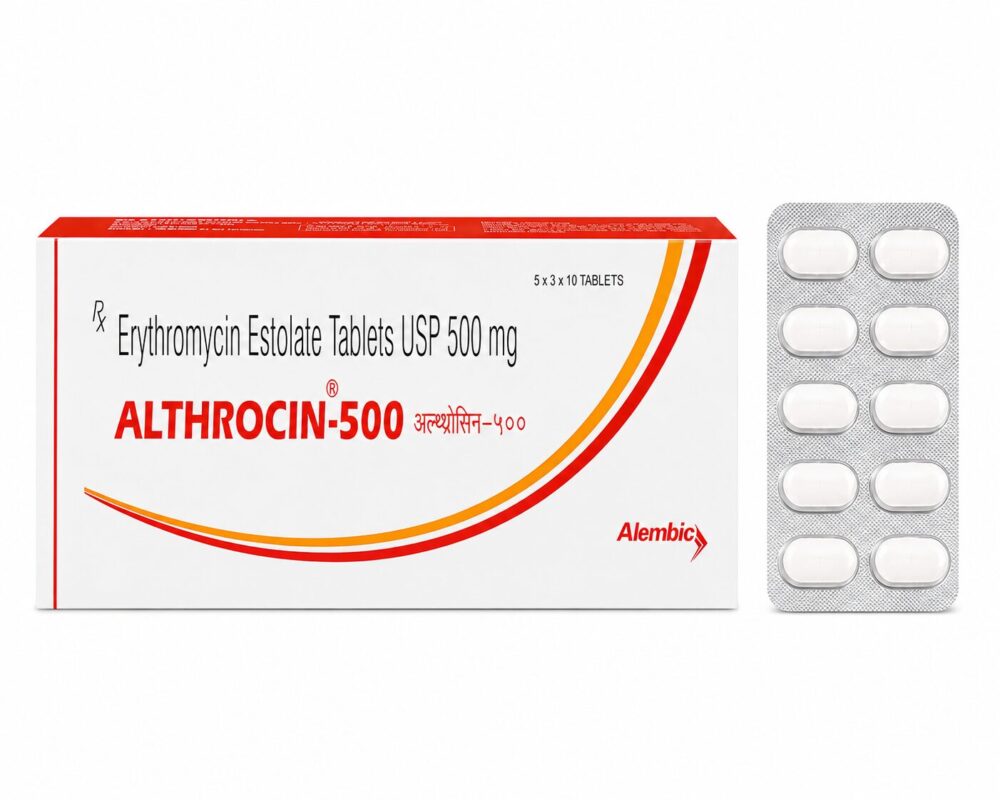
Althrocin 500 mg (Erythromycin Tablets)
| Active Ingredients | Erythromycin |
| Strength | Erythromycin (500mg) |
| Dosage Form | Tablets |
| Therapeutic Category | Bacterial infections |
| Manufacturer | Alembic Pharmaceuticals Ltd |
| Packaging | 10 tablets in 1 strip |
| Storage Conditions | Cool and dry place |
| Packaging Type | Plain and discreet |
| Pack Size | Price/Unit | Price | Quantity | |
|---|---|---|---|---|
| 100 Tablet/s | $0.70 | $70.00 | ||
| 200 Tablet/s | $0.60 | $120.00 | ||
| 300 Tablet/s | $0.56 | $170.00 | ||
| 500 Tablet/s | $0.46 | $230.00 |
$70.00 – $230.00Price range: $70.00 through $230.00
What Is Althrocin 500 mg?
Althrocin 500 mg is an Antibiotic Tablet with Erythromycin as the active salt. It belongs to the macrolide group of antibiotics. Doctors choose this medicine for certain bacterial infections where erythromycin fits the infection type and the person’s health needs.
Althrocin 500 mg does not treat viral illnesses such as cold or flu. Taking antibiotics when not needed can make future infections harder to treat. A full course is usually needed, even when the body starts feeling better early.
Uses of Althrocin 500 mg
Althrocin 500 mg is used for bacterial infections in different parts of the body. The exact use depends on the infection, test results when available, and medical history.
- Throat infection
- Tonsillitis
- Pharyngitis
- Sinus infection
- Ear infection
- Chest infection
- Pneumonia
- Bronchitis
- Pertussis or whooping cough
- Skin and soft tissue infection
- Impetigo
Certain stomach or intestinal bacterial infections
Althrocin 500 mg may also be used when a person cannot take some other antibiotics. The medicine choice depends on allergy history, liver health, heart rhythm risk, pregnancy status, and other medicines being taken.
How Althrocin 500 mg Acts in the Body
Erythromycin blocks bacteria from making proteins they need to grow. When bacteria cannot grow well, the infection becomes easier for the body to control. This action is useful only for bacterial infections, not viral fever, flu, or common cold.
The response can vary by infection type. Some people feel better within a few days, while deeper infections may need a longer course. Stopping early can allow bacteria to remain in the body.
How to Take Althrocin 500 mg
Althrocin 500 mg is taken by mouth with water. Swallow the tablet whole. Do not crush, chew, or break it unless the prescriber has given that advice.
Some erythromycin tablets are taken before food, while stomach upset can make food intake useful for some users. The exact timing depends on the form supplied and the prescription label. Keep a steady time gap between doses to maintain the medicine level in the body.
Althrocin 500 mg Dosage
The dose of Althrocin 500 mg depends on the infection, age, body weight, kidney or liver condition, and response to treatment. Adults may receive 500 mg at set intervals, but the final dose schedule must come from the prescription.
Missed Dose
Take the missed dose when remembered. If the next dose is close, skip the missed dose and return to the normal schedule. Do not take two doses together to cover the missed one.
Overdose
Too much Althrocin 500 mg can cause vomiting, loose stools, stomach pain, hearing changes, or abnormal heartbeat. Emergency care or poison control help is needed if overdose is suspected.
Side Effects of Althrocin 500 mg
Many people tolerate Althrocin 500 mg, but side effects can happen. Stomach-related effects are among the most reported with erythromycin.
Common Side Effects
- Nausea
- Vomiting
- Diarrhea
- Stomach pain
- Loss of appetite
- Mild cramps
- Serious Side Effects
- Skin rash, itching, swelling, or breathing trouble
- Yellow eyes or skin
- Dark urine
- Severe watery or bloody diarrhea
- Severe stomach or back pain
- Hearing changes
- Fast, slow, or uneven heartbeat
- Seizures
Any strong allergic sign, severe diarrhea, chest discomfort, fainting, or heartbeat change needs urgent medical care.
Precautions Before Taking Althrocin 500 mg
Share allergy history before using Althrocin 500 mg, especially allergy to erythromycin, azithromycin, clarithromycin, or other macrolide antibiotics. Heart rhythm problems, Long QT history, low potassium, low magnesium, liver disease, and myasthenia gravis need extra care.
Pregnancy and breastfeeding need a risk-benefit check by the treating doctor. Older adults can be more sensitive to heartbeat and hearing-related side effects. Alcohol is not a direct match for every risk, but heavy drinking can burden the liver during antibiotic use.
Drug Interactions With Althrocin 500 mg
Erythromycin can interact with several medicines. Some combinations can raise side effect risk or affect heart rhythm.
- Cisapride
- Pimozide
- Ergotamine
- Dihydroergotamine
- Warfarin
- Statins such as simvastatin or lovastatin
- Carbamazepine
- Digoxin
- Theophylline
- Alprazolam
- Sildenafil or similar medicines
- Some antifungal medicines
- Some heart rhythm medicines
- Calcium channel blockers
- Methotrexate
Keep a written list of prescription drugs, OTC tablets, vitamins, and herbal products. Share it with the prescriber and pharmacist before starting Althrocin 500 mg.
When Not to Take Althrocin 500 mg
Avoid Althrocin 500 mg if there is a known allergy to erythromycin or similar macrolide antibiotics. It may also be unsuitable with certain heart rhythm problems, very low potassium or magnesium, serious liver concerns, or medicines that strongly interact with erythromycin.
Do not share antibiotic tablets with another person. Similar symptoms do not always mean the same infection or the same treatment.
Frequently Asked Question (FAQs)
Althrocin 500 mg is used for bacterial infections such as throat infection, tonsillitis, pneumonia, bronchitis, skin infection, ear infection, sinus infection, and some genital or urinary bacterial infections.
Yes. Althrocin 500 mg contains Erythromycin, a macrolide antibiotic.
Only bacterial chest or throat infections may need this medicine. Viral cold, flu, or simple cough does not need antibiotics.
Take it when remembered. Skip it if the next dose is near. Do not double the dose.
Yes. It can interact with heart medicines, blood thinners, statins, antifungals, seizure medicines, and some migraine medicines.
| Pack Size | 100 Tablet/s, 200 Tablet/s, 300 Tablet/s, 500 Tablet/s |
|---|---|
| Price/Unit | $0.46, $0.56, $0.60, $0.70 |
Related products
- + wishlist+ compare
Amoxyclav 1000 Tablet (Amoxicillin/Clavulanic Acid)
$225.00 – $620.00Price range: $225.00 through $620.00Select options - + wishlist+ compare
Ampoxin 500 mg (Ampicillin/Cloxacillin)
$80.00 – $220.00Price range: $80.00 through $220.00Select options - + wishlist+ compare
Azee DT 100 mg (Azithromycin)
$50.00 – $155.00Price range: $50.00 through $155.00Select options - + wishlist+ compare
Ciplox 750 mg (Ciprofloxacin)
$70.00 – $230.00Price range: $70.00 through $230.00Select options - + wishlist+ compare
Doxenorm-LBX 100 mg (Doxycycline)
$80.00 – $220.00Price range: $80.00 through $220.00Select options


There are no reviews yet.