

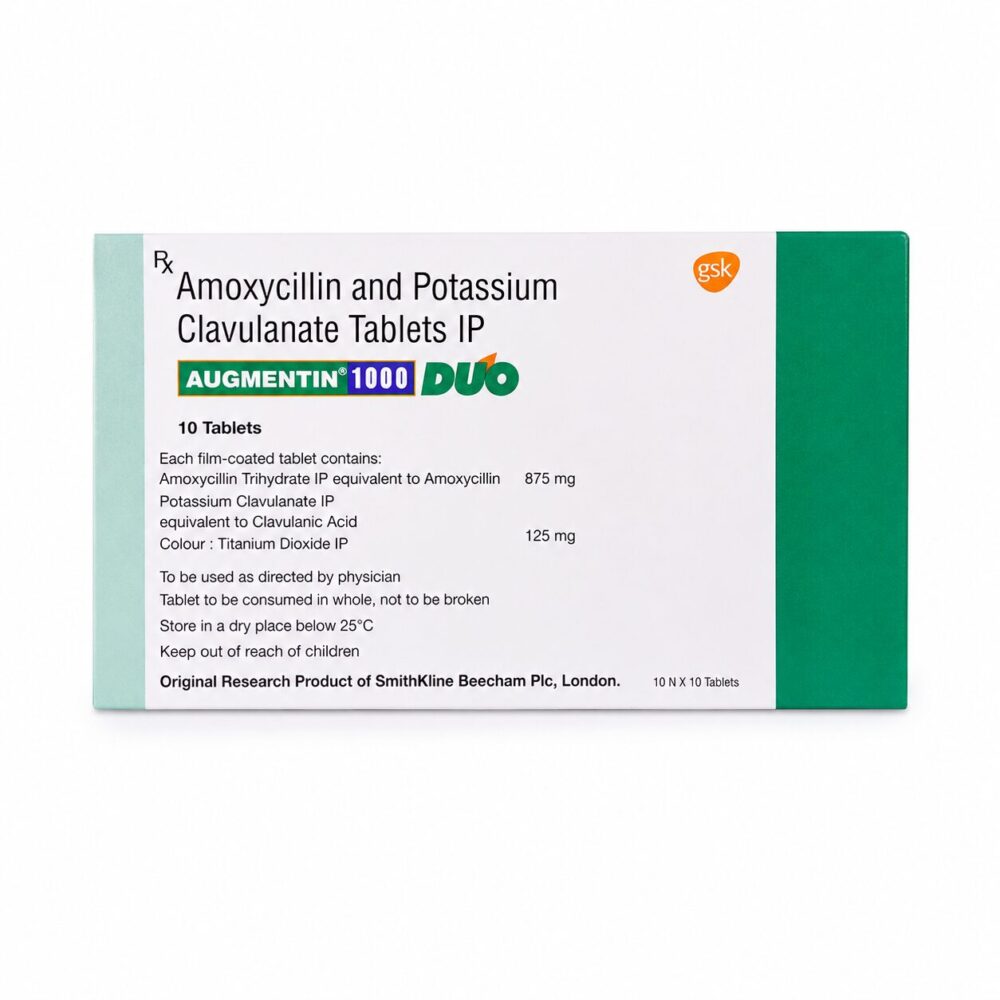
Augmentin 1000mg Duo ( Amoxycillin + Clavulanic Acid )
| Active Ingredients | Amoxicillin/Clavulanic Acid |
| Strength | Amoxicillin (875mg) + Potassium Clavulanate (125mg) |
| Dosage Form | Tablets |
| Therapeutic Category | Bacterial infections |
| Manufacturer | Glaxo SmithKline Pharmaceuticals Ltd |
| Packaging | 10 tablets in 1 strip |
| Storage Conditions | Cool and dry place |
| Packaging Type | Plain and discreet |
| Pack Size | Price/Unit | Price | Quantity | |
|---|---|---|---|---|
| 90 Tablet/s | $2.50 | $225.00 | ||
| 120 Tablet/s | $2.41 | $290.00 | ||
| 210 Tablet/s | $2.28 | $480.00 | ||
| 300 Tablet/s | 2.06 | $620.00 |
Price range: $225.00 through $620.00
What Is Augmentin 1000 mg?
Augmentin 1000 mg is a combination Antibiotic made with Amoxicillin and Clavulanic Acid. Amoxicillin fights bacteria, while Clavulanic Acid protects Amoxicillin from bacterial enzymes that can make some infections harder to treat.
Doctors may choose Augmentin 1000 mg when a stronger Amoxicillin-Clavulanic Acid dose is suitable. It is often used for short-term bacterial infections where the likely bacteria match this medicine. The 1000 mg strength is usually given when a lower strength may not be enough or when the infection needs wider coverage.
Augmentin 1000 mg is a prescription product, so self-use is not safe. Wrong antibiotic use can lead to side effects, poor treatment response, and antibiotic resistance.
Uses of Augmentin 1000 mg
Augmentin 1000 mg may be prescribed for infections caused by bacteria in different body areas.
Common use cases include:
- Sinus infections
- Ear infections
- Tonsil or throat infections caused by bacteria
- Bronchitis flare-ups
- Pneumonia
- Urinary tract infections
- Skin and soft tissue infections
- Wound infections
- Dental infections
- Bite wound infections
Benefits of Augmentin 1000 mg
Augmentin 1000 mg gives two-in-one antibacterial support. Amoxicillin targets bacterial growth, and Clavulanic Acid helps protect it from enzymes produced by some bacteria. This combination is useful when bacteria may not respond well to plain Amoxicillin.
Main benefits include:
- Covers many common bacterial infection types
- Useful for respiratory, urinary, skin, and dental infections
- Combines Amoxicillin with Clavulanic Acid for stronger coverage
- Often taken by mouth, making treatment easier at home
- Available in different strengths for different treatment needs
Treatment works best when the full prescribed course is completed, even when the infection starts feeling better earlier.
How to Take Augmentin 1000 mg
Take Augmentin 1000 mg with food or at the start of a meal. This can reduce stomach upset. Swallow the tablet whole with water. Do not crush, chew, or break it unless the prescriber or pharmacist says it is suitable.
Most courses last a few days to two weeks, depending on the infection. Do not extend the course on your own. If a dose is missed, take it when remembered. If the next dose is close, skip the missed dose. Do not take two doses together.
Augmentin 1000 mg Dosage
The usual adult dose depends on infection severity and medical condition. Many adults are given one tablet every 12 hours, but the exact dose can differ. Kidney problems may need a dose change because Amoxicillin leaves the body mainly through the kidneys.
Missed Dose
Take the missed dose when remembered. Keep a safe gap before the next dose. Do not double the dose.
Overdose
Too much Augmentin may cause stomach pain, vomiting, diarrhea, dizziness, or kidney-related problems. Urgent care is needed if a large extra amount was taken or severe symptoms appear.
Side Effects of Augmentin 1000 mg
Augmentin 1000 mg can cause side effects, though not everyone gets them.
Common Side Effects
- Diarrhea
- Nausea
- Vomiting
- Stomach discomfort
- Skin rash
- Itching
- Vaginal yeast infection
Serious Side Effects
Stop taking the dose and get urgent help if swelling of the face, lips, tongue, breathing trouble, severe rash, peeling skin, yellow eyes, dark urine, or severe watery/bloody diarrhea occurs.
Precautions Before Taking Augmentin 1000 mg
Avoid Augmentin 1000 mg if there is a known allergy to Amoxicillin, Clavulanic Acid, penicillin antibiotics, or cephalosporin antibiotics. A past allergic reaction can be serious.
Extra care is needed in liver disease, kidney disease, mononucleosis, past antibiotic-related diarrhea, asthma, hives, or severe allergies. Pregnant or breastfeeding women need a prescriber s review before use.
Alcohol is not a direct strict ban for every person, but it can worsen nausea, stomach upset, dizziness, and liver stress in some cases.
Drug Interactions
Augmentin 1000 mg may interact with some medicines. Share current medicines, vitamins, and supplements with the prescriber before starting treatment.
Common interaction concerns include:
- Warfarin or other blood thinners
- Allopurinol
- Probenecid
- Methotrexate
- Oral contraceptive pills
- Other antibiotics
Birth control pills may become less reliable for some users during antibiotic treatment. A backup method may be suggested.
Who Should Not Take Augmentin 1000 mg?
Augmentin 1000 mg may not be suitable for people with:
- Penicillin allergy
- Cephalosporin allergy
- Past liver injury linked to Amoxicillin-Clavulanic Acid
- Severe kidney disease without dose adjustment
- Past severe antibiotic-related colitis
- Suspected mononucleosis with rash risk
Frequently Asked Questions (FAQs)
Augmentin 1000 mg is used for bacterial infections such as sinus infection, chest infection, urine infection, skin infection, wound infection, ear infection, and dental infection.
Yes. Augmentin 1000 mg is an antibiotic combination containing Amoxicillin and Clavulanic Acid.
Doctors may prescribe Augmentin 1000 mg for dental infections when bacteria are suspected. Dental treatment may still be needed if there is an abscess or damaged tooth.
Taking it with food is usually better because it lowers the chance of nausea, vomiting, and stomach upset.
Some people feel better within a few days, but the full course still needs to be completed as prescribed.
No. Augmentin 1000 mg does not treat viral fever, cold, or flu.
| Pack Size | 120 Tablet/s, 210 Tablet/s, 300 Tablet/s, 90 Tablet/s |
|---|---|
| Price/Unit | $2.28, $2.41, $2.50, 2.06 |
Related products
- + wishlist+ compare
Augmentin 625mg Duo ( Amoxycillin + Clavulanic Acid )
Price range: $120.00 through $300.00Select options - + wishlist+ compare
Azipro 250 mg Tablet (Azithromycin)
Price range: $50.00 through $155.00Select options - + wishlist+ compare
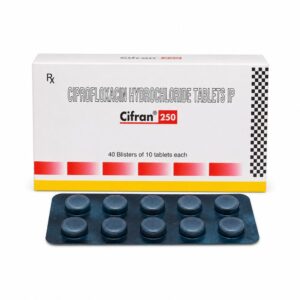
Cifran 250 mg Tablet (Ciprofloxacin)
Price range: $50.00 through $190.00Select options - + wishlist+ compare
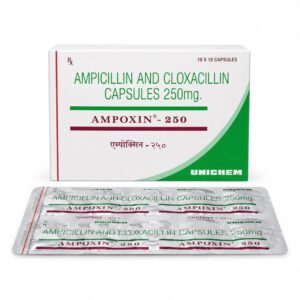
Ampoxin 250 mg (Ampicillin/Cloxacillin)
Price range: $60.00 through $190.00Select options
There are no reviews yet.