
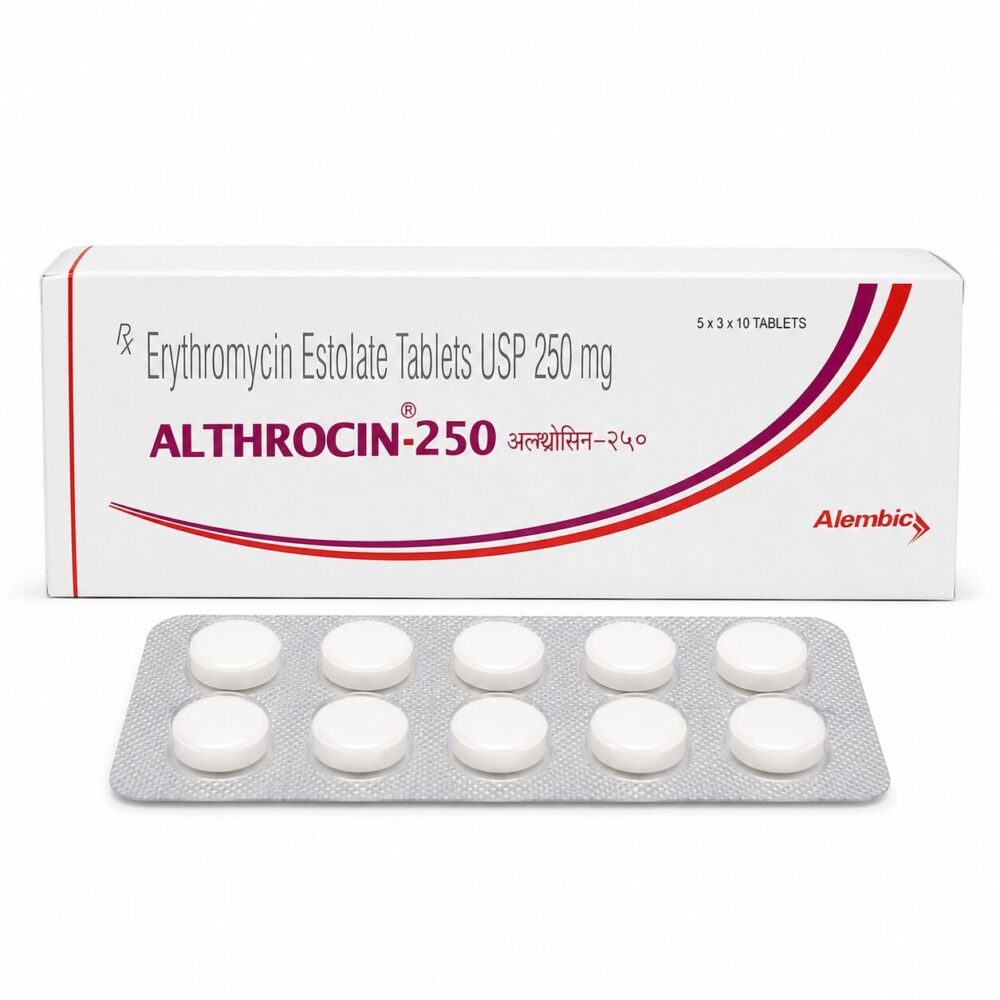
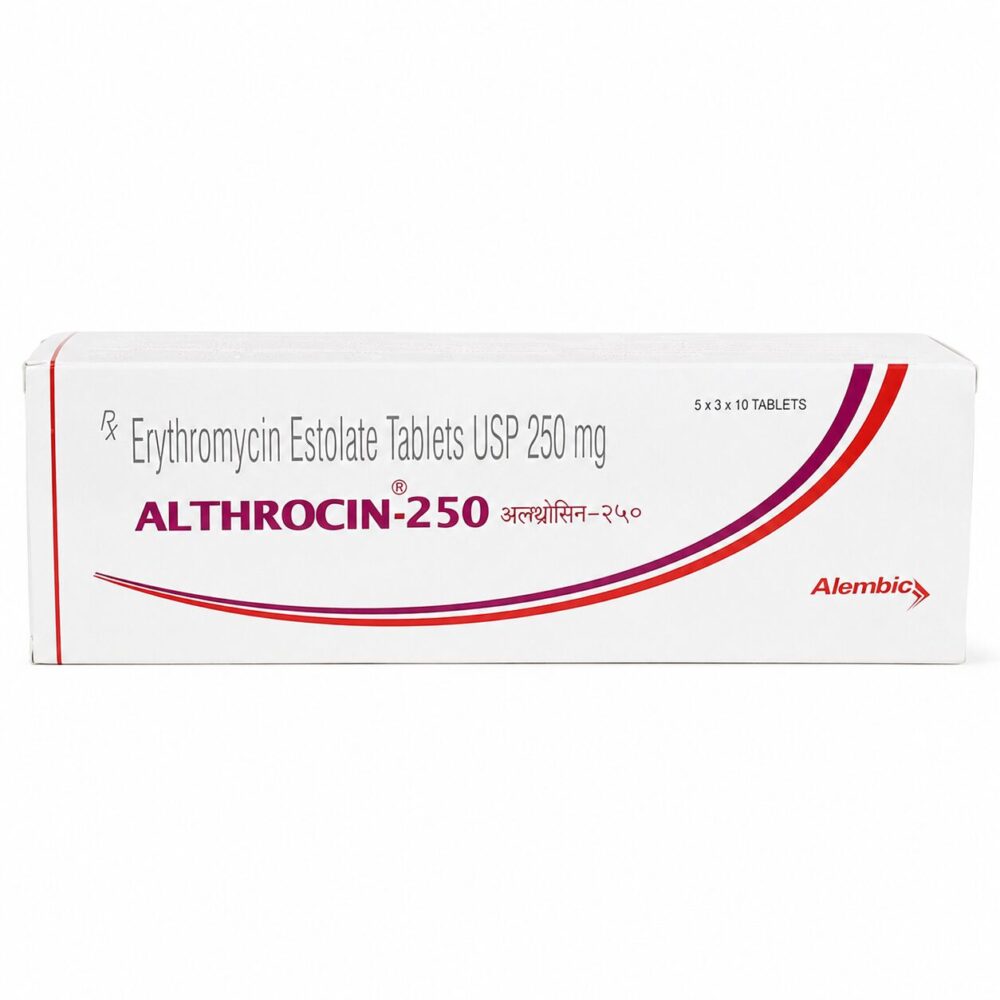
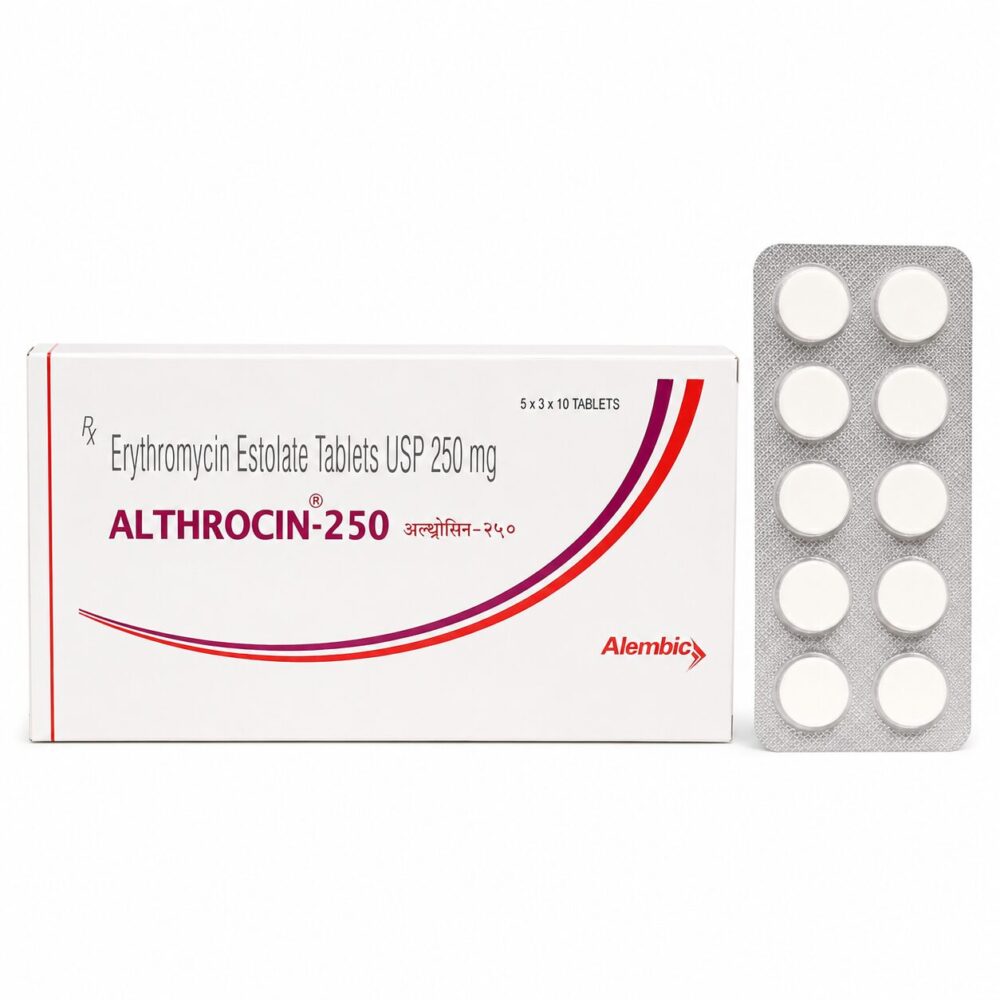
Althrocin 250 mg (Erythromycin Tablets)
| Active Ingredients | Erythromycin |
| Strength | Erythromycin (250mg) |
| Dosage Form | Tablets |
| Therapeutic Category | Bacterial infections |
| Manufacturer | Alembic Pharmaceuticals Ltd |
| Packaging | 10 tablets in 1 strip |
| Storage Conditions | Cool and dry place |
| Packaging Type | Plain and discreet |
| Pack Size | Price/Unit | Price | Quantity | |
|---|---|---|---|---|
| 100 Tablet/s | $0.50 | $50.00 | ||
| 200 Tablet/s | $0.45 | $90.00 | ||
| 300 Tablet/s | $0.43 | $130.00 | ||
| 500 Tablet/s | $0.38 | $190.00 |
$50.00 – $190.00Price range: $50.00 through $190.00
What Is Althrocin 250 mg?
Althrocin 250 mg contains Erythromycin, an Antibiotic used when bacteria are causing an infection. The 250 mg strength is often chosen for mild to moderate infections, depending on age, body weight, infection type, and medical history.
Erythromycin acts on bacteria by blocking protein formation inside bacterial cells. Without these proteins, bacteria cannot grow in the same way. Viral illnesses like cold, flu, or most sore throats do not respond to Althrocin unless a bacterial infection is confirmed or strongly suspected.
Uses of Althrocin 250 mg
Althrocin 250 mg may be used for infections caused by bacteria sensitive to Erythromycin. The exact use depends on the infection site and the doctor’s judgment.
Common uses include:
- Throat infection and pharyngitis
- Tonsillitis
- Ear, nose, and sinus infection
- Chest infection, bronchitis, and pneumonia
- Whooping cough
- Skin and soft tissue infection
- Impetigo
- Acne-related bacterial infection
- Certain urogenital infections
- Some sexually transmitted bacterial infections where suitable
Althrocin 250 mg is not meant for self-treatment. Wrong use of antibiotics can make future infections harder to treat.
How Althrocin 250 mg Helps Control Infection
Erythromycin in Althrocin 250 mg attaches to bacterial ribosomes, which are small parts inside bacteria needed for protein production. Once protein production slows down, bacteria lose their ability to grow and spread.
The benefit depends on using the medicine for the right infection and completing the course given by the prescriber. Stopping early may allow bacteria to return.
How to Take Althrocin 250 mg
Swallow Althrocin 250 mg with water. Some people take it on an empty stomach, while others may need food if stomach upset occurs. Do not crush or chew the tablet unless the label or pharmacist says so.
Take each dose at evenly spaced times. A steady routine helps keep the antibiotic level stable in the body. Alcohol, antacids, and other medicines may affect comfort or response, so ask a pharmacist before mixing products.
Dosage Information
The dose of Althrocin 250 mg depends on infection type, age, weight, and health condition. Erythromycin is available in different strengths, including 250 mg and 500 mg, so the chosen strength may vary from person to person.
Missed Dose
Take the missed dose when remembered. If the next dose is close, skip the missed one and continue the normal schedule. Two doses together can raise the chance of side effects like stomach pain, nausea, or loose stools.
Overdose
Too much Erythromycin may cause vomiting, diarrhea, stomach cramps, hearing changes, dizziness, or irregular heartbeat. Poison control or emergency care is needed if a large amount has been taken or serious symptoms appear.
Side Effects of Althrocin 250 mg
Many users tolerate Althrocin 250 mg, but side effects can happen. Stomach-related effects are more common with Erythromycin than with some other antibiotics.
Common Side Effects
- Nausea
- Vomiting
- Diarrhea
- Stomach pain
- Loss of appetite
- Gas or cramps
- Mild skin rash
- Serious Side Effects
- Yellow eyes or skin
- Dark urine
- Severe stomach or back pain
- Watery or bloody diarrhea
- Fast, slow, or uneven heartbeat
- Trouble breathing
- Face, lip, tongue, or throat swelling
- Hearing problems
- Seizures
Get urgent care if breathing trouble, swelling, severe allergy, fainting, or serious heartbeat changes occur.
Warnings and Precautions
Althrocin 250 mg needs care in people with liver problems, heart rhythm issues, low potassium, low magnesium, myasthenia gravis, or a past allergy to macrolide antibiotics.
Before Taking Althrocin 250 mg
Tell the doctor or pharmacist about:
- Liver disease
- Kidney problems
- Heart rhythm disorder
- Long QT syndrome
- Low potassium or magnesium
- Myasthenia gravis
- Cisapride
- Pimozide
- Ergotamine
- Dihydroergotamine
- Carbamazepine
- Warfarin
- Digoxin
- Theophylline
- Statins such as simvastatin or lovastatin
- Some antifungals
- Some heart rhythm medicines
- Certain calcium channel blockers
- Methotrexate
- Alprazolam
- Domperidone
- Useful for many respiratory and throat infections
- Can treat selected skin and soft tissue infections
- Available in tablet form
- Known macrolide antibiotic option
Older adults may have a higher chance of rhythm-related side effects, especially when taking other medicines that affect the heart.
Pregnancy and Breastfeeding
Pregnant or breastfeeding women need direct medical guidance before using Althrocin 250 mg. Erythromycin may be used in selected cases, but the decision depends on infection type, risk, and safer choices available.
Drug Interactions With Althrocin 250 mg
Erythromycin can interact with many medicines because it affects how the body handles certain drugs. Some combinations may raise side effects or change the action of the other medicine.
Possible interacting medicines include:
When Not to Take Althrocin 250 mg
Avoid Althrocin 250 mg if there is a known allergy to Erythromycin or similar antibiotics. A past reaction with rash, swelling, breathing trouble, or severe skin peeling needs careful review before any repeat use.
Do not combine it with medicines known to cause dangerous rhythm problems unless a doctor specifically manages the risk. Heart disease, severe liver disease, and abnormal ECG history also need extra caution.
Benefits of Althrocin 250 mg
Althrocin 250 mg offers a useful option for bacterial infections where Erythromycin is suitable. It is often considered when penicillin-type antibiotics are not preferred or not tolerated.
Key benefits include:
Frequently Asked Questions(FAQs)
Yes, Althrocin 250 mg may be used for bacterial throat infections when Erythromycin is suitable. A sore throat caused by a virus will not respond to antibiotics.
Erythromycin may be used for some acne-related bacterial skin problems. The dose and duration depend on skin condition and other acne medicines being used.
Paracetamol is usually taken with many antibiotics, including Erythromycin, but personal health conditions and other medicines can change safety.
Many people can take ibuprofen with Erythromycin, but stomach irritation, kidney issues, asthma, ulcers, or blood thinner use may make ibuprofen unsuitable.
Erythromycin is not a first-choice antibiotic for many urinary tract infections. Lab testing and doctor guidance help choose the right antibiotic.
Stopping early can allow bacteria to remain. Finish the course unless the doctor changes the plan due to side effects or test results.
Driving is usually not affected, but avoid driving if dizziness, weakness, vision changes, or unusual symptoms appear.
| Pack Size | 100 Tablet/s, 200 Tablet/s, 300 Tablet/s, 500 Tablet/s |
|---|---|
| Price/Unit | $0.38, $0.43, $0.45, $0.50 |
Related products
- + wishlist+ compare
Cifran 250 mg Tablet (Ciprofloxacin)
$50.00 – $190.00Price range: $50.00 through $190.00Select options - + wishlist+ compare
Augmentin 375mg ( Amoxycillin + Clavulanic Acid )
$120.00 – $300.00Price range: $120.00 through $300.00Select options - + wishlist+ compare
Azee 250 mg (Azithromycin)
$90.00 – $280.00Price range: $90.00 through $280.00Select options - + wishlist+ compare
Ciplox 750 mg (Ciprofloxacin)
$70.00 – $230.00Price range: $70.00 through $230.00Select options - + wishlist+ compare
Cifran 500mg Tablet (Ciprofloxacin)
$60.00 – $225.00Price range: $60.00 through $225.00Select options


There are no reviews yet.