

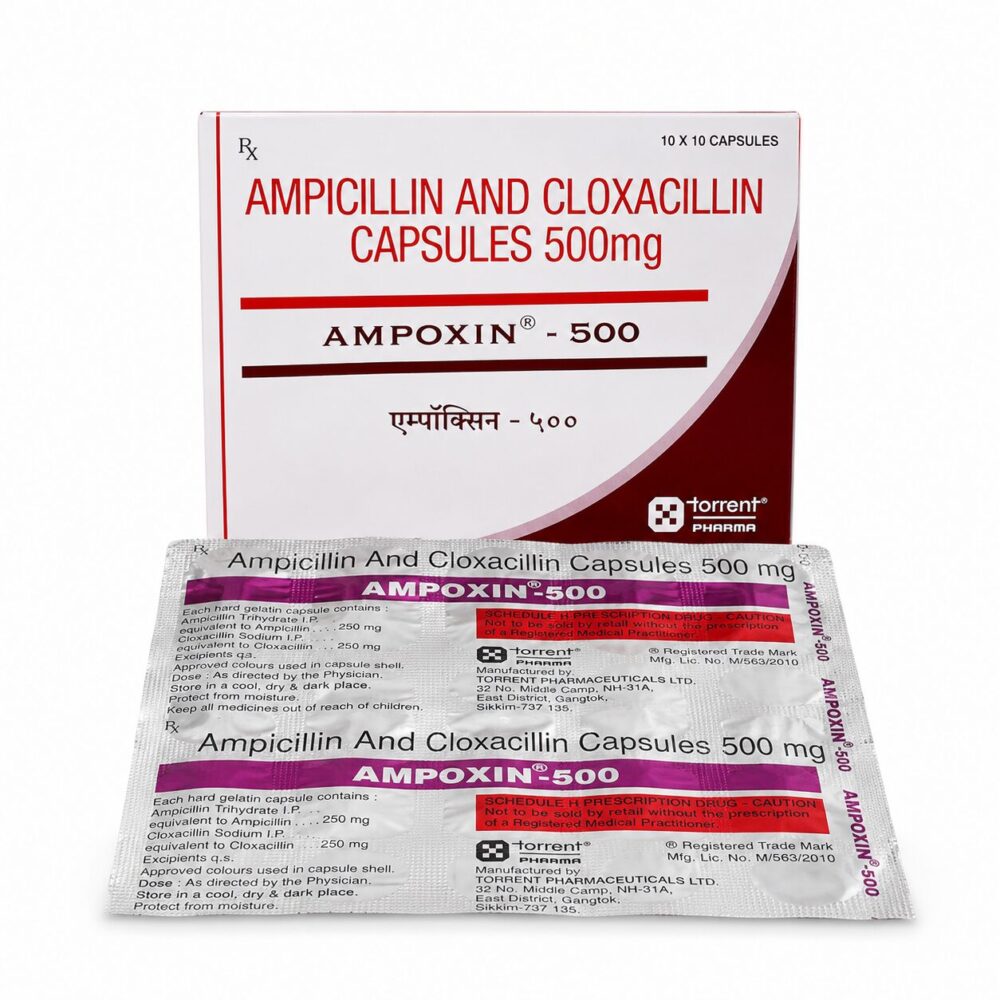
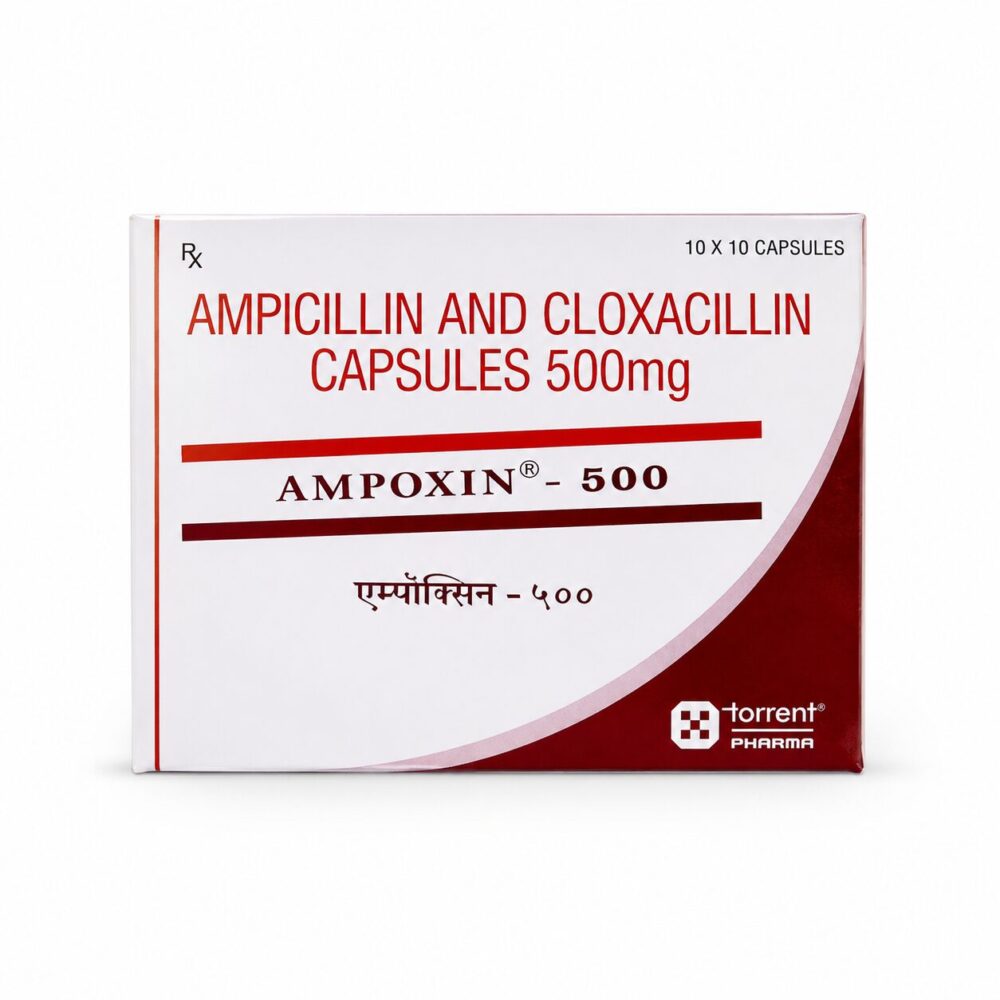
Ampoxin 500 mg (Ampicillin/Cloxacillin)
| Active Ingredients | Ampicillin/Cloxacillin |
| Strength | Ampicillin (250mg) + Cloxacillin (250mg) |
| Dosage Form | Capsule |
| Therapeutic Category | Bacterial infections |
| Manufacturer | Torrent Pharmaceuticals Ltd |
| Packaging | 10 Capsule in 1 strip |
| Storage Conditions | Cool and dry place |
| Packaging Type | Plain and discreet |
| Pack Size | Price/Unit | Price | Quantity | |
|---|---|---|---|---|
| 90 Capsule/s | $0.88 | $80.00 | ||
| 120 Capsule/s | $0.83 | $100.00 | ||
| 210 Capsule/s | $0.76 | $160.00 | ||
| 300 Capsule/s | $0.73 | $220.00 |
Price range: $80.00 through $220.00
What Is Ampoxin 500 mg?
Ampoxin 500 mg is a combination Antibiotic made with Ampicillin and Cloxacillin. Ampicillin covers many bacteria that can cause infections in different body areas, while Cloxacillin is often used where certain resistant bacteria may be involved. Together, they give wider bacterial coverage than a single ingredient in selected cases.
Ampoxin 500 mg is used only when a bacterial infection is suspected or confirmed. Taking antibiotics without need can make future infections harder to treat. A doctor decides the dose, timing, and treatment length after checking the infection type, age, weight, allergy history, and other medicines being used.
Composition of Ampoxin 500 mg
Each Ampoxin 500 mg capsule usually contains Ampicillin 250 mg and Cloxacillin 250 mg. Both ingredients belong to the penicillin antibiotic group. The combination is selected for bacterial infections where both ingredients may support the treatment plan.
Ampicillin
Ampicillin is a penicillin-type antibiotic used for several bacterial infections. It is often linked with infections of the respiratory tract, urinary tract, gastrointestinal tract, ear, throat, and some deeper infections when the bacteria are sensitive to it.
Cloxacillin
Cloxacillin is also a penicillin-type antibiotic. It is mainly known for use against certain bacteria that can affect the skin, soft tissues, bones, joints, lungs, and other body areas. Its role in the combination is to support coverage where Ampicillin alone may not be enough.
Uses of Ampoxin 500 mg
Ampoxin 500 mg may be prescribed for bacterial infections such as:
- Respiratory tract infections
- Throat and tonsil infections
- Skin and soft tissue infections
- Urinary tract infections
- Gastrointestinal bacterial infections
- Ear infections
- Bone and joint infections
- Blood-related bacterial infections
- Certain wound infections
The exact use depends on the bacteria causing the illness. Fever, swelling, pain, pus, burning urine, cough with infection signs, or stomach infection symptoms may need testing before the right antibiotic is chosen. Ampoxin 500 mg does not treat viral infections, so using it for a common cold or flu is not useful.
How Ampoxin 500 mg Acts in the Body
Ampoxin 500 mg targets bacteria by disturbing their cell wall formation. Bacteria need a strong outer wall to grow and survive. When that wall becomes weak, the bacteria cannot keep multiplying in the same way.
The medicine may take some time to show clear results. Fever, pain, swelling, or discharge may reduce slowly as the infection comes under control. Stopping the course early can allow bacteria to remain in the body, which may bring the infection back.
How to Take Ampoxin 500 mg
Swallow the capsule whole with water. Do not crush, chew, or open it unless your doctor gives a clear reason. Many people take it at fixed times each day to keep a steady amount of medicine in the body.
Food instructions may vary. Some antibiotic capsules are taken before food, while some people tolerate them better after food. Follow the timing written on your prescription label. Keep enough gap between doses and do not double the dose after missing one.
Dosage Recommendations
The dose of Ampoxin 500 mg depends on the infection type, infection severity, age, weight, kidney function, and past allergy history. A short course may be enough for some infections, while deeper infections may need a longer plan.
Never change the number of capsules or stop the course early only because symptoms feel lighter. Antibiotic courses are planned to reduce bacterial load fully. An unfinished course can make the same infection return and may also increase resistance risk.
Missed Dose
Take the missed dose when remembered if there is enough time before the next scheduled dose. Skip the missed one when the next dose is close. Taking two doses together can increase stomach upset and other unwanted effects.
Overdose
Extra capsules will not clear the infection sooner. Too much Ampoxin 500 mg may cause nausea, vomiting, loose stools, stomach pain, confusion, or serious reactions in sensitive people. Contact a doctor or poison helpline if an overdose happens.
Possible Side Effects of Ampoxin 500 mg
Some users may feel mild side effects while taking Ampoxin 500 mg. Many are temporary, but severe allergy signs or serious stomach symptoms need fast care.
Common and serious side effects may include:
- Nausea
- Vomiting
- Loose stools
- Stomach pain
- Skin rash
- Itching
- Mouth sores
- Headache
- Dizziness
- Tiredness
- Vaginal yeast infection
- White patches on tongue
- Watery or bloody diarrhea
- Breathing trouble
- Swelling of face, lips, tongue, or throat
- Unusual bleeding or bruising
- Seizures in rare cases
A rash, swelling, breathing trouble, or bloody diarrhea should not be ignored. Stop taking the capsule only when a doctor tells you or when emergency allergy care is needed.
Precautions and Warnings
Ampoxin 500 mg is not suitable for everyone. A history of allergy to Ampicillin, Cloxacillin, penicillin, cephalosporins, or beta-lactam antibiotics must be shared before use. Allergy signs can range from mild rash to severe breathing problems.
Share details about kidney disease, liver problems, asthma, stomach infection history, long-term diarrhea, glandular fever, or past antibiotic reaction. Pregnant or breastfeeding women need dose guidance from a doctor because small amounts of some antibiotics can pass into breast milk.
Avoid using leftover antibiotics from an old prescription. The same symptoms can come from different bacteria, viruses, or non-infectious causes. Wrong antibiotic use can delay the right treatment.
Drug Interactions
Some medicines may change how Ampoxin 500 mg behaves in the body or may increase side effect risk. Keep a list of all prescription drugs, OTC medicines, vitamins, and herbal products before starting treatment.
Possible interactions may include:
- Methotrexate
- Warfarin
- Anisindione
- Oral typhoid vaccine
- Cholera vaccine
- Tetracycline antibiotics
- Doxycycline
- Gentamicin
- Chloroquine
- Mycophenolate medicines
- Some gut microbiota products
- Oral contraceptive pills in some cases
Any blood thinner, vaccine, immune medicine, or another antibiotic needs extra care. A pharmacist or doctor can check whether timing changes, monitoring, or another medicine is safer.
Alcohol and Ampoxin 500 mg
Alcohol does not directly cancel every antibiotic, but it can make nausea, vomiting, dizziness, and stomach upset worse. Heavy drinking can also slow the body s normal healing process. During infection treatment, keeping alcohol low or avoiding it is usually the safer choice.
Frequently Asked Questions (FAQs)
Yes, Ampoxin 500 mg is an antibiotic capsule. It contains two antibiotic ingredients: Ampicillin 250 mg and Cloxacillin 250 mg.
No, Ampoxin 500 mg does not treat viral fever, flu, or common cold. Antibiotics only work against bacterial infections.
Some symptoms may start improving within a few days, but the full course still needs to be completed. Slow or no improvement needs a doctor review.
Stopping early can leave bacteria behind and may cause the infection to return. Finish the course unless your doctor changes the plan.
Food instructions can vary by prescription. Some users take it before food, while others may take it after food to reduce stomach upset. Follow the label given with your medicine.
Anyone with allergy to Ampicillin, Cloxacillin, penicillin, cephalosporins, or beta-lactam antibiotics should avoid it unless a doctor says otherwise.
Pregnant women should use Ampoxin 500 mg only after a doctor checks the need, dose, and safety.
| Pack Size | 120 Capsule/s, 210 Capsule/s, 300 Capsule/s, 90 Capsule/s |
|---|---|
| Price/Unit | $0.73, $0.76, $0.83, $0.88 |
Related products
- + wishlist+ compare
Azipro 250 mg Tablet (Azithromycin)
Price range: $50.00 through $155.00Select options - + wishlist+ compare
Amoxyclav 1000 Tablet (Amoxicillin/Clavulanic Acid)
Price range: $225.00 through $620.00Select options
There are no reviews yet.