

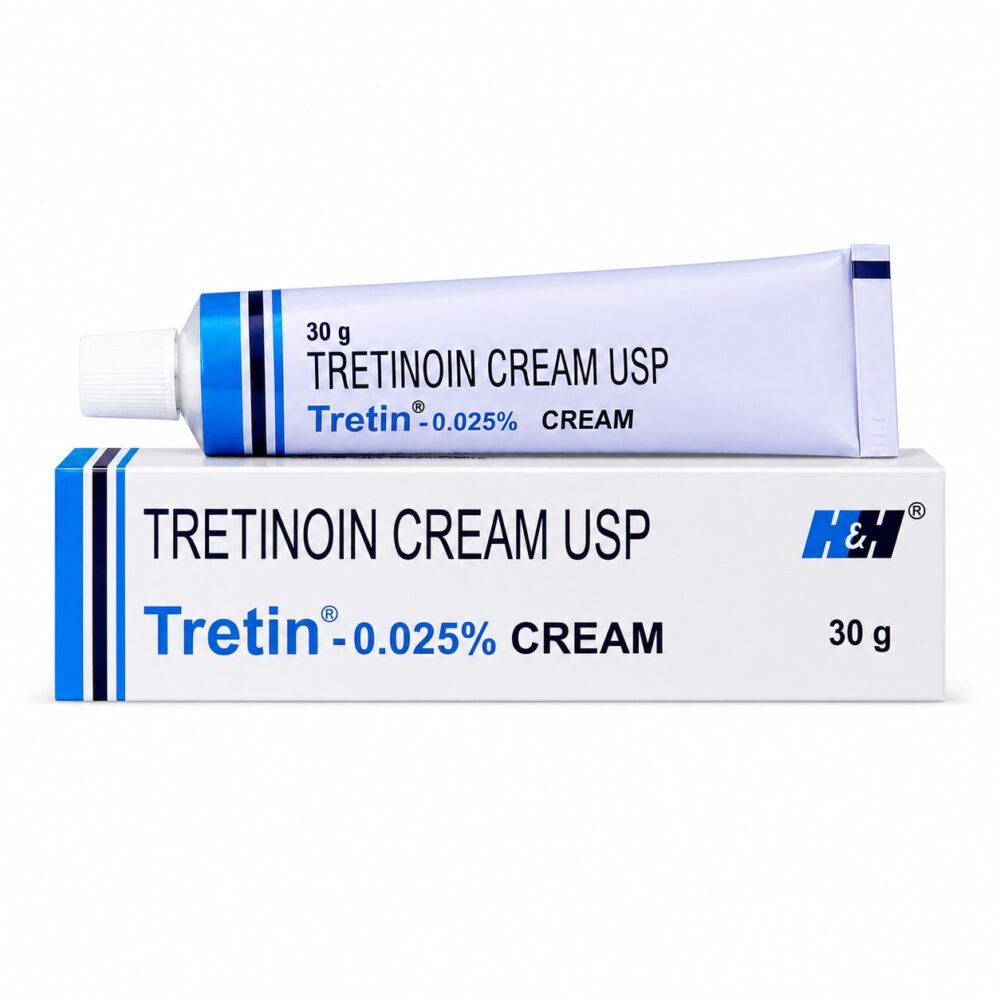
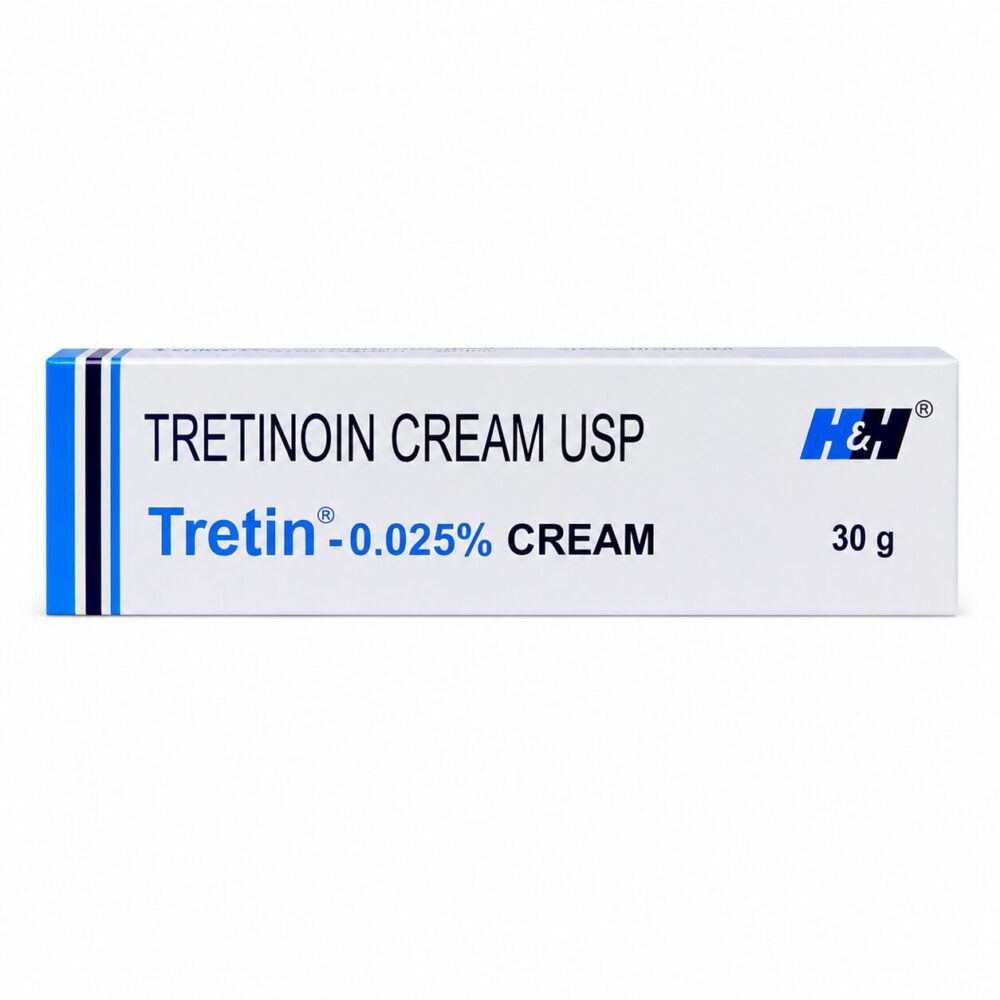
Tretin 0.025% Cream (Tretinoin Cream)
| Active Ingredients | Tretinoin |
| Strength | Tretinoin 0.025% |
| Dosage Form | Topical Cream |
| Therapeutic Category | Skin Care |
| Manufacturer | Hegde & Hegde Pharma. |
| Packaging | 1 Tube |
| Storage Conditions | Cool and dry place |
| Packaging Type | Plain and discreet |
| Pack Size | Price/Unit | Price | Quantity | |
|---|---|---|---|---|
| 6 Tube/s | $7.50 | $45.00 | ||
| 8 Tube/s | $7.50 | $60.00 | ||
| 10 Tube/s | $7.00 | $70.00 | ||
| 12 Tube/s | $6.66 | $80.00 |
Price range: $45.00 through $80.00
What is Tretin 0.025% Cream
Tretin 0.025% Cream contains Tretinoin, a Vitamin A derivative used in skincare treatment plans for acne, uneven skin texture, clogged pores, and early signs of skin aging.
Regular use supports faster skin renewal and helps reduce the buildup of dead skin cells that often lead to pimples, blackheads, and rough patches.
Dermatologists often recommend Tretinoin-based creams for mild to moderate acne because of their long-standing clinical use in skin care routines. Along with acne management, many users also include Tretin 0.025% Cream in anti-aging skincare plans to soften fine lines and improve overall skin tone over time.
Tretin 0.025% Cream is meant only for external application. Contact with the eyes, lips, inside the nose, or broken skin should be avoided.
Benefits of Tretin 0.025% Cream
Tretinoin supports deep skin renewal instead of only treating surface-level acne. Consistent use may improve both active breakouts and leftover acne marks over time. Many users notice smoother skin texture after several weeks of regular nighttime application.
Key benefits of Tretin 0.025% Cream include:
- Helps reduce pimples and acne breakouts
- Supports unclogging of blocked pores
- Helps lower blackheads and whiteheads
- Improves rough or uneven skin texture
- Softens the appearance of fine lines
- Encourages healthy skin cell turnover
- Helps fade mild post-acne marks gradually
Uses of Tretin 0.025% Cream
Tretin 0.025% Cream is widely included in dermatology routines for several skin concerns. Acne treatment remains its primary use, especially for comedonal acne involving blackheads and whiteheads. Reduced pore blockage often leads to fewer future breakouts.
Some dermatology plans also use Tretinoin creams for improving dull skin texture and mild pigmentation changes linked with sun exposure.
Long-term skincare users often include low-strength Tretinoin as part of anti-aging maintenance because of its role in supporting collagen activity and smoother skin appearance. A temporary increase in peeling or mild irritation can happen during the early phase of use as the skin adjusts to the treatment cycle.
How to Use Tretin 0.025% Cream
- Wash the face gently and allow the skin to dry completely before applying the cream.
- A pea-sized amount is usually enough for the entire face.
- Applying too much cream does not speed up results and may increase irritation.
- Nighttime application is generally preferred because sunlight can increase skin sensitivity during Tretinoin use.
- Gentle spreading over acne-prone areas works better than thick spot application. .
- Harsh scrubs, alcohol-based skincare products, or strong exfoliants may worsen dryness and redness while using this cream.
- New users often begin with alternate-night use before shifting to regular nightly application depending on skin tolerance.
How Long Does Tretin 0.025% Cream Take to Show Results
Visible skin improvement may take several weeks. Some users notice early dryness or peeling before acne starts improving. This adjustment period is common during the first few weeks of treatment.
Acne reduction often becomes more noticeable after 6 to 10 weeks of steady use. Improvement in skin texture, fine lines, and acne marks may take longer. Consistency matters more than frequent application. Stopping treatment too early may reduce long-term benefits.
Side Effects of Tretin 0.025% Cream
Common Side Effects
Mild skin reactions are common during the adjustment phase, especially when treatment begins suddenly or when large amounts are applied.
Possible side effects include:
- Skin dryness
- Redness
- Peeling or flaking
- Mild burning sensation
- Temporary irritation
- Increased sun sensitivity
- Tight or itchy skin
- Most reactions improve as the skin slowly adapts to treatment.
- When Skin Irritation Becomes Severe
- Excessive peeling, swelling, blistering, severe redness, or painful burning may suggest the skin barrier is becoming irritated. Reduced application frequency is often considered in such cases until the skin settles.
- Using moisturizers and avoiding strong skincare products may help lower discomfort during treatment.
Precautions Before Using Tretin 0.025% Cream
Pregnancy and Breastfeeding
Tretinoin creams are generally avoided during pregnancy unless specifically advised in a medical treatment plan. Breastfeeding mothers should avoid applying the cream near the chest area.
Sun Exposure
Skin treated with Tretinoin becomes more sensitive to sunlight. Long sun exposure, tanning beds, and harsh UV exposure can increase redness and irritation. Sunscreen and protective clothing are commonly used alongside treatment.
Sensitive Skin Conditions
Eczema, severely dry skin, sunburned skin, or damaged skin barriers may react strongly to topical retinoids. Applying the cream over cuts or inflamed skin can worsen irritation.
Drug and Skincare Interactions
Products That May Increase Irritation
Combining Tretin 0.025% Cream with strong exfoliating products can make the skin excessively dry or sensitive.
Extra caution is often needed with:
- Benzoyl peroxide
- Salicylic acid
- Sulfur-based acne products
- Alcohol-heavy toners
- Chemical peels
- Waxing treatments
- Other topical retinoids
- Spacing products apart within a skincare routine may help reduce irritation.
- Cosmetic and Facial Procedures
Laser procedures, chemical peels, dermabrasion, and strong facial treatments may temporarily increase skin sensitivity while using Tretinoin. Many skincare clinics advise pausing retinoid use before intensive procedures.
Frequently Asked Questions (FAQs)
Active acne responds better than deep scars. Gradual improvement in post-acne marks and uneven texture may happen with long-term use.
Mild peeling and dryness are common during the first few weeks, especially in new users or when larger amounts are applied.
Many users continue makeup routines while using Tretinoin. Non-comedogenic and gentle cosmetic products are generally preferred.
Low-strength Tretinoin creams are often used in anti-aging skincare routines to improve fine lines and skin texture gradually.
Daily nighttime use is common after the skin adjusts. Sensitive skin users sometimes begin with fewer weekly applications.
Early purging can happen because clogged pores move to the surface faster during increased skin turnover. This phase is usually temporary.
Moisturizers are commonly added to reduce dryness and irritation linked with topical retinoid treatment.
| Pack Size | 10 Tube/s, 12 Tube/s, 6 Tube/s, 8 Tube/s |
|---|---|
| Price/Unit | $6.66, $7.00, $7.50 |
Related products
- + wishlist+ compare
Retino A 0.025% Cream (Tretinoin Cream)
Price range: $45.00 through $80.00Select options - + wishlist+ compare
Tretin 0.05% Cream (Tretinoin Cream)
Price range: $50.00 through $85.00Select options - + wishlist+ compare
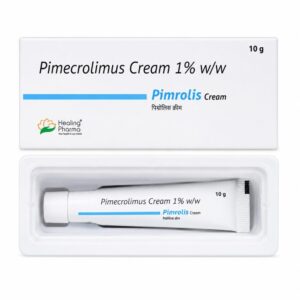
Pimrolis 1% Cream (Pimecrolimus)
Price range: $150.00 through $265.00Select options - + wishlist+ compare
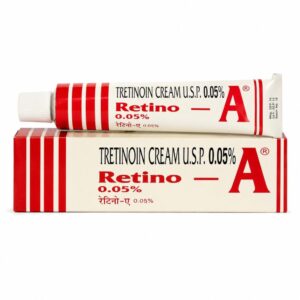
Retino A 0.05% Cream (Tretinoin Cream)
Price range: $50.00 through $85.00Select options - + wishlist+ compare
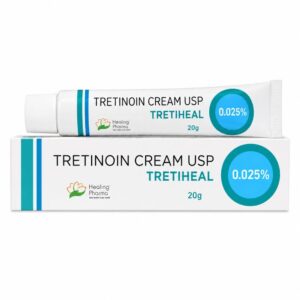
Tretiheal 0.025% Cream (Tretinoin)
Price range: $45.00 through $80.00Select options
There are no reviews yet.