
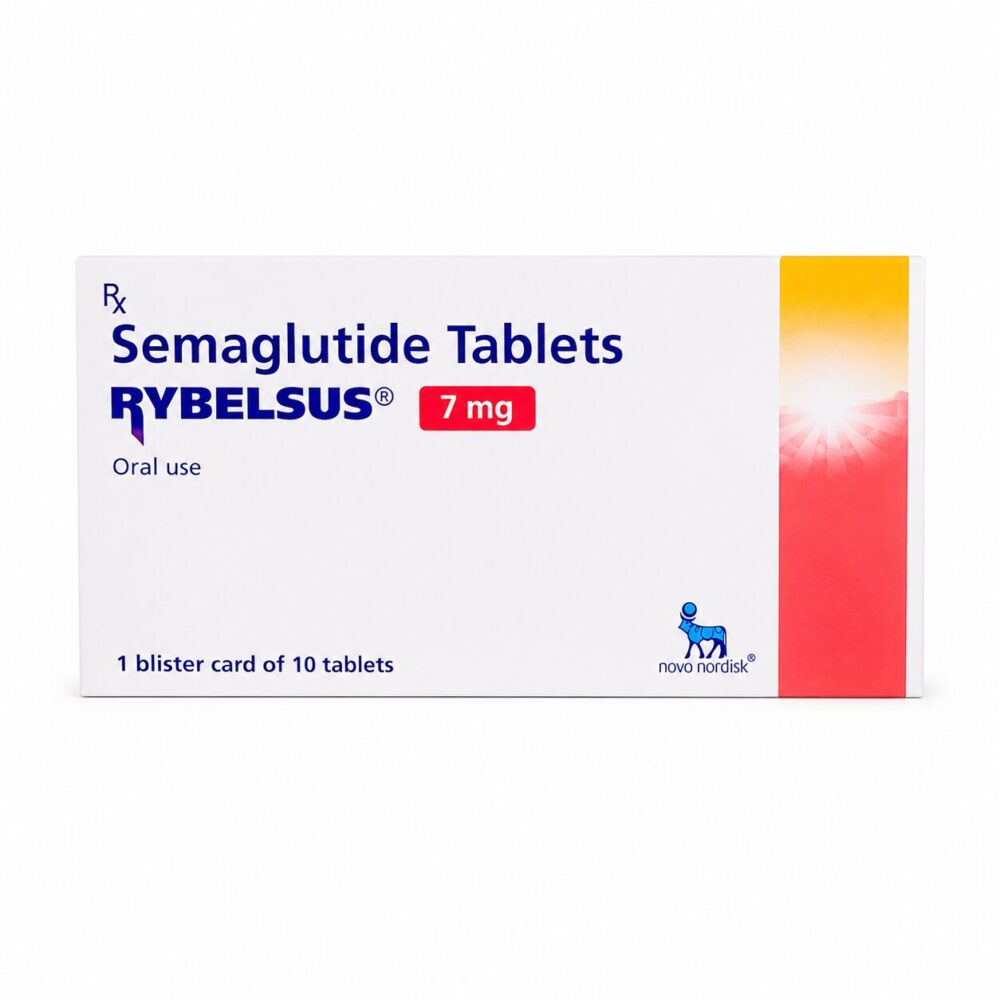
Rybelsus 7 mg (Semaglutide)
| Active Ingredients | Semaglutide |
| Strength | Semaglutide 7 mg |
| Dosage Form | Tablet |
| Therapeutic Category | Type 2 diabetes |
| Manufacturer | Novo Nordisk India Pvt Ltd. |
| Packaging | 10 tablets in 1 strip |
| Storage Conditions | Cool and dry place |
| Packaging Type | Plain and discreet |
| Pack Size | Price/Unit | Price | Quantity | |
|---|---|---|---|---|
| 30 Tablet/s | $12.00 | $360.00 | ||
| 60 Tablet/s | $11.75 | $705.00 | ||
| 90 Tablet/s | $11.50 | $1,035.00 | ||
| 120 Tablet/s | $11.25 | $1,350.00 |
Price range: $360.00 through $1,350.00
What is Rybelsus 7 mg
Rybelsus 7 mg belongs to a newer group of Diabetes Medicines designed to support blood glucose control through hormone-based regulation. Semaglutide, the active ingredient, helps the body release insulin when sugar levels rise after meals.
Alongside glucose control, many adults notice reduced appetite and slower digestion, which can support weight management goals during treatment.
It often begin therapy with a lower strength before shifting to Rybelsus 7 mg for ongoing blood sugar control. Daily consistency matters because the tablet has a specific absorption pattern that depends on timing and stomach conditions. Oral Semaglutide has become a preferred option for adults looking for a non-injectable GLP-1 treatment approach. Long-term diabetes management usually combines medicine, food choices, physical activity, and regular glucose tracking. Rybelsus 7 mg fits into this broader care plan rather than replacing healthy lifestyle habits.
Uses of Rybelsus 7 mg
Rybelsus 7 mg is prescribed mainly for adults living with Type 2 diabetes. Blood sugar balance improves gradually when the medicine is taken regularly under a structured treatment routine.
Common uses include:
- Managing high blood glucose levels in Type 2 diabetes
- Supporting HbA1c reduction
- Helping control post-meal sugar spikes
- Supporting weight management alongside diet changes
- Lowering appetite in some adults
- Assisting long-term diabetes care plans
Many diabetes treatment plans include Rybelsus when earlier medicines alone do not provide enough glucose control. Some adults also prefer oral Semaglutide because injections may feel uncomfortable or difficult to maintain regularly. Clinical studies linked Semaglutide with improvements in HbA1c levels and body weight in many participants. Results vary depending on eating habits, physical activity, treatment consistency, and existing medical conditions.
Benefits of Rybelsus 7 mg
Rybelsus 7 mg offers several advantages for adults managing Type 2 diabetes over the long term. The oral tablet format remains one of the biggest reasons behind its growing demand.
Key benefits include:
- Once-daily oral dosing
- Supports stable blood sugar control
- Lower appetite in many users
- Weight reduction support in suitable candidates
- Reduced post-meal glucose rise
- Convenient alternative to injectable GLP-1 medicines
- Lower risk of severe hypoglycemia when used alone
Many adults notice appetite changes within the first few weeks of treatment. Smaller meal portions and improved fullness after eating are commonly reported experiences during therapy. Gradual progress often gives better long-term results compared to sudden short-term changes.
How to Take Rybelsus 7 mg
Correct administration affects how well Rybelsus 7 mg gets absorbed in the body. Morning dosing on an empty stomach remains the preferred method.
- Take one tablet daily after waking up
- Use only a small amount of plain water
- Swallow the tablet whole without crushing or chewing
- Wait at least 30 minutes before food, coffee, tea, or other medicines
- Avoid taking more than one dose within 24 hours
Food and beverages can reduce absorption significantly if taken too early after dosing. Daily timing consistency supports better glucose control during treatment.
Dosage Information
Doctors usually begin treatment with Rybelsus 3 mg before increasing to Rybelsus 7 mg after the initial adjustment period. Dose escalation helps reduce stomach-related discomfort during early treatment stages. Some adults may later move to Rybelsus 14 mg if stronger glucose control becomes necessary. Dose changes depend on blood sugar response, tolerability, and treatment goals. Missing a dose does not require doubling the next tablet. Continue with the next scheduled dose on the following day.
Side Effects of Rybelsus 7 mg
Common Side Effects
Digestive discomfort appears most often during the first weeks of treatment. Many symptoms become milder as the body adapts.
Commonly reported effects include:
- Nausea
- Vomiting
- Diarrhea
- Constipation
- Reduced appetite
- Bloating
- Stomach pain
- Acid reflux
Eating smaller meals and avoiding heavy oily foods may reduce stomach irritation during treatment.
Serious Side Effects
Medical evaluation may be needed if severe reactions appear during therapy.
Watch for symptoms such as:
- Severe abdominal pain
- Signs of pancreatitis
- Vision changes
- Persistent vomiting
- Severe dehydration
- Allergic swelling or rash
- Sudden kidney-related symptoms
Long-lasting gastrointestinal problems may increase dehydration risk in vulnerable adults.
Precautions and Warnings
Pregnancy and Breastfeeding
Rybelsus 7 mg is generally avoided during pregnancy because safety information remains limited. Women planning pregnancy are often advised to stop treatment well in advance. Breastfeeding use also requires careful medical review.
Kidney and Liver Concerns
Mild kidney or liver problems may not always require dose changes, though monitoring remains useful during long-term treatment. Severe kidney issues linked with dehydration need extra caution because vomiting and diarrhea may worsen fluid loss.
Pancreatitis History
Adults with a previous history of pancreatitis may require alternative treatment approaches. Sudden severe upper stomach pain should never be ignored during therapy.
Diabetic Retinopathy
Rapid glucose improvement sometimes affects diabetic eye disease temporarily. Vision monitoring becomes more relevant in adults already diagnosed with diabetic retinopathy.
Drug Interactions
Rybelsus 7 mg may interact with certain medicines and affect absorption timing because digestion slows during treatment.
Interaction risks may increase with:
- Insulin products
- Sulfonylurea diabetes medicines
- Other GLP-1 receptor agonists
- Oral medicines requiring fast absorption
- Alcohol in excess amounts
Blood sugar levels may fall too low when combined with insulin or insulin-stimulating medicines. Dose adjustments are sometimes needed during combination therapy.
Frequently Asked Questions (FAQs)
Reduced appetite and slower digestion may support weight reduction in some adults using Rybelsus 7 mg. Weight-related outcomes differ from person to person depending on eating habits, physical activity, and overall diabetes management.
Morning dosing should happen on an empty stomach. Food or drinks taken too early can lower absorption and reduce effectiveness. Waiting at least 30 minutes before eating helps maintain proper absorption.
Blood sugar improvement may appear within a few weeks, while HbA1c changes usually become more noticeable after several months of consistent treatment. Weight-related changes often develop gradually.
Oral tablets offer convenience for adults who prefer avoiding injections. Injectable and oral Semaglutide options both contain the same active ingredient, though treatment suitability varies between individuals.
Heavy oily meals, excessive alcohol intake, and overeating may worsen stomach discomfort during treatment. Balanced meals in smaller portions are often easier to tolerate.
Low blood sugar risk stays lower when Rybelsus is used alone. Combining it with insulin or sulfonylurea medicines may increase hypoglycemia risk.
Physical activity remains an important part of Type 2 diabetes management. Regular exercise, hydration, and glucose tracking support better long-term control during treatment.
Stopping treatment may lead to rising blood sugar levels over time. Appetite and weight changes may also reverse gradually after discontinuation.
| Pack Size | 120 Tablet/s, 30 Tablet/s, 60 Tablet/s, 90 Tablet/s |
|---|---|
| Price/Unit | $11.25, $11.50, $11.75, $12.00 |
Related products
- + wishlist+ compare
Empasmart 10 mg (Empagliflozin)
Price range: $60.00 through $225.00Select options
There are no reviews yet.