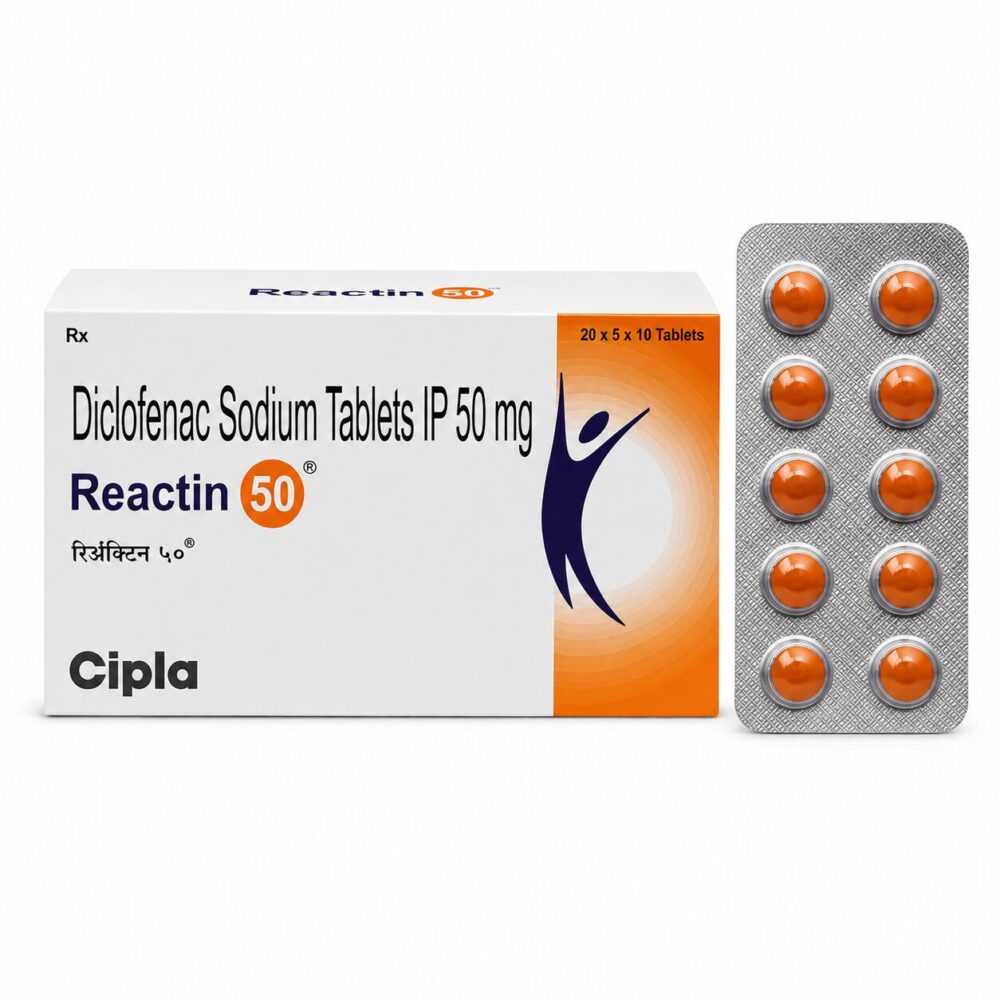
Reactin 50 mg (Diclofenac)
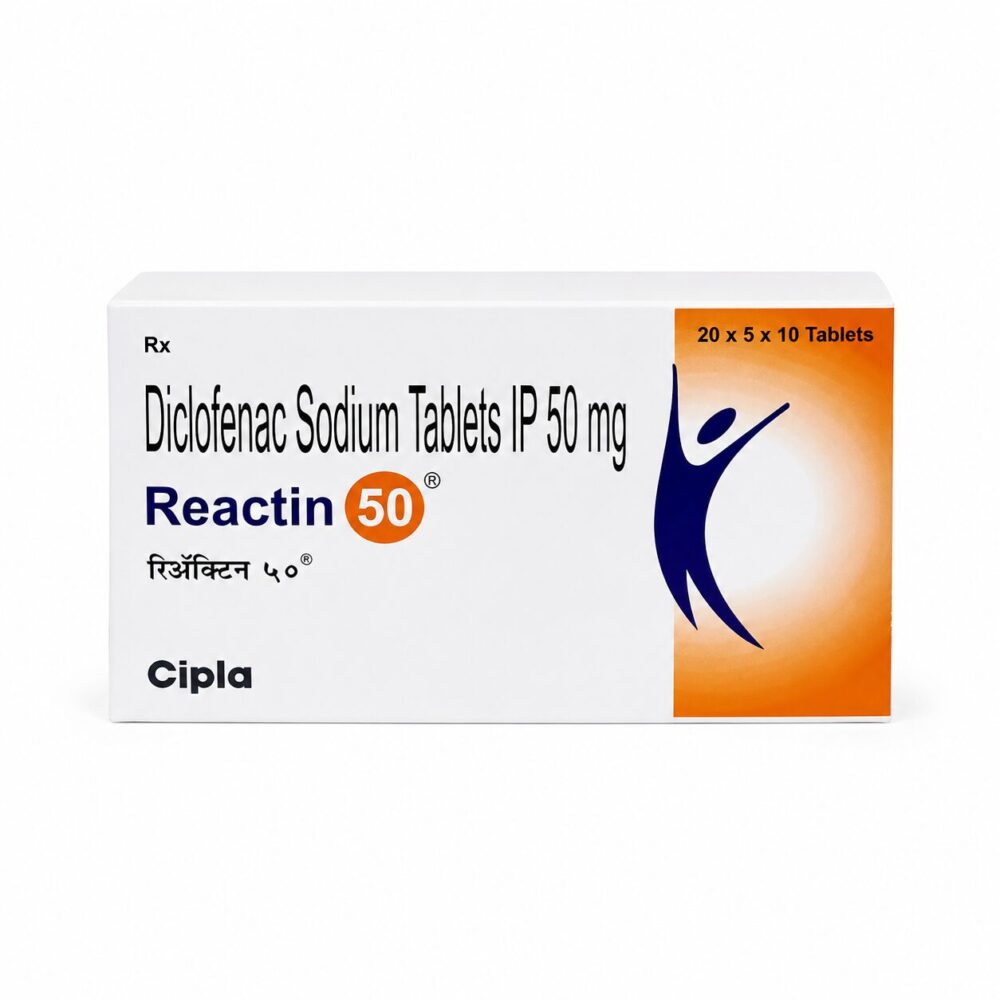
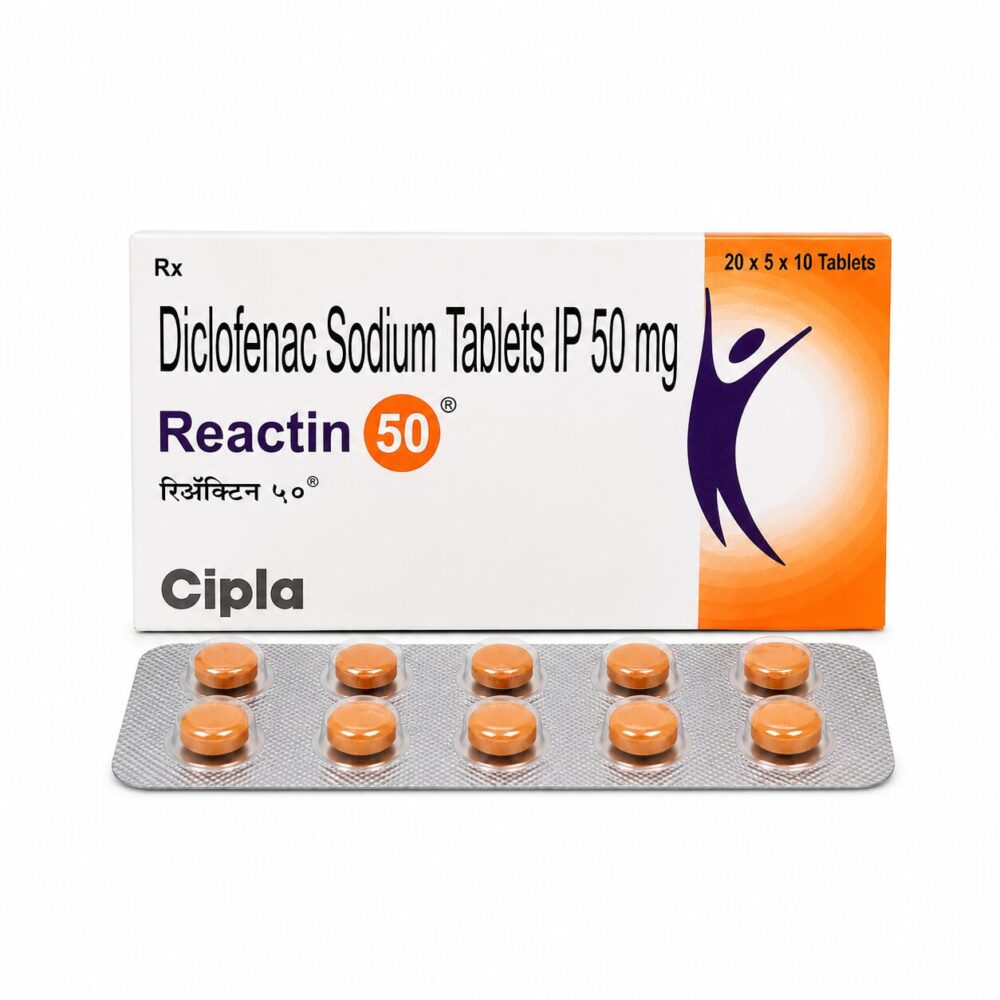
| Active Ingredients | Diclofenac |
| Strength | Diclofenac (50mg) |
| Dosage Form | Tablets |
| Therapeutic Category | Pain relief |
| Manufacturer | Cipla Ltd |
| Packaging | 10 tablets in 1 strip |
| Storage Conditions | Cool and dry place |
| Packaging Type | Plain and discreet |
| Pack Size | Price/Unit | Price | Quantity | |
|---|---|---|---|---|
| 90 Tablet/s | $0.50 | $45.00 | ||
| 150 Tablet/s | $0.45 | $70.00 | ||
| 210 Tablet/s | $0.43 | $90.00 | ||
| 300 Tablet/s | $0.40 | $120.00 |
$45.00 – $120.00Price range: $45.00 through $120.00
What is Reactin 50 mg?
Reactin 50 mg is an anti-inflammatory Pain Relief Medicine used in painful conditions connected with joints, muscles, ligaments, bones, and soft tissues. Diclofenac, the active ingredient, belongs to the NSAID category and is widely prescribed for inflammatory pain where swelling and stiffness are also present along with discomfort. Pain related to arthritis often affects mobility and daily routine. Joint tenderness, morning stiffness, and muscle soreness can become difficult to manage without anti-inflammatory treatment.
Reactin 50 mg helps reduce inflammation linked with these conditions, making movement easier for many users over time.
Doctors may also recommend Diclofenac tablets after minor injuries, sprains, muscle strain, dental pain, or painful inflammatory episodes where fast pain control is required. Since inflammatory pain behaves differently from ordinary aches, anti-inflammatory medicines such as Reactin 50 mg are frequently chosen in these situations.
Reactin 50 mg Uses
Reactin 50 mg tablets are prescribed in several inflammatory and painful conditions where swelling and tissue irritation contribute to discomfort. Diclofenac is known for managing both acute pain and recurring inflammatory pain linked with chronic conditions.
Common uses include:
- Musculoskeletal pain
- Rheumatic pain
- Osteoarthritis
- Rheumatoid arthritis
- Joint stiffness
- Back pain
- Muscle injury pain
- Sports injury discomfort
- Menstrual pain
Swelling linked with inflammation
Musculoskeletal pain can affect muscles, tendons, ligaments, and bones. Conditions involving repeated movement, physical strain, injury, or inflammation often create persistent soreness and restricted movement. Reactin 50 mg helps reduce inflammatory activity that contributes to pain in these areas. Rheumatic conditions often involve swollen joints, tenderness, reduced flexibility, and difficulty walking or lifting objects comfortably.
Diclofenac tablets are regularly included in pain management plans for these conditions because they help calm inflammatory responses inside affected joints.
How Does Reactin 50 mg Work?
Diclofenac reduces the production of chemical substances linked with inflammation and pain inside the body. These chemicals, called prostaglandins, are produced during injury, swelling, or inflammatory reactions and are strongly connected with pain sensitivity, redness, stiffness, and heat around affected tissues.
Reactin 50 mg blocks certain enzymes involved in prostaglandin production, mainly COX-1 and COX-2 enzymes. Lower prostaglandin activity gradually reduces swelling and pain signals, helping improve comfort and physical movement.
Inflammatory pain conditions often become worse when prostaglandin activity remains high for long periods. By lowering this inflammatory response, Diclofenac tablets provide relief in many joint and muscle-related conditions where ordinary painkillers may not offer enough support.
How to Take Reactin 50 mg
- Reactin 50 mg tablets are usually taken with food or milk to reduce stomach irritation.
- Swallow the tablet whole with water without crushing or chewing it.
- Taking the medicine around the same time each day often helps maintain stable relief during treatment.
- Dosage depends on the pain condition, severity of inflammation, medical history, and response to treatment.
- Some people require short-term use after injury, while others with arthritis-related pain may receive treatment for a longer duration. Avoid alcohol intake during treatment if stomach sensitivity is already present.
- Empty stomach use may increase the chances of gastric irritation in certain individuals.
Benefits of Reactin 50 mg
Reactin 50 mg offers multiple advantages in inflammatory pain management, especially where swelling and stiffness interfere with normal daily activities.
Benefits include:
- Helps reduce pain and inflammation
- Useful in joint and muscle pain conditions
- Supports better movement and flexibility
- Tablet form is simple to consume
- Often provides quicker relief in inflammatory pain
- Suitable for different pain-related conditions
- Widely prescribed NSAID medicine
- Convenient storage and handling
Many users prefer Diclofenac tablets because they address both inflammation and discomfort together. Relief from swelling can improve walking, bending, lifting, and movement in painful inflammatory conditions.
Reactin 50 mg Dosage
The exact dosage schedule depends on age, pain severity, treatment duration, and overall health condition. Doctors may adjust dosage according to the response seen during treatment.
Missed Dose
Take the missed tablet when remembered unless the next scheduled dose is very close. Skip the missed dose if timing overlaps with the next one. Taking two tablets together may increase side effect risks.
Overdose
Excess Diclofenac intake may lead to nausea, stomach pain, vomiting, dizziness, breathing difficulty, severe gastric irritation, or unusual weakness. Immediate medical evaluation becomes necessary if overdose symptoms appear after taking extra tablets.
Reactin 50 mg Side Effects
Like other NSAID medicines, Reactin 50 mg can cause side effects in some individuals. Mild effects may improve as the body adjusts during treatment.
Common Side Effects
- Headache
- Dizziness
- Stomach discomfort
- Gas or bloating
- Diarrhoea
- Constipation
- Mild nausea
- Ringing in ears
Serious Side Effects
- Skin rash
- Breathing difficulty
- Fast heartbeat
- Severe stomach pain
- Swelling of face or throat
- Blisters on skin
- Vomiting blood
- Black stools
- Severe allergic reaction
Persistent or severe symptoms require medical evaluation without delay.
Precautions and Warnings
Certain medical situations require extra caution before starting Reactin 50 mg tablets. Diclofenac may not suit everyone, especially individuals with stomach ulcers, severe liver disease, kidney problems, heart disease, or NSAID allergies.
Precautions include:
- Avoid use in known Diclofenac allergy
- Inform the doctor about current medicines
- Stomach ulcer history needs careful assessment
- Alcohol intake may increase gastric irritation
- Driving or machinery handling may feel difficult after dizziness
- Pregnancy and breastfeeding require medical review
- Older adults may need closer monitoring
- Surgery-related medicine planning may require temporary discontinuation
Long-term NSAID use can increase risks linked with stomach bleeding or cardiovascular complications in some individuals. Duration and dosage are generally kept as low as reasonably possible for safer treatment.
Drug Interactions
Diclofenac can interact with several prescription and non-prescription medicines. Certain combinations may increase bleeding risk, kidney strain, or stomach-related complications.
Possible interacting medicines include:
- Blood thinners
- Steroid medicines
- Other NSAID painkillers
- High blood pressure medicines
- Diuretics
- Certain antidepressants
- Lithium
- Methotrexate
Medicine history should be reviewed carefully before starting Reactin 50 mg, especially during long-term treatment.
Who Should Avoid Reactin 50 mg?
Reactin 50 mg may not be suitable for individuals with severe stomach ulcers, active bleeding disorders, serious heart disease, severe liver impairment, or NSAID-triggered asthma reactions.
People who previously developed allergic swelling, breathing trouble, or severe skin reactions after taking Diclofenac, Ibuprofen, or similar pain medicines should avoid this tablet unless specifically advised otherwise after medical review.
Frequently Asked Questions (FAQs)
Pain relief may begin within 30 minutes to 1 hour in many cases. Inflammatory conditions such as arthritis may require a few doses before noticeable improvement in swelling and stiffness appears.
Some individuals experience stomach discomfort, acidity, nausea, or bloating during treatment. Taking the tablet with food or milk may help reduce gastric irritation.
Pregnancy use requires medical review because Diclofenac may not suit every stage of pregnancy. Treatment decisions depend on risk assessment and medical need.
Dizziness or lightheadedness may occur in some users. Driving or machinery work should be avoided if concentration feels affected after taking the tablet.
Daily use duration depends on the condition being treated and overall health profile. Long-term NSAID treatment generally requires periodic medical monitoring.
| Pack Size | 150 Tablet/s, 210 Tablet/s, 300 Tablet/s, 90 Tablet/s |
|---|---|
| Price/Unit | $0.40, $0.43, $0.45, $0.50 |
Related products
- + wishlist+ compare
Gabatop 400 mg Capsule (Gabapentin)
$85.00 – $260.00Price range: $85.00 through $260.00Select options - + wishlist+ compare
Brufen 200 mg (Ibuprofen)
$50.00 – $110.00Price range: $50.00 through $110.00Select options - + wishlist+ compare
Gabapin 300 mg Capsule (Gabapentin)
$90.00 – $240.00Price range: $90.00 through $240.00Select options - + wishlist+ compare
Voveran SR 75 mg (Diclofenac)
$80.00 – $220.00Price range: $80.00 through $220.00Select options - + wishlist+ compare
Voveran SR 100 mg (Diclofenac)
$85.00 – $230.00Price range: $85.00 through $230.00Select options


There are no reviews yet.