

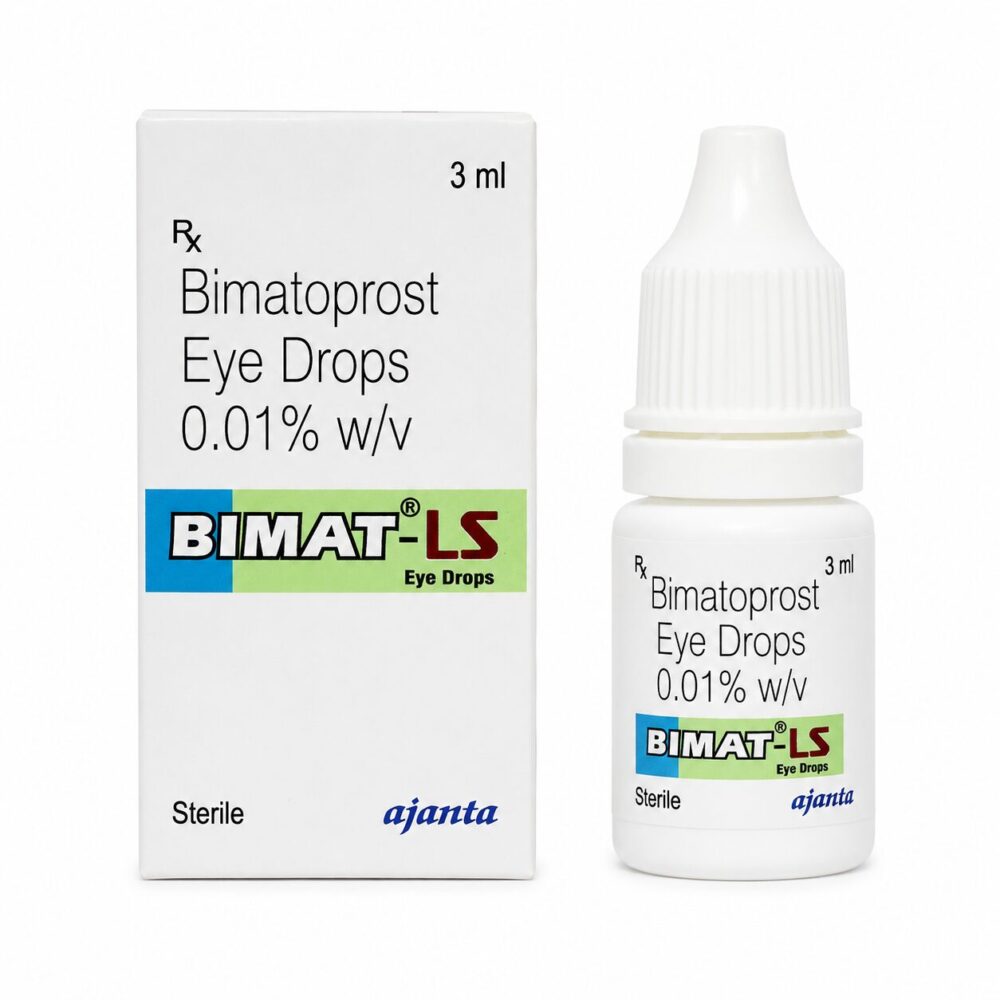
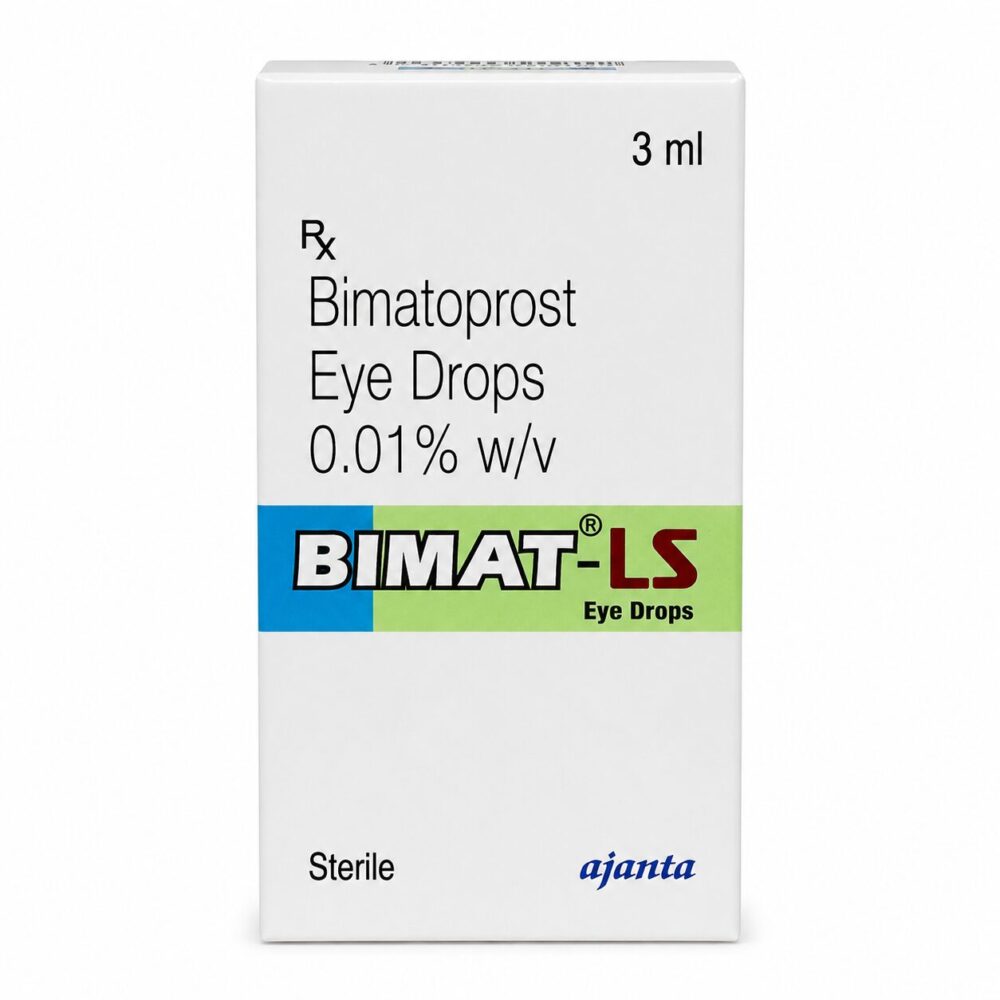
Bimat LS Eye Drop 0.01% (Bimatoprost Ophthalmic Solution)
| Active Ingredients | Bimatoprost |
| Strength | 0.01% w/v |
| Dosage Form | Ophthalmic Solution (Eye Drops) |
| Therapeutic Category | Ocular Hypertension |
| Manufacturer | Ajanta Pharma Ltd. |
| Packaging | 3 ml bottle |
| Storage Conditions | Cool and dry place |
| Packaging Type | Plain and discreet |
| Pack Size | Price/Unit | Price | Quantity | |
|---|---|---|---|---|
| 6 Bottle/s Pack | $10.83 | $65.00 | ||
| 9 Bottle/s Pack | $10.55 | $95.00 | ||
| 12 Bottle/s Pack | $10.41 | $125.00 | ||
| 15 Bottle/s Pack | $10.00 | $150.00 |
Price range: $65.00 through $150.00
What Is Bimat LS Eye Drop 0.01%?
Bimat LS Eye Drop 0.01% is an ophthalmic solution designed to reduce increased pressure inside the eye. Raised intraocular pressure is one of the leading risk factors linked with glaucoma and can gradually damage the optic nerve if it remains uncontrolled. Vision loss caused by glaucoma often develops slowly, making regular treatment and eye examinations valuable for long-term care.
The active ingredient, bimatoprost, belongs to a group of medicines known as prostaglandin analogues. A lower concentration of 0.01% was developed to provide effective pressure control while aiming to improve comfort for many users. Consistent use, as prescribed, supports healthy eye pressure and helps reduce the chance of progressive optic nerve damage.
How Bimat LS Eye Drop 0.01% Helps Lower Eye Pressure
Healthy eyes constantly produce and drain fluid to maintain normal pressure. When drainage becomes less efficient, pressure inside the eye begins to rise. Over time, this extra pressure can place stress on the optic nerve, which carries visual signals from the eye to the brain.
Bimat LS Eye Drop 0.01% increases the natural drainage of fluid from the eye. Better fluid outflow lowers intraocular pressure and reduces unnecessary strain on the optic nerve. Stable eye pressure is one of the primary goals in glaucoma management because it supports long-term vision preservation.
Many people do not notice changes in eye pressure without an examination, making routine monitoring an important part of treatment. Even when vision feels normal, continuing therapy often remains necessary to keep pressure under control.
Uses of Bimat LS Eye Drop 0.01%
Bimat LS Eye Drop 0.01% is prescribed for conditions linked with increased pressure inside the eye. Keeping pressure within the recommended range lowers the risk of gradual optic nerve damage and vision loss.
Common uses include:
- Treatment of open-angle glaucoma
- Management of ocular hypertension
- Lowering elevated intraocular pressure
- Supporting long-term optic nerve protection
- Helping reduce the risk of glaucoma progression
Eye specialists may recommend continued treatment even after pressure reaches the desired range. Maintaining consistent control often provides better long-term protection than treating pressure only after it rises again.
Benefits of Bimat LS Eye Drop 0.01%
Regular use offers several benefits for people managing glaucoma or ocular hypertension.
- Reduces elevated intraocular pressure.
- Supports long-term optic nerve health.
- Helps preserve vision by controlling eye pressure.
- Once-daily dosing offers a convenient treatment routine.
- Lower 0.01% formulation is designed to provide effective pressure reduction with good tolerability for many users.
- Suitable for long-term glaucoma management when used as prescribed.
A well-managed treatment plan, along with regular eye pressure checks, gives eye specialists a clearer picture of how the condition is responding over time.
Dosage of Bimat LS Eye Drop 0.01%
The dosage depends on the eye condition being treated and the treatment plan recommended by the eye specialist. In most cases, one drop in the affected eye once daily during the evening is the usual schedule. Applying more drops than recommended does not improve the result and may reduce the pressure-lowering effect over time.
Using the drops at the same time every day helps maintain a steady effect. If more than one eye medication is part of the treatment plan, leave at least 5 minutes between each product to avoid washing one medicine away with another.
How to Apply Bimat LS Eye Drop 0.01%
Proper application improves the effectiveness of the treatment and lowers the chance of contamination.
- Wash your hands before using the bottle.
- Remove the cap without touching the dropper tip.
- Tilt your head slightly backward.
- Pull down the lower eyelid to create a small pocket.
- Place one drop into the affected eye.
- Close the eye gently for 1 to 2 minutes.
- Avoid blinking repeatedly or rubbing the eye.
- Keep the dropper tip away from the eye, fingers, or any surface.
- Replace the cap tightly after each use.
Contact lenses should be removed before applying the drops. Lenses can usually be placed back into the eyes about 15 minutes later unless different instructions have been provided.
Possible Side Effects
Most people use Bimat LS Eye Drop 0.01% without major problems. Mild eye irritation may appear during the first few days and often settles as the eyes adjust to the treatment.
Common Side Effects
- Mild eye redness
- Temporary burning or stinging
- Itching of the eye
- Watery eyes
- Dry eyes
- Mild eye discomfort
- Blurred vision for a short time after application
- Feeling that something is inside the eye
Less Common Side Effects
- Darkening of the eyelid skin
- Gradual increase in eyelash length, thickness, or number
- Darkening of the iris, especially in mixed-colored eyes
- Increased sensitivity to light
- Swelling around the eye
Vision changes that persist, severe eye pain, marked swelling, or signs of an allergic reaction deserve prompt medical assessment.
Precautions Before Using Bimat LS Eye Drop 0.01%
A complete eye history helps determine whether this treatment is suitable. Previous eye surgery, eye infections, inflammation inside the eye, or damage to the surface of the eye may influence treatment decisions.
Extra care may be needed in the following situations:
- History of uveitis or eye inflammation
- Recent eye surgery
- Dry eye syndrome
- Corneal disorders
- Contact lens use
- Pregnancy or breastfeeding
- Allergy to bimatoprost or any ingredient in the formulation
Gradual changes in eyelash growth or eye color can occur with long-term use. These changes may become permanent, particularly iris pigmentation changes.
Warnings
Pregnancy and Breastfeeding
Limited information is available regarding the use of bimatoprost during pregnancy and breastfeeding. The expected benefit of treatment is weighed against any possible risk before use during these periods.
Driving and Operating Machinery
Temporary blurred vision may appear immediately after applying the drops. Driving, operating machinery, or performing tasks that require clear vision should wait until eyesight becomes normal again.
Contact Lens Users
Soft contact lenses may absorb certain preservatives present in eye drops. Removing lenses before application and waiting at least 15 minutes before reinserting them helps reduce this risk.
Drug Interactions
Interactions with eye medications are generally uncommon, though using several ophthalmic products together requires proper spacing between doses.
Tell your eye specialist about all medicines you use, including:
- Prescription eye drops
- Artificial tears
- Other glaucoma medicines
- Steroid eye drops
- Herbal supplements
- Vitamins
- Non-prescription medicines
A short gap between different eye drops allows each product enough time to work properly.
Missed Dose
A missed dose can be applied as soon as it is remembered on the same day. If the next scheduled dose is close, skip the missed application and continue with the regular schedule. Two doses should not be applied together to make up for the missed one.
Overdose
Using more drops than prescribed is unlikely to improve eye pressure control. Excess use may increase eye irritation, redness, or discomfort. If a large amount is accidentally used or swallowed, medical guidance should be obtained for further advice.
Frequently Asked Questions (FAQs)
The usual dose is one drop in the affected eye once daily, generally in the evening. The exact schedule depends on the treatment plan recommended by an eye specialist.
Yes. When using more than one eye drop, leave at least 5 minutes between each medicine to allow proper absorption.
Yes, but contact lenses should be removed before applying the drops. Wait about 15 minutes before putting them back in.
Some users notice mild eye redness, temporary burning, itching, or watery eyes. Changes in eyelash growth or eye color may occur with long-term use.
Apply the missed dose as soon as you remember. If the next scheduled dose is close, skip the missed dose and continue with the regular schedule. Do not use two doses at the same time.
Store the bottle below 25°C in a cool, dry place away from direct sunlight. Keep the cap tightly closed and out of the reach of children.
| Pack Size | 12 Bottle/s Pack, 15 Bottle/s Pack, 6 Bottle/s Pack, 9 Bottle/s Pack |
|---|---|
| Price/Unit | $10.00, $10.41, $10.55, $10.83 |
Related products
- + wishlist+ compare
Bimat 0.03% Eye Drops (Bimatoprost Ophthalmic Solution)
Price range: $70.00 through $160.00Select options - + wishlist+ compare
Careprost Plus Eye Drops (3ml)
Price range: $150.00 through $360.00Select options
There are no reviews yet.