

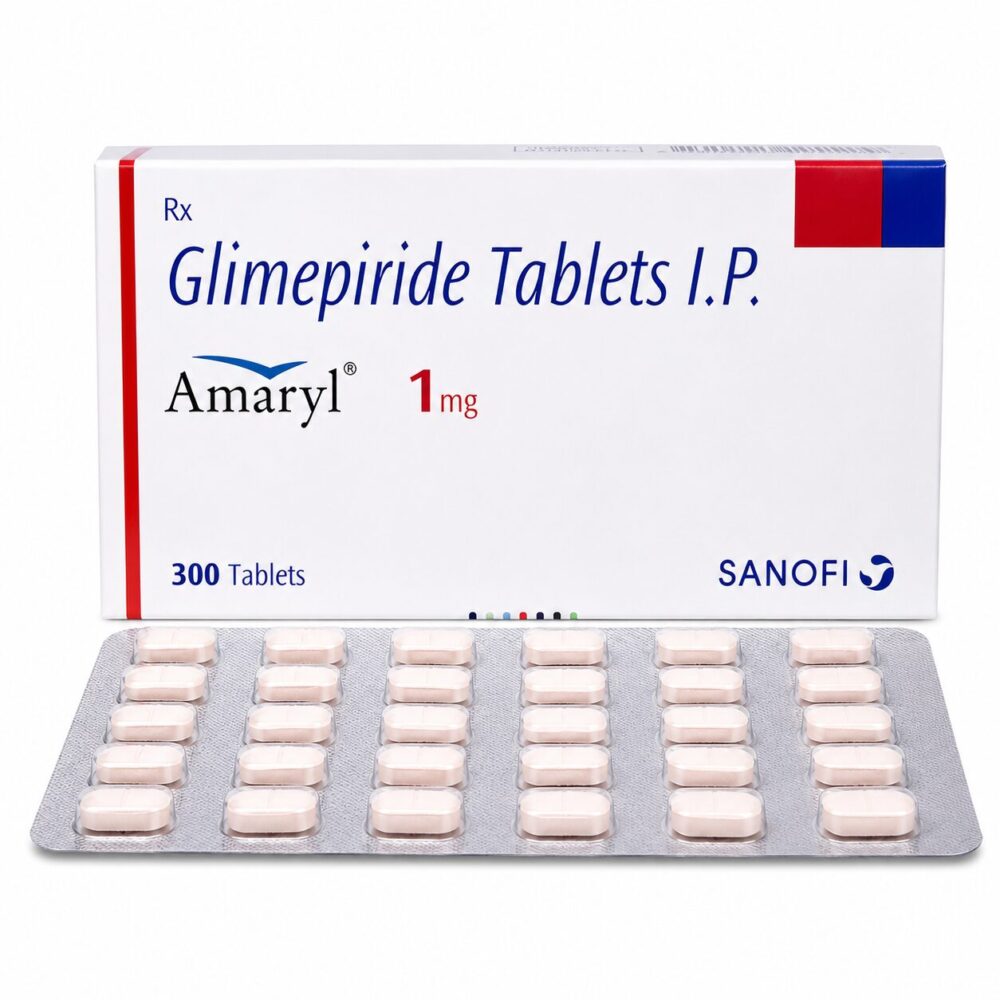
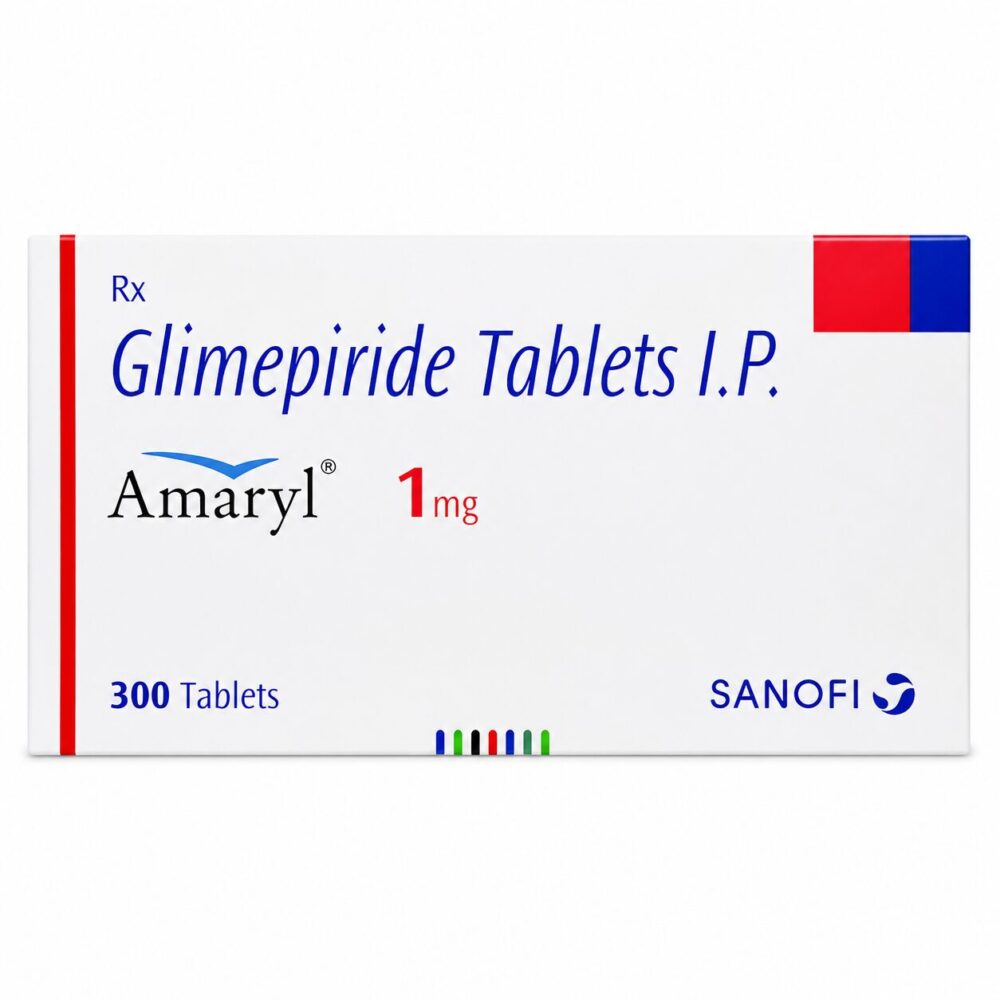
Amaryl 1 mg (Glimepiride Tablet)
| Active Ingredients | Glimepiride |
| Strength | Glimepiride 1 mg |
| Dosage Form | Tablet |
| Therapeutic Category | Type 2 diabetes |
| Manufacturer | Sanofi India Ltd. |
| Packaging | 30 tablets in 1 strip |
| Storage Conditions | Cool and dry place |
| Packaging Type | Plain and discreet |
| Pack Size | Price/Unit | Price | Quantity | |
|---|---|---|---|---|
| 120 Tablet/s | $0.58 | $70.00 | ||
| 180 Tablet/s | $0.55 | $100.00 | ||
| 240 Tablet/s | $0.52 | $125.00 | ||
| 300 Tablet/s | $0.48 | $145.00 |
Price range: $70.00 through $145.00
What Is Amaryl 1 mg?
Amaryl 1 mg contains glimepiride, a medicine designed to lower blood sugar levels in adults living with type 2 diabetes. Stable glucose control reduces sudden sugar spikes after meals and supports better day-to-day diabetes management.
Glimepiride encourages the pancreas to release more insulin, helping the body move sugar from the bloodstream into cells where it can be used for energy.
It has sometimes start treatment with lower strengths like 1 mg when introducing sulfonylurea therapy or adjusting Diabetes Medicines gradually. Dose selection depends on current blood sugar readings, lifestyle habits, body response, and use of other diabetes medicines. Regular glucose monitoring gives a clearer idea of how well the treatment plan is working over time.
Uses of Amaryl 1 mg
Amaryl 1 mg is mainly prescribed for:
- Type 2 diabetes mellitus
- High blood sugar management
- Supporting glucose control alongside diet and exercise
- Combination diabetes treatment with metformin or insulin in selected cases
- Reducing long-term diabetes-related complications linked with uncontrolled sugar levels
Blood sugar control becomes more effective when medicine intake is combined with regular meals, healthy food choices, and physical activity. Skipping meals while taking glimepiride may increase the chances of low blood sugar episodes.
How Amaryl 1 mg Helps Control Blood Sugar
Glucose levels rise when insulin production becomes weak or when the body stops responding properly to insulin. Glimepiride helps increase insulin release from pancreatic beta cells, allowing glucose to move more efficiently from the blood into body tissues.
Type 2 diabetes management usually needs long-term consistency. Missing doses frequently, irregular eating habits, lack of exercise, or excessive sugar intake may affect glucose balance even while taking medication. Many diabetes treatment plans include regular HbA1c testing, fasting sugar checks, and meal planning to track overall progress.
Benefits of Amaryl 1 mg
Several benefits are associated with proper use of Amaryl 1 mg:
- Helps lower elevated blood sugar levels
- Supports long-term diabetes control
- Helps reduce post-meal glucose spikes
- Can be combined with other anti-diabetic medicines
- Easy oral tablet form for daily use
- Helps improve energy balance linked with controlled glucose levels
Steady blood sugar management also supports better daily functioning and lowers stress caused by uncontrolled diabetes symptoms such as tiredness, frequent urination, increased thirst, and blurred vision.
Directions for Use
Amaryl 1 mg is generally taken once daily before breakfast or with the first main meal of the day. Swallow the tablet with water without crushing or chewing it. Meal timing matters because glimepiride may lower blood sugar significantly if taken without food.
Dose adjustments are usually made gradually based on blood sugar response. Sudden dose increases without monitoring may raise the risk of hypoglycemia. Maintaining a fixed medicine schedule each day helps support more stable glucose control.
Missed doses should not be doubled. If a dose is forgotten, the next scheduled dose can be taken normally unless medical advice suggests otherwise.
Dosage Information
Starting Dose
Many adults beginning glimepiride therapy start with Amaryl 1 mg as an initial dose. Gradual titration helps monitor how the body responds to treatment.
Dose Adjustment
Blood sugar readings, HbA1c levels, age, eating habits, and kidney function may influence dose changes. Some individuals continue on 1 mg long term, while others may require stronger doses for better glucose control.
Side Effects of Amaryl 1 mg
Common Side Effects
Some users may notice mild side effects during treatment:
- Low blood sugar
- Headache
- Nausea
- Dizziness
- Weakness
- Increased hunger
- Mild stomach discomfort
Low Blood Sugar Symptoms
Hypoglycemia is one of the more discussed concerns linked with glimepiride medicines.
Warning signs may include:
- Sweating
- Shaking
- Fast heartbeat
- Confusion
- Sudden hunger
- Irritability
- Blurred vision
Carrying a quick sugar source such as glucose tablets, fruit juice, or candy may help during mild low sugar episodes.
Precautions and Warnings
Kidney and Liver Conditions
Reduced kidney or liver function may affect how glimepiride is processed inside the body. Lower doses and closer monitoring are often preferred in such situations.
Alcohol Consumption
Alcohol intake may increase fluctuations in blood sugar levels and may also increase hypoglycemia risk in some individuals taking sulfonylurea medicines.
Driving and Machine Use
Low blood sugar episodes may affect alertness, concentration, and reaction speed. Driving or operating machinery during dizziness or confusion may become unsafe.
Pregnancy and Breastfeeding
Glucose management during pregnancy requires careful monitoring. Alternative diabetes treatments are sometimes preferred during pregnancy or breastfeeding depending on medical evaluation.
Drug Interactions
Certain medicines may alter the glucose-lowering effect of Amaryl 1 mg.
Examples include:
- Insulin
- Metformin
- Corticosteroids
- Beta blockers
- Diuretics
- Some antibiotics
- Antifungal medicines
Changes in sugar readings after starting a new medicine should be discussed with a healthcare provider managing diabetes treatment.
Frequently Asked Questions (FAQs)
Amaryl 1 mg is used for controlling blood sugar levels in adults with type 2 diabetes mellitus.
Yes, glimepiride may lower blood sugar too much in some cases, especially after skipped meals, alcohol intake, or incorrect dosing.
Most people take the tablet before breakfast or with the first main meal of the day.
No. Amaryl 1 mg is an oral anti-diabetic tablet containing glimepiride, not insulin.
Combination treatment with metformin is fairly common in type 2 diabetes management when stronger glucose control is needed.
The next scheduled dose can usually be taken normally. Double dosing is generally avoided.
Older adults may use glimepiride under monitored dosing because age-related kidney changes can increase low blood sugar risk.
| Pack Size | 120 Tablet/s, 180 Tablet/s, 240 Tablet/s, 300 Tablet/s |
|---|---|
| Price/Unit | $0.48, $0.52, $0.55, $0.58 |
Related products
- + wishlist+ compare
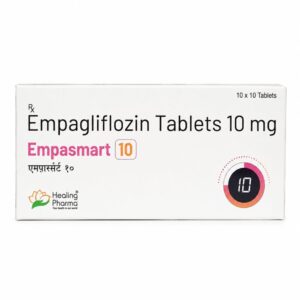
Empasmart 10 mg (Empagliflozin)
Price range: $60.00 through $225.00Select options
There are no reviews yet.