
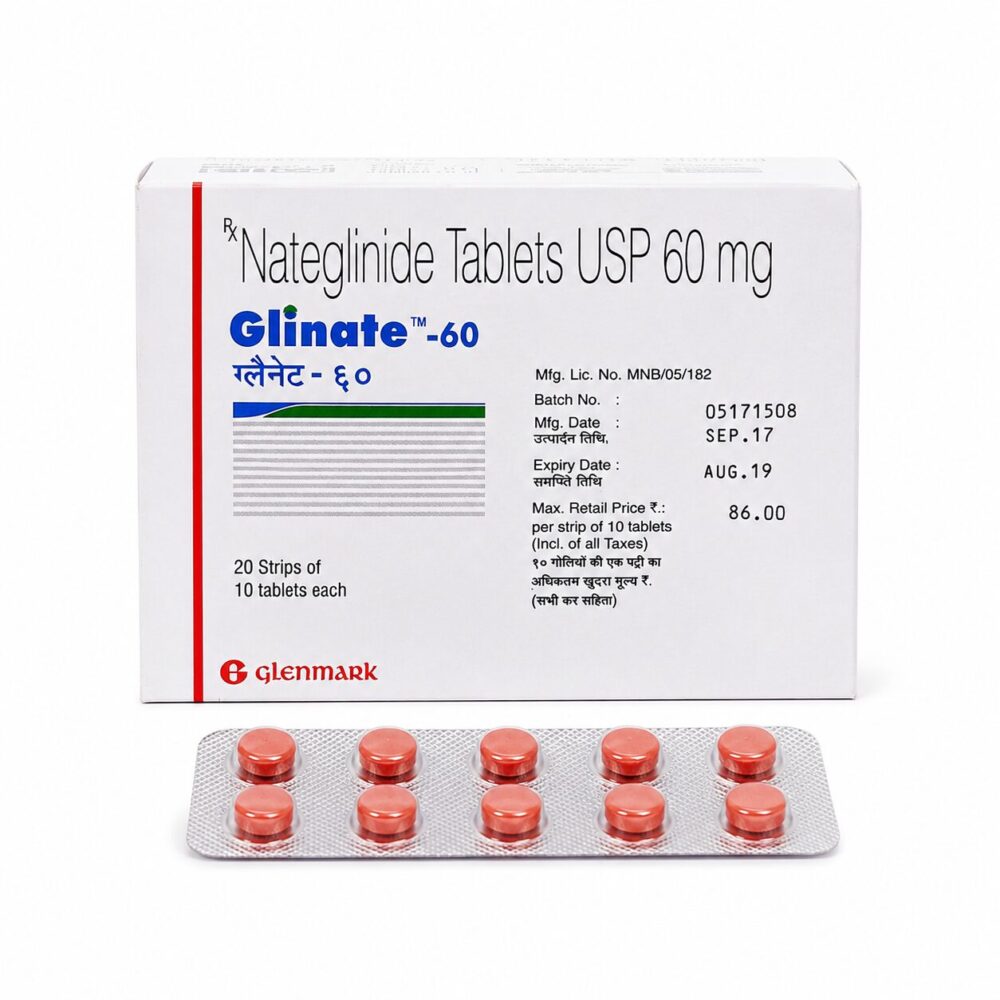
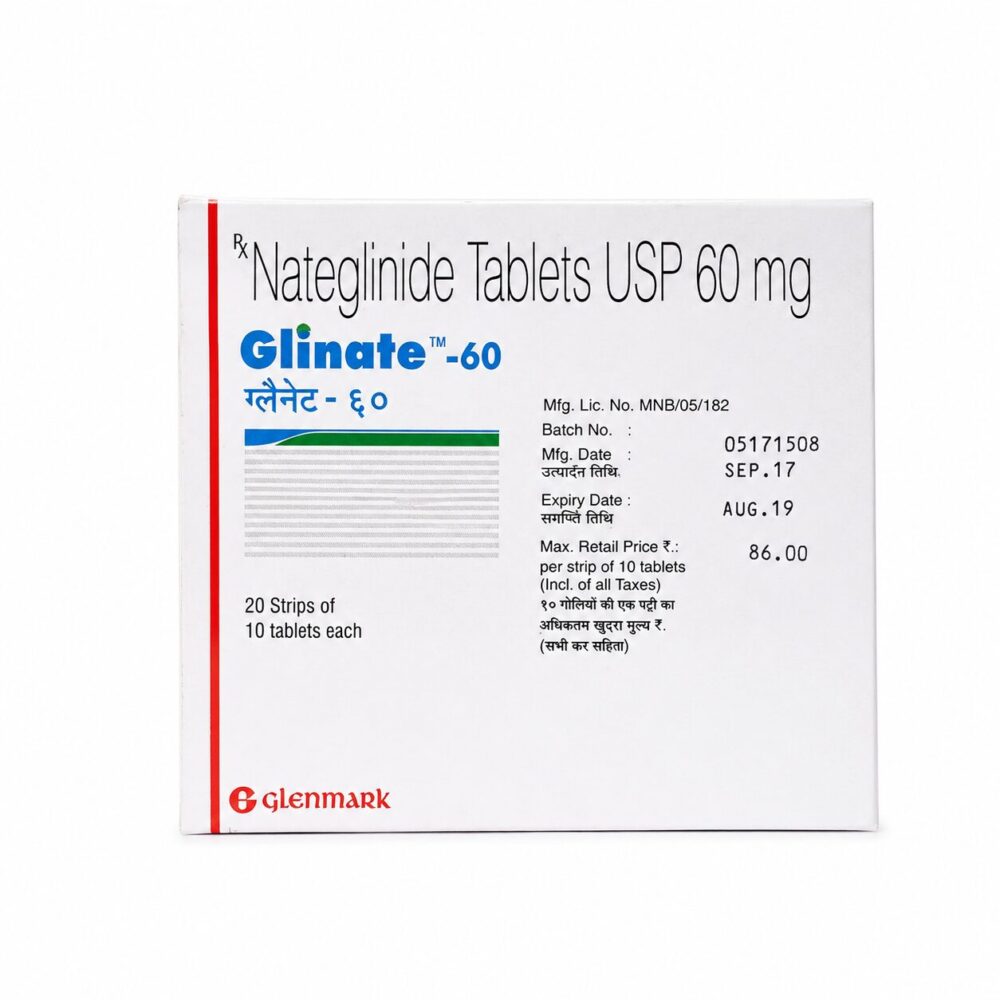
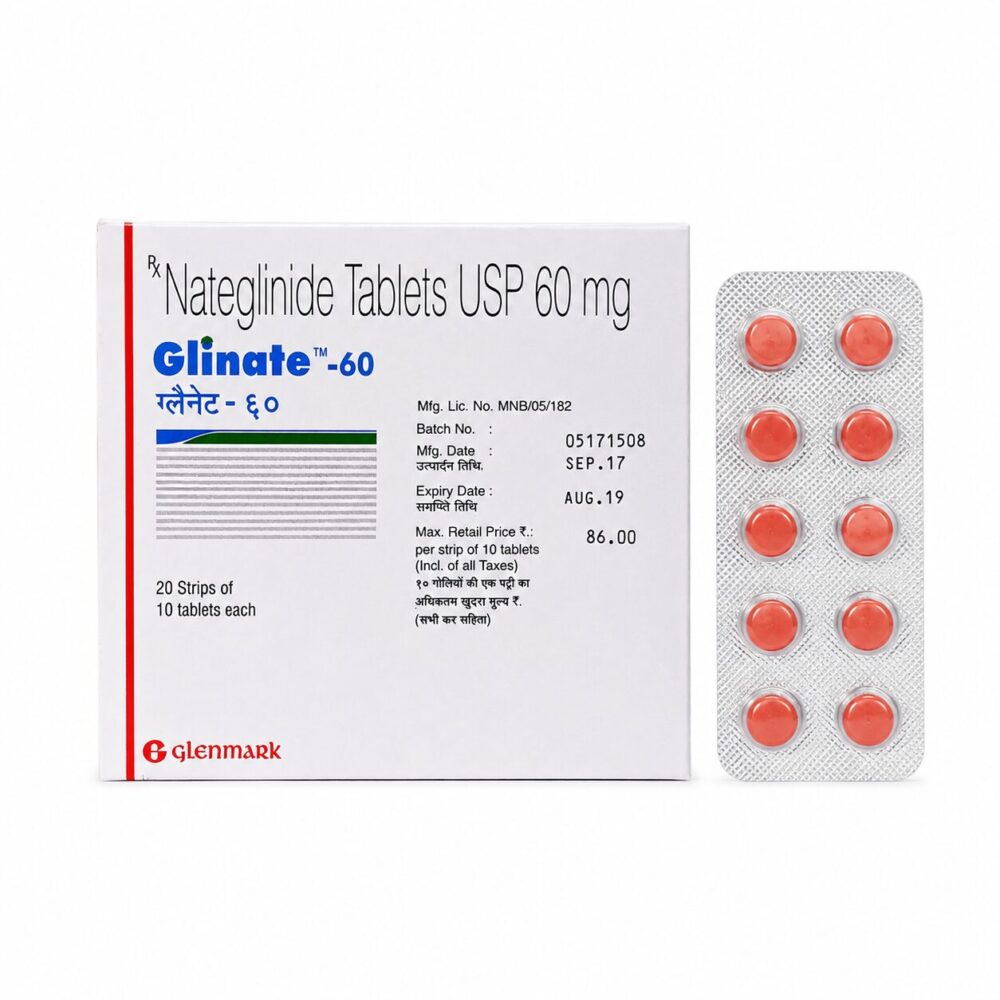
Glinate 60 mg (Nateglinide)
| Active Ingredients | Nateglinide |
| Strength | 60 mg |
| Dosage Form | Tablets |
| Therapeutic Category | Diabetes |
| Manufacturer | Glenmark Pharmaceuticals Ltd. |
| Packaging | 10 tablets in 1 strip |
| Storage Conditions | Cool and dry place |
| Packaging Type | Plain and discreet |
| Pack Size | Price/Unit | Price | Quantity | |
|---|---|---|---|---|
| 80 Tablet/s | $0.62 | $50.00 | ||
| 120 Tablet/s | $0.58 | $70.00 | ||
| 160 Tablet/s | $0.53 | $85.00 | ||
| 200 Tablet/s | $0.50 | $100.00 |
Price range: $50.00 through $100.00
What Is Glinate 60 mg?
Glinate 60 mg contains Nateglinide, a medicine prescribed for adults dealing with Type 2 diabetes. Blood sugar levels usually rise after meals because the body does not release enough insulin at the right time. Nateglinide supports early insulin release from the pancreas around meal hours, helping reduce post-meal glucose fluctuations.
Control over post-meal sugar levels plays a major role in long-term diabetes management. High glucose levels over time may affect the eyes, kidneys, nerves, blood vessels, and heart.
Glinate 60 mg is generally used along with meal planning and exercise habits for better glycemic control.The tablet is not suitable for Type 1 diabetes or diabetic ketoacidosis.
It may prescribe it alone or along with other anti-diabetic medicines depending on glucose levels and treatment goals.
Uses of Glinate 60 mg
Glinate 60 mg is prescribed for:
- Type 2 diabetes mellitus
- Controlling blood sugar rise after meals
- Improving glycemic control along with diet and exercise
- Combination therapy with other diabetes medicines when needed
Many diabetes treatment plans focus heavily on fasting sugar levels, though post-meal glucose spikes also matter. Nateglinide is often selected for people whose blood sugar rises sharply after eating.
How Glinate 60 mg Supports Blood Sugar Control
After food intake, the pancreas naturally releases insulin to move glucose from the bloodstream into body cells. In Type 2 diabetes, that insulin response may become delayed or weaker than normal. Nateglinide encourages a quicker insulin release around meal timing, which helps reduce sugar spikes after eating.
Because of its rapid action and shorter duration, the tablet is usually taken before meals rather than once daily at random timings. Meal scheduling and medicine timing often affect how well blood sugar remains controlled throughout the day.
Dosage and Administration
The exact dosage depends on blood sugar readings, ongoing Diabetes Medicines, meal habits, and medical history. Glinate 60 mg is usually taken before meals, commonly around 15 to 30 minutes prior to eating.
Swallow the tablet whole with water without crushing or chewing it. Missing meals after taking the tablet may raise the chance of low blood sugar symptoms such as sweating, dizziness, weakness, shakiness, or confusion.
Dose adjustments may be needed in older adults or those with liver-related concerns. Sudden dose changes without medical advice may disturb glucose control.
Missed Dose
If a meal is skipped, the corresponding dose is generally skipped as well. Taking the tablet without food may increase the risk of hypoglycemia. If the next scheduled dose is near, the missed dose should not be doubled.
Overdose
Taking excess Nateglinide may lead to dangerously low blood sugar. Signs can include trembling, sweating, confusion, faintness, blurred vision, or severe weakness. Medical care may be required if overdose symptoms appear.
Benefits of Glinate 60 mg
- Helps lower post-meal blood sugar levels
- Fast onset around meal timings
- Supports overall diabetes management
- May be combined with other diabetes medicines
- Useful for meal-related glucose fluctuations
- Short duration action lowers prolonged insulin exposure
Blood sugar management often needs consistency across meals, medicines, exercise, and routine monitoring. Glinate 60 mg supports that daily control when used properly within a diabetes care plan.
Side Effects of Glinate 60 mg
Like many anti-diabetic medicines, some unwanted effects may appear during treatment. Side effects vary from person to person and may depend on meal timing, other medicines, and blood sugar control.
Common Side Effects
- Headache
- Dizziness
- Nausea
- Stomach discomfort
- Diarrhea
- Weakness
- Sweating
- Shaking
- Mild hypoglycemia
Serious Side Effects
- Yellowing of skin or eyes
- Dark urine
- Severe allergic reaction
- Breathing difficulty
- Unusual bleeding
- Severe abdominal pain
- Persistent low blood sugar
- Liver enzyme elevation
Persistent or severe symptoms deserve prompt medical review.
Precautions Before Using Glinate 60 mg
Certain health conditions may affect how Nateglinide behaves inside the body. Medical history and current medicines often influence whether the tablet is suitable.
Medical Conditions Requiring Attention
- Liver disease
- Kidney disease
- Heart disease
- History of hypoglycemia
- Hormonal disorders
- Nutritional imbalance
- Alcohol dependence
Irregular eating habits may also affect glucose stability while using Glinate 60 mg.
Pregnancy and Breastfeeding
Limited safety data exists regarding Nateglinide use during pregnancy and breastfeeding. Alternative diabetes management approaches are sometimes preferred during these stages.
Alcohol Consumption
Alcohol may increase the risk of low blood sugar episodes and unpredictable glucose swings. Excess drinking may also interfere with diabetes management routines.
Drug Interactions
Several medicines may alter blood sugar control or affect how Nateglinide acts in the body. Full medication history matters before starting treatment.
Medicines That May Interact
- Atenolol
- Aspirin
- Diclofenac
- Gemfibrozil
- Gatifloxacin
- Bisoprolol
- Benazepril
- Other anti-diabetic medicines
Some medicines may hide warning signs of low blood sugar, especially beta-blockers.
Disease Interactions
Extra caution may be needed in:
- Type 1 diabetes
- Severe liver disorders
- Cardiovascular disease
- Frequent hypoglycemia episodes
What to Avoid While Taking Glinate 60 mg
- Skipping meals after taking the tablet
- Excess alcohol intake
- Random dose adjustments
- Heavy physical exertion without meal planning
Driving or operating machines may become risky during low blood sugar episodes because concentration and alertness can drop suddenly.
Frequently Asked Questions (FAQs)
Taking the tablet without eating may increase the risk of low blood sugar. Meal timing plays a major role in how Nateglinide performs.
Nateglinide is the generic name used in Glinate 60 mg tablets.
No. The tablet is intended for Type 2 diabetes management and is not suitable for Type 1 diabetes or diabetic ketoacidosis.
Nateglinide acts rapidly around meal timings and mainly targets post-meal glucose rise.
Low blood sugar may occur, especially when meals are delayed, skipped, or combined with other glucose-lowering medicines.
| Pack Size | 120 Tablet/s, 160 Tablet/s, 200 Tablet/s, 80 Tablet/s |
|---|---|
| Price/Unit | $0.50, $0.53, $0.58, $0.62 |
Related products
- + wishlist+ compare
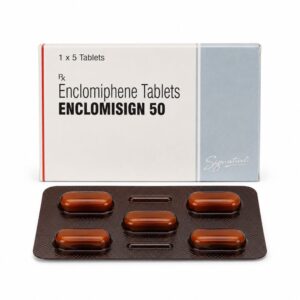
Enclomisign 50 mg (Enclomiphene)
Price range: $55.00 through $105.00Select options - + wishlist+ compare
Deviry 10 mg (Medroxyprogesterone acetate)
Price range: $45.00 through $100.00Select options
There are no reviews yet.